
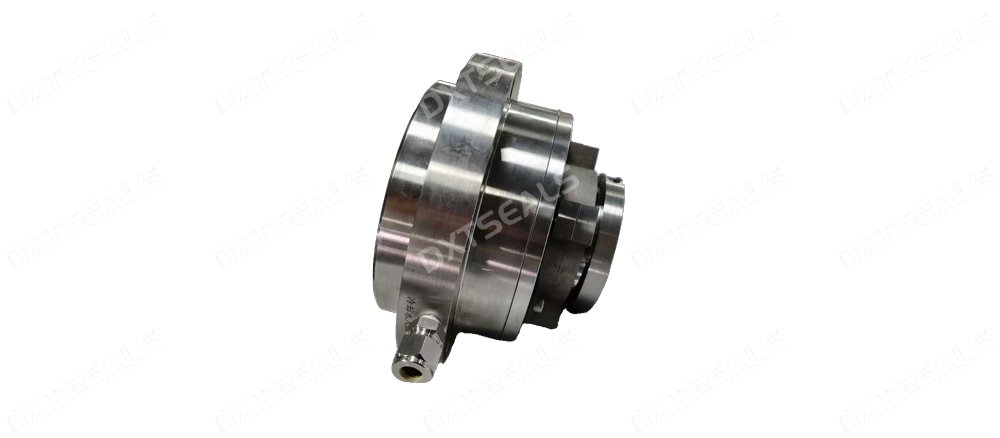
Mechanical seals are essential components in industrial equipment, preventing fluid leakage and ensuring safe, efficient operation. As industries continue to evolve, sealing requirements have become increasingly diverse. While many applications rely on standard mechanical seal models, others require customized solutions tailored to unique operating conditions.
For manufacturers and equipment operators, selecting a supplier with comprehensive manufacturing capabilities is critical. A capable mechanical seal manufacturer should not only provide standard replacement products but also offer engineering expertise, material selection support, precision machining, and non-standard customization services.
This article explores the full spectrum of mechanical seal manufacturing capabilities, from standard models to custom-engineered sealing solutions, and explains how DXTSEALS helps customers meet complex sealing challenges.
Understanding Modern Mechanical Seal Requirements
Industrial equipment operates under a wide range of conditions, including:
- High pressure
- Extreme temperatures
- Corrosive chemicals
- Abrasive media
- High rotational speeds
- Strict hygiene standards
Because no single seal design can meet every application requirement, modern mechanical seal manufacturing requires flexibility, precision, and engineering expertise.
A comprehensive supplier must be capable of delivering both standard products and customized sealing solutions.
Standard Mechanical Seal Manufacturing Capabilities
Standard mechanical seals remain the most commonly used sealing solutions across industries.
These products are designed according to widely accepted industry dimensions and specifications, making them suitable for direct replacement and OEM applications.
Advantages of Standard Mechanical Seals
Standard seals offer several benefits:
- Cost-effective solutions
- Fast production and delivery
- Easy replacement
- Proven performance
- Broad application compatibility
For maintenance teams and equipment operators, standard seals help minimize downtime and simplify inventory management.
Manufacturing Standard Replacement Models
A professional seal manufacturer should be capable of producing equivalent replacements for many commonly used market models.
These may include seals compatible with equipment from major pump and compressor manufacturers.
Manufacturing capabilities typically include:
Component Production
- Rotary faces
- Stationary faces
- Springs
- Metal hardware
- Elastomer components
Material Options
Common face materials include:
- Silicon carbide (SiC)
- Tungsten carbide (TC)
- Carbon graphite
- Ceramic
Secondary sealing materials may include:
- NBR
- EPDM
- FKM
- FFKM
This flexibility allows customers to match performance requirements while maintaining compatibility with existing equipment.
Precision Machining Technology
The quality of a mechanical seal depends heavily on manufacturing precision.
At DXTSEALS, precision manufacturing capabilities support both standard and custom seal production.
CNC Machining
Advanced CNC equipment enables:
- High dimensional accuracy
- Tight tolerance control
- Consistent product quality
- Complex geometry machining
Critical dimensions such as seal face diameters, gland components, and shaft interfaces are produced with strict precision standards.
Grinding and Lapping
Precision grinding and lapping processes ensure:
- Exceptional flatness
- Low surface roughness
- Uniform face contact
- Improved sealing performance
These processes are particularly important for silicon carbide and tungsten carbide sealing faces.
Material Engineering Expertise
Material selection is one of the most important factors affecting seal performance.
Different industries require different material combinations based on:
- Temperature
- Pressure
- Chemical exposure
- Abrasion levels
- Hygiene requirements
Common Seal Face Materials
Silicon Carbide (SiC)
Offers:
- Excellent wear resistance
- High thermal conductivity
- Superior corrosion resistance
Tungsten Carbide (TC)
Provides:
- High mechanical strength
- Excellent impact resistance
- Long service life
Carbon Graphite
Delivers:
- Self-lubricating properties
- Low friction operation
- Excellent compatibility with hard faces
The ability to manufacture seals using multiple material combinations allows DXTSEALS to support a wide variety of applications.
Custom Mechanical Seal Design Capabilities
While standard products satisfy many requirements, some operating environments demand customized solutions.
Custom mechanical seals are often required when equipment experiences:
- Extreme temperatures
- High-pressure operation
- Aggressive chemicals
- Limited installation space
- Unusual shaft dimensions
- Special industry requirements
In these situations, engineering customization becomes essential.
Non-Standard Mechanical Seal Manufacturing
Non-standard mechanical seals are designed according to customer-specific requirements rather than industry-standard dimensions.
Customization may involve:
Dimensional Modifications
- Special shaft sizes
- Unique gland dimensions
- Modified installation spaces
- Customized face configurations
Material Optimization
Engineers may select specific materials based on:
- Chemical compatibility
- Wear resistance
- Thermal stability
- FDA compliance
- Industry regulations
Structural Improvements
Custom designs may incorporate:
- Multiple spring configurations
- Balanced seal designs
- Cartridge seal structures
- Double mechanical seals
- Specialized cooling systems
These improvements help maximize equipment reliability and service life.
Reverse Engineering and OEM Replacement Services
Many industrial facilities operate older equipment for which original seal drawings are no longer available.
In such cases, reverse engineering capabilities become valuable.
DXTSEALS can develop replacement solutions based on:
- Existing seal samples
- Equipment drawings
- Operating parameters
- Performance requirements
This allows customers to reduce dependency on expensive OEM products while maintaining reliable sealing performance.
Industries Served by Comprehensive Manufacturing Capabilities
Mechanical seal requirements vary significantly across industries.
Chemical Processing
Requires:
- Corrosion resistance
- Chemical compatibility
- Pressure stability
Oil and Gas
Demands:
- High-pressure sealing
- Extreme temperature capability
- Long-term reliability
Water Treatment
Needs:
- Cost-effective solutions
- Continuous operation
- Wear resistance
Food and Beverage
Requires:
- Hygienic design
- FDA-compliant materials
- Easy cleaning
Pharmaceutical Industry
Demands:
- Contamination control
- Sterilization resistance
- High purity standards
Power Generation
Requires:
- Thermal stability
- High-speed performance
- Long service intervals
A manufacturer with broad capabilities can support all of these industries through customized engineering and precision production.
Quality Control Throughout Manufacturing
Reliable mechanical seals require strict quality assurance at every stage of production.
Dimensional Inspection
Verification includes:
- Diameter measurements
- Concentricity
- Parallelism
- Surface geometry
Material Verification
Ensures consistency in:
- Hardness
- Density
- Chemical composition
Performance Testing
Depending on customer requirements, testing may include:
- Pressure testing
- Leakage testing
- Dynamic operation testing
- Thermal cycling evaluation
Comprehensive quality control helps ensure every seal meets performance expectations.
Why Customers Choose DXTSEALS
As a professional sealing solutions provider, DXTSEALS offers comprehensive manufacturing capabilities that cover both standard and customized mechanical seals.
Our strengths include:
- Production of widely used standard seal models
- OEM-equivalent replacement solutions
- Precision CNC machining and lapping technology
- Multiple material combinations
- Reverse engineering support
- Non-standard customization capabilities
- Strict quality control procedures
- Technical engineering assistance
Whether customers require a direct replacement seal or a fully customized sealing system, DXTSEALS provides reliable solutions designed to meet demanding industrial applications.
Conclusion
Modern industrial sealing requirements extend far beyond standard products. While standard mechanical seals remain important for maintenance and replacement applications, many industries increasingly require customized solutions tailored to specific operating conditions.
From standard models and OEM replacements to advanced non-standard designs, comprehensive manufacturing capabilities enable suppliers to provide the flexibility, precision, and performance that today's industries demand.
With advanced machining technology, extensive material expertise, and strong customization capabilities, DXTSEALS delivers high-quality mechanical seal solutions that help customers improve reliability, reduce maintenance costs, and maximize equipment performance.