
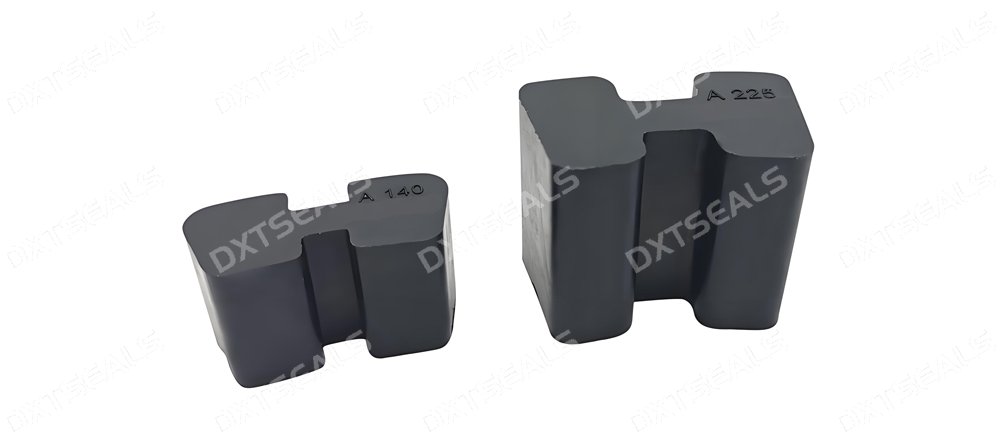
Rubber components are widely used in sealing, damping, insulation, and protection across industries such as automotive, electronics, construction, oil & gas, and medical devices. With so many rubber materials available, choosing the right one for your custom parts can be a challenge. Each type of rubber has its own strengths and limitations, and selecting the wrong material may lead to premature failure, higher costs, and downtime.
This article provides a practical comparison of common rubber materials and a selection guide to help you make the right decision for your application.
1. Common Rubber Materials for Custom Parts
NBR (Nitrile Rubber)
-
Advantages: Excellent resistance to oils, fuels, and hydraulic fluids. Good wear resistance.
-
Limitations: Poor resistance to weathering, ozone, and strong acids.
-
Applications: O-rings, oil seals, fuel system parts.
EPDM (Ethylene Propylene Diene Monomer Rubber)
-
Advantages: Excellent weather resistance, ozone resistance, and good performance in hot water and steam.
-
Limitations: Poor resistance to oils and fuels.
-
Applications: Automotive seals, outdoor gaskets, water system components.
FKM (Fluorocarbon Rubber, e.g., Viton®)
-
Advantages: Exceptional resistance to oils, fuels, high temperatures, and many chemicals.
-
Limitations: Higher cost compared to other rubbers.
-
Applications: Aerospace seals, chemical processing equipment, high-performance automotive components.
Silicone Rubber (VMQ)
-
Advantages: Wide temperature range (-60°C to +200°C), excellent flexibility, and good biocompatibility.
-
Limitations: Poor mechanical strength and low resistance to fuels and oils.
-
Applications: Medical devices, food-grade seals, electrical insulation.
HNBR (Hydrogenated Nitrile Rubber)
-
Advantages: Improved heat, ozone, and chemical resistance compared to NBR.
-
Limitations: More expensive than standard NBR.
-
Applications: Automotive engine components, industrial seals, dynamic applications.
2. Key Factors in Selecting the Right Rubber Material
When choosing a material for your custom rubber part, consider the following:
-
Operating Temperature: High-temperature environments favor FKM or Silicone.
-
Chemical Compatibility: For oils and fuels, NBR or FKM are recommended; for water and steam, EPDM is ideal.
-
Mechanical Strength: For wear and tear resistance, NBR and HNBR perform best.
-
Environmental Conditions: For outdoor applications, EPDM provides superior weather resistance.
-
Regulatory Requirements: For food or medical applications, FDA-approved Silicone or EPDM is essential.
-
Cost vs Performance: NBR offers a cost-effective solution, while FKM ensures long-term reliability in extreme environments.
3. Custom Rubber Parts from DXTSEALS
At DXTSEALS, we specialize in providing custom rubber components tailored to your specific application. From material selection to design optimization, our team ensures that every part delivers reliability, durability, and cost efficiency.
We offer:
-
Wide range of rubber materials including NBR, EPDM, FKM, HNBR, and Silicone.
-
Customized sizes, hardness levels, and shapes.
-
Strict quality control and industry certifications.
-
Engineering support for special working conditions.
Conclusion
Choosing the right rubber material is essential for ensuring long-lasting performance and cost savings. By understanding the properties of common rubber types and evaluating your operating conditions, you can make an informed decision for your custom rubber parts.
📩 Contact DXTSEALS today for expert guidance and high-quality customized rubber solutions.