
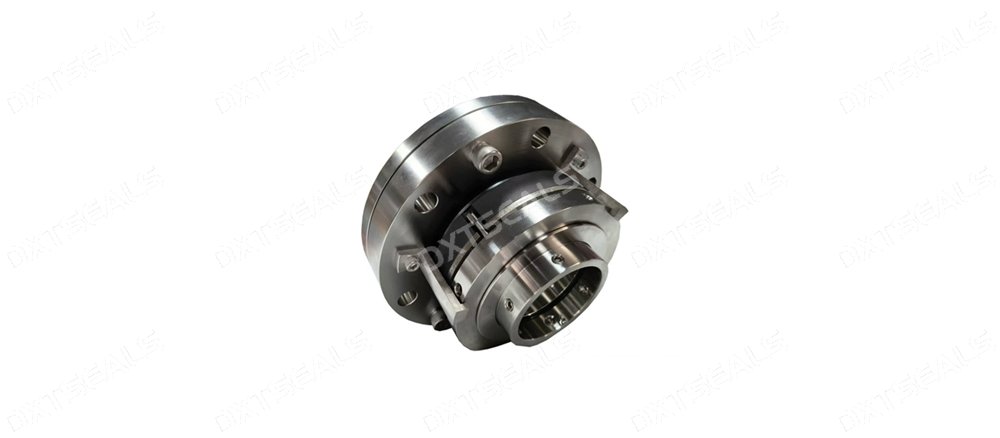
Mechanical seals are among the most critical components in rotating equipment, serving as the primary barrier against fluid leakage while ensuring operational efficiency and equipment reliability. While seal design and manufacturing precision are essential, the performance of a mechanical seal is heavily influenced by the materials used for its sealing faces and supporting components.
Different operating environments require different material combinations. A seal that performs exceptionally well in a water pump may fail rapidly in a chemical reactor or abrasive slurry application. Therefore, selecting the right material pairing is crucial for maximizing sealing performance, reducing maintenance costs, and extending service life.
This article explores the most common material combinations used in mechanical seals and analyzes their performance advantages across various industrial applications.
Why Material Selection Matters in Mechanical Seals
Mechanical seals operate under challenging conditions involving:
- Friction between sealing faces
- High rotational speeds
- Pressure fluctuations
- Temperature variations
- Chemical exposure
- Abrasive particles
The wrong material combination can lead to:
- Premature wear
- Excessive leakage
- Thermal cracking
- Chemical degradation
- Increased maintenance costs
Proper material selection helps achieve:
- Longer service life
- Improved sealing reliability
- Better wear resistance
- Enhanced chemical compatibility
- Reduced operating costs
Understanding Mechanical Seal Face Materials
Mechanical seal faces typically consist of a rotating face and a stationary face. These surfaces must work together to maintain a thin lubricating film while minimizing wear and leakage.
Common seal face materials include:
- Carbon Graphite
- Silicon Carbide (SiC)
- Tungsten Carbide (TC)
- Ceramic (Alumina)
- Reaction-Bonded Silicon Carbide
- Pressureless Sintered Silicon Carbide
Each material offers unique advantages and limitations.
Carbon Graphite + Silicon Carbide
One of the Most Popular Material Combinations
The Carbon Graphite versus Silicon Carbide pairing is widely used across industrial applications.
Advantages
- Low friction coefficient
- Excellent self-lubrication
- Good thermal stability
- Reduced heat generation
- Reliable dry-running capability for short periods
Typical Applications
- Water pumps
- Chemical pumps
- General industrial equipment
- Food processing systems
The carbon face provides lubrication while the silicon carbide face offers superior hardness and wear resistance.
Performance Characteristics
| Property | Performance |
|---|---|
| Wear Resistance | Excellent |
| Friction Control | Excellent |
| Corrosion Resistance | Excellent |
| Cost Efficiency | High |
This combination is often considered the industry standard for many pump applications.
Silicon Carbide + Silicon Carbide
Maximum Corrosion and Wear Resistance
A Silicon Carbide versus Silicon Carbide combination is commonly used in highly demanding environments.
Advantages
- Exceptional hardness
- Outstanding wear resistance
- Excellent chemical resistance
- High thermal conductivity
- Superior dimensional stability
Typical Applications
- Chemical processing plants
- Acid transfer pumps
- Pharmaceutical systems
- High-purity applications
Performance Characteristics
| Property | Performance |
|---|---|
| Wear Resistance | Outstanding |
| Chemical Resistance | Outstanding |
| High Temperature Capability | Excellent |
| Abrasion Resistance | Excellent |
Because both faces are extremely hard, this combination performs exceptionally well in corrosive and abrasive environments.
Carbon Graphite + Tungsten Carbide
Balanced Performance for Heavy-Duty Applications
Tungsten carbide is tougher than silicon carbide and offers superior impact resistance.
Advantages
- Excellent mechanical strength
- High wear resistance
- Good shock resistance
- Reliable operation under varying loads
Typical Applications
- Mining equipment
- Pulp and paper industry
- Wastewater treatment systems
- Industrial pumps
Performance Characteristics
| Property | Performance |
|---|---|
| Impact Resistance | Excellent |
| Wear Resistance | Excellent |
| Mechanical Strength | Excellent |
| Corrosion Resistance | Good |
This combination is often chosen when equipment experiences vibration, shock loading, or abrasive media.
Tungsten Carbide + Tungsten Carbide
High Strength for Extreme Conditions
For severe-duty environments, Tungsten Carbide versus Tungsten Carbide provides outstanding durability.
Advantages
- Exceptional mechanical strength
- Superior abrasion resistance
- High pressure capability
- Excellent dimensional stability
Typical Applications
- Slurry pumps
- Mining operations
- Dredging systems
- Heavy industrial equipment
Performance Characteristics
| Property | Performance |
|---|---|
| Abrasion Resistance | Outstanding |
| Impact Resistance | Outstanding |
| Pressure Capability | Excellent |
| Service Life | Very Long |
Although highly durable, this combination generally produces higher friction compared to carbon-based pairings.
Carbon Graphite + Ceramic
Economical Solution for General Applications
Ceramic materials offer good hardness and corrosion resistance at a lower cost.
Advantages
- Cost-effective
- Good corrosion resistance
- Suitable for clean fluids
- Reliable operation in moderate conditions
Typical Applications
- Domestic water pumps
- HVAC systems
- Light industrial equipment
Performance Characteristics
| Property | Performance |
|---|---|
| Cost Efficiency | Excellent |
| Corrosion Resistance | Good |
| Wear Resistance | Moderate |
| Mechanical Strength | Moderate |
This combination is often selected for cost-sensitive applications.
Material Selection Beyond Seal Faces
Mechanical seal performance also depends on secondary sealing materials and metal components.
Elastomer Materials
Common options include:
NBR (Nitrile Rubber)
Suitable for:
- Oils
- Water
- General industrial fluids
EPDM
Suitable for:
- Hot water
- Steam
- Food applications
FKM (Viton® Equivalent)
Suitable for:
- Chemicals
- High temperatures
- Industrial solvents
FFKM
Suitable for:
- Semiconductor industry
- Aggressive chemicals
- Extreme temperatures
Metal Components and Spring Materials
Springs and hardware materials must also match operating conditions.
Common materials include:
Stainless Steel 304/316
Advantages:
- Corrosion resistance
- Cost efficiency
- Good mechanical properties
Hastelloy
Advantages:
- Superior chemical resistance
- Suitable for aggressive acids
Duplex Stainless Steel
Advantages:
- High strength
- Excellent corrosion resistance
Proper selection of metal components significantly impacts overall seal reliability.
How Different Industries Choose Material Combinations
Chemical Industry
Preferred combinations:
- Silicon Carbide + Silicon Carbide
- Carbon + Silicon Carbide
Focus:
- Corrosion resistance
- Chemical compatibility
Food and Beverage Industry
Preferred combinations:
- Carbon + Silicon Carbide
- Carbon + Ceramic
Focus:
- Hygiene
- Low friction
- FDA-compliant materials
Mining Industry
Preferred combinations:
- Tungsten Carbide + Tungsten Carbide
- Carbon + Tungsten Carbide
Focus:
- Abrasion resistance
- Mechanical durability
Pharmaceutical Industry
Preferred combinations:
- Silicon Carbide + Silicon Carbide
Focus:
- Cleanliness
- Chemical resistance
- Product purity
Water Treatment Industry
Preferred combinations:
- Carbon + Silicon Carbide
- Carbon + Ceramic
Focus:
- Cost efficiency
- Reliability
Why Customized Material Pairings Deliver Better Results
Standard material combinations may not always provide optimal performance.
Customized material selection allows engineers to optimize:
- Wear resistance
- Friction levels
- Chemical compatibility
- Thermal performance
- Service life
- Operating cost
At DXTSEALS, material combinations are selected based on actual operating conditions, including media type, temperature, pressure, shaft speed, and environmental requirements.
This engineering-driven approach ensures customers receive the most effective sealing solution for their applications.
Conclusion
Material selection is one of the most important factors influencing mechanical seal performance. Different material combinations offer distinct advantages in terms of wear resistance, corrosion protection, friction control, and service life.
Whether using Carbon Graphite and Silicon Carbide for general industrial applications, Silicon Carbide and Silicon Carbide for aggressive chemicals, or Tungsten Carbide combinations for abrasive environments, the correct material pairing can significantly improve equipment reliability and operational efficiency.
With extensive material expertise and advanced manufacturing capabilities, DXTSEALS provides customized mechanical seal solutions designed to meet the demanding requirements of modern industries worldwide.