
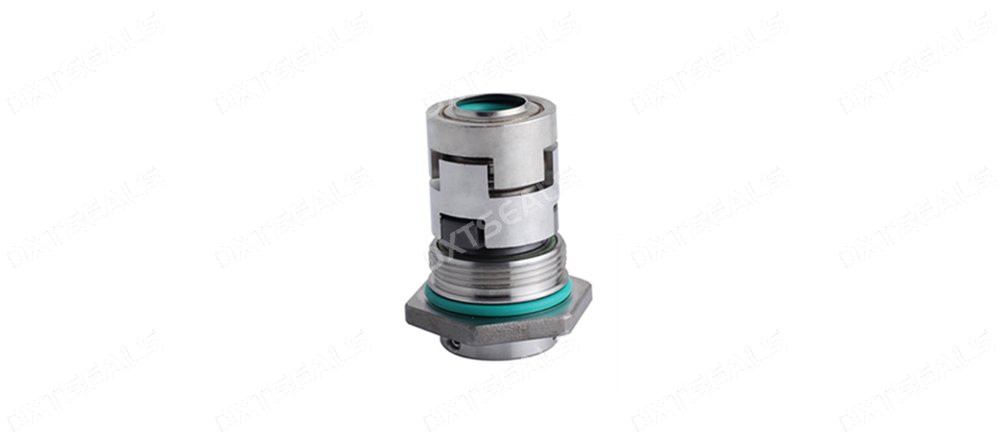
Mechanical seals are wear components that play a vital role in preventing leakage, protecting rotating equipment, and maintaining reliable industrial operations. Whether installed in pumps, compressors, mixers, agitators, or other rotating machinery, mechanical seals eventually require replacement due to normal wear, changes in operating conditions, or scheduled maintenance.
Selecting the correct replacement seal involves much more than matching dimensions. Engineers must consider operating pressure, temperature, shaft speed, process media, material compatibility, and equipment design to ensure long-term reliability.
At DXTSEALS, we manufacture both standard mechanical seals and custom mechanical seals, providing OEM-equivalent replacement solutions for a wide range of industrial equipment. With advanced CNC machining, precision seal face lapping, and comprehensive engineering support, we help customers replace worn seals with confidence.
This guide explains the key factors involved in mechanical seal replacement and how to determine whether a standard size or a custom configuration is the best choice for your application.
When Should a Mechanical Seal Be Replaced?
Mechanical seals are designed for long service life, but all sealing systems experience gradual wear during operation.
Common signs that indicate replacement may be necessary include:
- Visible process fluid leakage
- Increased equipment vibration
- Excessive seal face wear
- Unusual operating noise
- Higher operating temperatures
- Reduced pump or compressor efficiency
- Frequent maintenance requirements
- Damage caused by dry running or contamination
Replacing a worn seal before complete failure helps prevent equipment damage, production interruptions, and costly emergency repairs.
Understanding Standard Mechanical Seal Sizes
Many industrial pumps and rotating machines are designed around internationally recognized mechanical seal dimensions.
Standard mechanical seals are manufactured to match these common sizes, making installation straightforward and reducing replacement time.
Advantages of Standard Mechanical Seals
Standard replacement seals offer several practical benefits:
- Easy availability
- Competitive pricing
- Shorter production lead times
- Proven sealing performance
- Simplified maintenance
- Compatibility with many industrial pump models
For equipment operating under typical conditions, a standard replacement is often the most economical solution.
Applications Suitable for Standard Replacement Seals
Standard mechanical seals are commonly used in:
- Centrifugal pumps
- Water pumps
- Cooling systems
- HVAC equipment
- General industrial machinery
- Chemical transfer pumps
- Utility systems
- Agricultural equipment
Where equipment dimensions and operating conditions fall within established design ranges, standard seals provide dependable performance with minimal installation complexity.
When Standard Sizes Are Not Enough
Not every mechanical seal application can be solved with an off-the-shelf replacement.
Custom configurations are often required when equipment features:
- Non-standard shaft diameters
- Limited installation space
- High operating pressure
- Extreme temperatures
- Corrosive chemicals
- Abrasive process media
- High rotational speeds
- Modified or legacy equipment
In these situations, a custom-engineered mechanical seal can improve both reliability and service life.
Custom Mechanical Seal Configurations
A custom mechanical seal is designed to match the specific requirements of the equipment and operating environment.
Customization may include:
- Overall dimensions
- Seal face geometry
- Spring arrangement
- Balance design
- Elastomer selection
- Seal face materials
- Metal component materials
- Installation configuration
Rather than forcing the equipment to fit a standard product, the seal is engineered to fit the equipment.
OEM-Equivalent Replacement Mechanical Seals
Many industrial facilities require replacement seals that are compatible with original equipment.
DXTSEALS manufactures OEM-equivalent mechanical seals based on:
- OEM part numbers
- Technical drawings
- Customer samples
- Existing seal assemblies
- Equipment specifications
Our goal is to provide dimensional compatibility while offering opportunities to improve material performance where appropriate.
Information Needed for Accurate Replacement
Providing complete technical information helps ensure the correct replacement seal is selected.
Useful information includes:
Equipment Information
- Pump or compressor manufacturer
- Equipment model
- Equipment type
Seal Information
- OEM part number
- Existing seal model
- Installation dimensions
- Shaft diameter
Operating Conditions
- Operating pressure
- Temperature
- Rotational speed
- Process medium
- Direction of rotation
- Dry-running conditions (if applicable)
Supporting Documentation
Whenever possible, provide:
- Technical drawings
- Photos of the existing seal
- Worn seal samples
- Equipment manuals
The more information available, the more accurately the replacement can be engineered.
Material Selection for Replacement Mechanical Seals
Selecting the correct materials is just as important as choosing the correct dimensions.
Common Seal Face Materials
- Silicon Carbide (SiC)
- Tungsten Carbide (WC)
- Carbon Graphite
- Ceramic
Secondary Sealing Materials
- NBR
- EPDM
- FKM
- FFKM
- PTFE
Metal Components
- Stainless Steel
- Duplex Stainless Steel
- Hastelloy
- Titanium
Material selection should always be based on the actual operating environment rather than simply duplicating the original seal.
Precision Manufacturing Ensures Reliable Replacement
At DXTSEALS, replacement mechanical seals are manufactured using advanced production technologies.
Our manufacturing process includes:
- CNC precision machining
- Precision grinding
- Seal face lapping
- Controlled assembly
- Dimensional inspection
- Final quality verification
This systematic approach ensures reliable fit, stable sealing performance, and long service life.
Reverse Engineering for Discontinued Mechanical Seals
Many industrial facilities operate equipment for decades after the original seal models have been discontinued.
DXTSEALS offers reverse engineering services to reproduce or improve obsolete mechanical seals using:
- Existing seal samples
- Damaged components
- Customer measurements
- Technical drawings
- Application data
Reverse engineering helps customers avoid expensive equipment redesigns while extending the life of valuable machinery.
Industries We Support
Our replacement mechanical seal solutions are widely used in:
- Chemical processing
- Oil and gas
- Water treatment
- Food and beverage
- Pharmaceutical manufacturing
- Mining
- Marine engineering
- Power generation
- Pulp and paper
- General industrial manufacturing
Each industry presents unique operating conditions that influence seal selection and material choice.
Common Mistakes When Replacing Mechanical Seals
Successful replacement requires more than matching dimensions.
Common mistakes include:
- Selecting seals based only on appearance
- Ignoring operating pressure and temperature
- Reusing damaged shaft sleeves
- Choosing incompatible elastomer materials
- Overlooking chemical compatibility
- Incorrect installation procedures
- Using low-quality replacement components
Working with an experienced manufacturer helps reduce these risks.
Why Choose DXTSEALS?
As a professional mechanical seal manufacturer, DXTSEALS provides comprehensive replacement solutions for standard and custom applications.
Our capabilities include:
- Standard mechanical seal manufacturing
- Custom mechanical seal development
- OEM-equivalent replacement seals
- Precision CNC machining
- Seal face lapping
- Reverse engineering services
- Material selection assistance
- Flexible production volumes
- Strict quality management
- Global technical support
Whether replacing a standard pump seal or developing a custom solution for specialized equipment, we focus on delivering reliable products backed by engineering expertise.
Requesting a Mechanical Seal Replacement Quote
To help us recommend the most suitable replacement, please provide:
- Equipment manufacturer and model
- Shaft size
- Existing seal dimensions
- OEM part number (if available)
- Operating pressure
- Temperature
- Rotational speed
- Process medium
- Photos, drawings, or samples
Our engineering team will evaluate your application and recommend a replacement solution that balances performance, reliability, and cost.
Conclusion
Replacing a mechanical seal is an opportunity to improve equipment reliability, reduce maintenance, and optimize long-term operating performance. While standard mechanical seals are ideal for many common applications, custom configurations provide greater flexibility for specialized equipment and demanding operating conditions.
With expertise in OEM-equivalent replacement seals, reverse engineering, precision CNC machining, seal face lapping, and custom manufacturing, DXTSEALS delivers mechanical seal replacement solutions that meet the needs of customers across a wide range of industries.
Whether you need a standard replacement or a fully customized sealing solution, DXTSEALS is committed to providing precision-engineered mechanical seals designed for reliable, long-lasting industrial performance.