
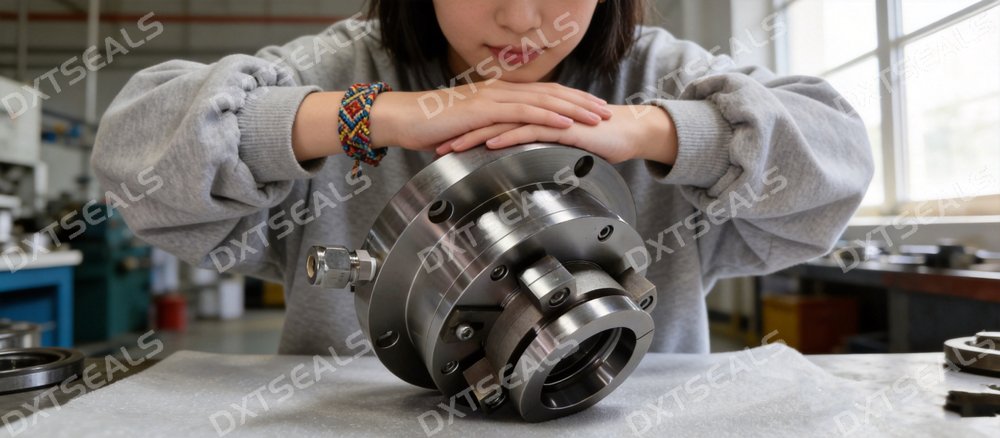
As industrial equipment becomes more powerful, efficient, and process-intensive, sealing systems are expected to perform under increasingly demanding conditions. Among the most challenging environments are high-pressure and high-speed applications, where leakage control, heat management, wear resistance, and operational stability become critical to equipment reliability.
In these environments, the choice between mechanical seals and traditional sealing solutions—such as oil seals, O-rings, gaskets, and packing seals—can significantly affect service life, maintenance frequency, safety, and total operating cost.
While traditional seals remain essential in many industrial systems, their performance limits become more apparent when shaft speed increases or fluid pressure rises. Mechanical seals, by contrast, are specifically engineered to handle dynamic process sealing under more severe conditions.
This article compares mechanical seals and traditional sealing products in high-pressure and high-speed applications, explains where each solution fits best, and provides practical guidance for selecting the right seal for demanding industrial equipment.
Why High Pressure and High Speed Create Special Sealing Challenges
In standard operating environments, many sealing products can perform adequately. However, when pressure or shaft speed increases, the sealing system is exposed to additional mechanical, thermal, and tribological stress.
High-pressure conditions typically increase:
- Fluid leakage risk
- Seal face loading
- Extrusion force on elastomers
- Structural stress on sealing components
- Safety and environmental risks if leakage occurs
High-speed conditions typically increase:
- Frictional heat generation
- Surface wear
- Shaft runout sensitivity
- Dynamic instability
- Lubrication demands at the sealing interface
When high pressure and high speed occur together, the challenge becomes even greater. The seal must not only prevent leakage, but also maintain stability, control heat, resist wear, and tolerate pressure fluctuations without damaging the shaft or surrounding components.
This is why not all sealing technologies are equally suitable for these conditions.
Understanding the Two Main Sealing Categories
Before comparing their performance, it is useful to define what is meant by traditional seals and mechanical seals.
Traditional Seals: Simple and Economical, but Often Limited Under Extreme Conditions
Traditional sealing products generally include:
- Oil seals (radial shaft seals)
- O-rings
- Gaskets
- Packing seals
- Lip seals
- Other elastomer-based static or rotary seals
These products are widely used because they offer:
- Simple structures
- Lower cost
- Easy installation
- Broad availability
- Good performance in standard operating environments
Traditional seals remain highly effective in applications such as:
- Lubricant retention in gearboxes
- Static sealing in flanges and housings
- Basic contamination exclusion
- Moderate-duty shaft sealing
However, their limitations become more visible when pressure, speed, temperature, or media aggressiveness increases.
Mechanical Seals: Designed for Dynamic Fluid Sealing in Demanding Equipment
Mechanical seals are precision sealing systems designed mainly for rotating process equipment where leakage must be minimized under dynamic operating conditions.
A typical mechanical seal includes:
- A rotating seal face
- A stationary seal face
- Springs or bellows
- Secondary seals such as O-rings
- Metal hardware and drive elements
Unlike oil seals or packing, mechanical seals rely on a precision face-to-face sealing interface rather than a simple lip contact or compressed packing material. This allows them to achieve much better control over leakage, pressure handling, and shaft-related wear in many demanding industrial applications.
Mechanical seals are widely used in:
- Pumps
- Compressors
- Agitators
- Mixers
- Reactors
- High-duty process equipment
Performance Differences Under High-Pressure Conditions
Pressure is one of the most important factors in seal selection. A seal that performs well in a low-pressure gearbox may fail quickly in a pressurized pump or chemical reactor.
1. Leakage Control Under Pressure
Traditional Seals
Traditional seals are often limited in pressure-bearing capability.
Oil seals:
Oil seals are mainly designed for lubricant retention and contamination exclusion, not for sealing highly pressurized process fluids. Excess pressure can:
- Deform the sealing lip
- Increase lip wear
- Cause leakage or blowout
- Reduce service life
O-rings:
O-rings can handle moderate pressure and may work well in static applications. However, in dynamic systems or poorly designed grooves, high pressure can lead to:
- Extrusion
- nibbling damage
- accelerated wear
Packing seals:
Packing can tolerate certain pressure levels, but usually allows some controlled leakage and often requires regular adjustment.
Mechanical Seals
Mechanical seals are much better suited to pressurized fluid sealing because their sealing principle is specifically designed for this purpose.
In high-pressure pumps or process systems, mechanical seals offer:
- More stable sealing under pressure
- Much lower leakage rates
- Better control of seal face loading
- Reduced risk of fluid loss and emissions
Balanced mechanical seal designs are especially important in high-pressure service because they reduce the closing force on the seal faces, helping to control friction and temperature.
2. Structural Stability Under Pressure
Traditional Seals
Traditional seals often depend on elastomer deformation or lip contact to create sealing force. Under high pressure, this can create structural limitations such as:
- Seal lip distortion
- Elastomer extrusion into gaps
- increased contact stress on the shaft
- reduced dimensional stability
Mechanical Seals
Mechanical seals are structurally better suited for pressure-bearing service because:
- Seal faces are supported by engineered hardware
- Springs or bellows maintain controlled contact
- Face geometry can be optimized for pressure balance
- Material combinations can be selected for pressure resistance
This makes mechanical seals a more reliable choice when fluid pressure becomes a major part of the application challenge.
Performance Differences Under High-Speed Conditions
High shaft speed creates a completely different sealing challenge. At elevated speeds, friction, heat generation, vibration, and surface wear become dominant factors.
1. Friction and Heat Generation
Traditional Seals
Traditional rotary seals such as oil seals and packing seals generally create continuous contact friction against the shaft.
At higher speeds, this can result in:
- Rapid temperature rise
- accelerated lip wear
- hardening or degradation of elastomer materials
- shaft scoring
- loss of sealing effectiveness
Oil seals can perform well in moderate-speed applications, but when shaft speed increases beyond the seal’s design capability, heat buildup becomes a major limiting factor.
Packing seals also create significant friction and often require leakage for cooling and lubrication.
Mechanical Seals
Mechanical seals are designed to operate with a very thin lubricating film between two precision seal faces. This design helps reduce the kind of shaft-lip friction seen in traditional seals.
In high-speed applications, mechanical seals generally provide:
- Better thermal control
- Lower shaft wear
- More stable dynamic performance
- longer operating life when correctly selected
Because the sealing interface is engineered specifically for rotary process service, mechanical seals are usually the preferred option in high-speed pumps and compressors.
2. Shaft Wear and Surface Damage
Traditional Seals
Oil seals and packing seals are in direct contact with the shaft or sleeve. Over time, especially under high speed, this can lead to:
- Shaft grooving
- lip wear
- reduced sealing effectiveness
- more frequent replacement of shafts or sleeves
This is a major disadvantage in equipment that runs continuously or at elevated rotational speed.
Mechanical Seals
Mechanical seals typically reduce shaft wear because the main sealing action occurs between the seal faces rather than directly on the shaft surface.
Advantages include:
- Longer shaft life
- lower maintenance cost
- better dimensional stability over time
This is especially valuable in industrial equipment where downtime and shaft replacement are expensive.
Mechanical Seals vs Traditional Seals in Combined High-Pressure and High-Speed Conditions
When pressure and speed are both high, the performance gap between mechanical seals and traditional seals becomes even more obvious.
In such conditions, the sealing system must resist:
- Pressure-induced leakage
- frictional heat
- shaft movement and vibration
- face or lip wear
- material degradation
- possible safety risks from leakage
Traditional seals may still be used in auxiliary locations of the equipment, but they are usually not the best primary sealing solution for the main process fluid.
Mechanical seals are preferred because they can be engineered with:
- balanced face designs
- advanced face materials such as Silicon Carbide or Tungsten Carbide
- metal bellows or heavy-duty spring systems
- double-seal arrangements for hazardous media
- flushing or cooling systems to manage heat and contamination
For demanding pumps, compressors, and reactors, this makes mechanical seals the more reliable option.
Typical Equipment Comparison: Why Different Machines Use Different Solutions
The sealing method is not determined by pressure or speed alone. It also depends on the equipment’s sealing objective.
Gearboxes and Electric Motors: Traditional Seals Often Remain Sufficient
Gearboxes and electric motors usually require sealing for:
- Lubricant retention
- dust exclusion
- moderate-speed shaft protection
- low internal pressure environments
In these applications, oil seals are often sufficient because the system is not sealing a pressurized process fluid. Even if shaft speed is moderate to relatively high, a properly selected oil seal may still be the most practical and economical choice.
This is why traditional seals remain dominant in many drivetrain and bearing-related applications.
Pumps and Compressors: Mechanical Seals Become More Important
Pumps and compressors often handle:
- pressurized fluids or gases
- hazardous chemicals
- hot liquids
- continuous-duty operation
- strict environmental leakage limits
Under these conditions, sealing requirements go far beyond simple oil retention. The system needs:
- low leakage
- pressure resistance
- stable performance at speed
- long service life
This is why mechanical seals are the standard choice in many pumps and compressors operating under high pressure or high speed.
Mixers, Agitators, and Reactors: Process Integrity Drives Seal Selection
In mixers and reactors, the shaft enters a vessel containing process media that may be:
- corrosive
- toxic
- sanitary-sensitive
- under pressure or vacuum
- temperature-sensitive
In these applications, leakage control and process integrity are critical. Mechanical seals—often double seals or cartridge seals—are usually preferred over traditional seals because they can better support demanding process requirements.
Comparison Table: Mechanical Seals vs Traditional Seals in High-Pressure / High-Speed Applications
| Performance Factor | Traditional Seals (Oil Seals, O-Rings, Packing, etc.) | Mechanical Seals |
|---|---|---|
| Pressure Capability | Limited to moderate depending on seal type | Excellent for medium to high pressure applications |
| High-Speed Suitability | Moderate to limited depending on design | Excellent when properly selected |
| Leakage Control | Moderate; often not ideal for process fluid containment | Very low leakage |
| Shaft Wear | Higher due to direct contact | Lower, because sealing occurs mainly at seal faces |
| Heat Management | More difficult at high speed | Better with lubricating film and engineered face design |
| Maintenance Frequency | Often higher | Usually lower in demanding service |
| Initial Cost | Lower | Higher |
| Application Complexity | Best for simpler sealing tasks | Best for demanding rotating process equipment |
When Traditional Seals Are Still the Better Choice
Despite the performance advantages of mechanical seals, traditional seals are still the best solution in many cases.
Choose traditional seals when:
- The application is mainly lubricant retention rather than process-fluid sealing
- Internal pressure is low
- Slight leakage is acceptable
- Equipment structure is simple and compact
- Cost sensitivity is a major concern
- Shaft speed and temperature remain within seal design limits
Examples include:
- Standard gearboxes
- electric motors
- wheel hubs
- agricultural equipment
- low-pressure utility systems
- static flange sealing
When Mechanical Seals Are the Better Choice
Mechanical seals should be strongly considered when:
- The sealed medium is a pressurized process fluid or gas
- Leakage must be minimized for safety, environmental, or product-loss reasons
- The equipment operates at high shaft speed
- Pressure and speed are both significant
- The fluid is corrosive, hot, hazardous, or expensive
- Downtime and maintenance costs are critical concerns
Examples include:
- Chemical process pumps
- refinery pumps
- high-speed compressors
- pharmaceutical mixers
- food process equipment
- industrial reactors
Selection Factors for High-Pressure and High-Speed Sealing Applications
Choosing the correct sealing solution requires evaluating the actual working conditions, not just comparing product categories.
Key factors include:
1. Pressure Level
Is the seal exposed to low pressure, moderate pressure, or high pressure?
2. Shaft Speed
What is the peripheral speed and rotational speed of the shaft?
3. Medium Type
Is the sealed medium lubricating oil, gas, slurry, solvent, acid, or sanitary fluid?
4. Temperature
Will the seal experience high operating temperature, thermal cycling, or frictional heat?
5. Leakage Tolerance
Can slight leakage be tolerated, or is near-zero leakage required?
6. Maintenance Strategy
Is the goal the lowest purchase cost or the lowest long-term total cost of ownership?
7. Equipment Design
Does the equipment have the space and structural support needed for a mechanical seal arrangement?
DXTSEALS: Sealing Solutions for Demanding High-Pressure and High-Speed Applications
At DXTSEALS, we provide both traditional sealing products and mechanical sealing solutions for industrial equipment operating under a wide range of conditions—from standard machinery to severe high-pressure and high-speed service.
Our capabilities include:
Mechanical Seals
- Standard mechanical seals
- Cartridge mechanical seals
- Double mechanical seals
- Custom mechanical seals for pumps, compressors, and mixers
- Material combinations for corrosive, high-speed, or high-pressure applications
Traditional Sealing Products
- Oil seals
- O-rings
- PTFE seals
- Spring-energized seals
- Other industrial sealing components
Engineering Support
- Seal selection based on working conditions
- Reverse engineering from drawings or samples
- Material selection assistance
- Custom design for non-standard applications
- CNC precision manufacturing and quality control
Whether you need a cost-effective traditional seal for a gearbox or a high-performance mechanical seal for a demanding pump or compressor, DXTSEALS can help match the sealing solution to the actual operating environment.
Conclusion
High-pressure and high-speed operating conditions place far greater demands on sealing systems than ordinary industrial service. Under these conditions, the differences between mechanical seals and traditional sealing products become much more significant.
Traditional seals such as oil seals, O-rings, and packing remain practical and economical for many low-pressure, lubricant-retention, and static sealing applications. However, when the application involves pressurized process fluids, high shaft speed, strict leakage control, and demanding reliability requirements, mechanical seals generally offer clear advantages in leakage performance, pressure handling, wear resistance, and long-term operational stability.
The correct sealing solution depends on the actual equipment design and operating conditions—not on product category alone. By evaluating pressure, speed, media, temperature, leakage tolerance, and maintenance goals, engineers can select the most effective seal for both performance and cost control.
With broad manufacturing capabilities and experience across both traditional and advanced sealing technologies, DXTSEALS supports customers with reliable sealing solutions for high-pressure, high-speed, and other demanding industrial applications.