
Introduction
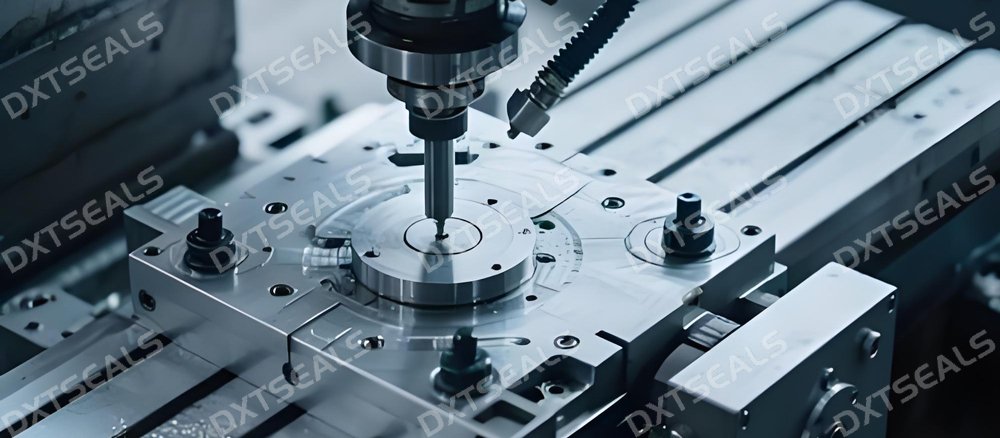
In precision metal machining, tolerance control is critical to ensuring component functionality, interchangeability, and long-term reliability. Even minor deviations can affect assembly performance, sealing integrity, and mechanical stability.
This article explores the key principles of tolerance control in metal machining and introduces common quality inspection methods used to ensure dimensional accuracy.
What Is Tolerance in Metal Machining?
Tolerance refers to the allowable variation in a physical dimension of a machined part. It defines the acceptable range between the maximum and minimum limits of a measurement.
Proper tolerance control ensures:
-
Accurate part assembly
-
Functional reliability
-
Reduced mechanical failure risk
-
Consistent production quality
Importance of Tolerance Control
In high-precision industries, tolerance directly impacts:
-
Fit between mating components
-
Rotational balance and concentricity
-
Sealing performance
-
Load-bearing capacity
At DXTSEALS, strict tolerance control is applied to ensure precision and stability in industrial metal components and sealing-related parts.
Key Points of Tolerance Control in Metal Machining
1. Design-Stage Tolerance Optimization
Tolerance should be defined based on functional requirements. Overly tight tolerances increase manufacturing costs, while loose tolerances may compromise performance.
2. Stable Machining Process
Consistent cutting parameters, tool selection, and machine calibration are essential to maintaining dimensional stability.
3. Tool Wear Monitoring
Tool wear significantly affects dimensional accuracy. Regular tool inspection and timely replacement help maintain tolerance consistency.
4. Thermal Control
Temperature variations can cause material expansion or contraction. Controlling heat during machining improves dimensional precision.
5. Rigid Fixturing and Machine Stability
Secure workholding systems reduce vibration and deformation, ensuring accurate results.
Common Quality Inspection Methods
1. Vernier Calipers and Micrometers
Used for routine dimensional measurements with good accuracy for standard tolerances.
2. Coordinate Measuring Machine (CMM)
CMM provides high-precision three-dimensional measurements, suitable for complex geometries and tight tolerances.
3. Surface Roughness Testing
Surface finish directly impacts performance, especially in sealing and friction-sensitive applications.
4. Optical Measurement Systems
Non-contact measurement ensures precision without physically affecting delicate components.
5. In-Process Inspection
Real-time monitoring during machining helps detect deviations early and reduce scrap rates.
Factors Affecting Machining Tolerances
-
Material properties
-
Machine accuracy
-
Cutting parameters
-
Environmental temperature
-
Operator skill and process control
Understanding these factors helps improve production consistency.
Applications Requiring Strict Tolerance Control
Tolerance control is especially critical in:
-
Aerospace components
-
Energy and power equipment
-
Industrial automation systems
-
Medical equipment
-
Precision sealing housings and structural parts
In sealing systems, dimensional accuracy directly influences leakage prevention and operational stability.
Balancing Cost and Precision
While tighter tolerances improve performance, they increase machining complexity and cost. Effective tolerance management finds the right balance between performance requirements and economic efficiency.
Conclusion
Tolerance control is a fundamental aspect of precision metal machining. By implementing optimized design standards, stable machining processes, advanced inspection equipment, and strict quality management, manufacturers can ensure consistent dimensional accuracy and long-term component reliability.
Combining precision machining with comprehensive quality inspection methods enables manufacturers to meet the demanding standards of modern industrial applications.