
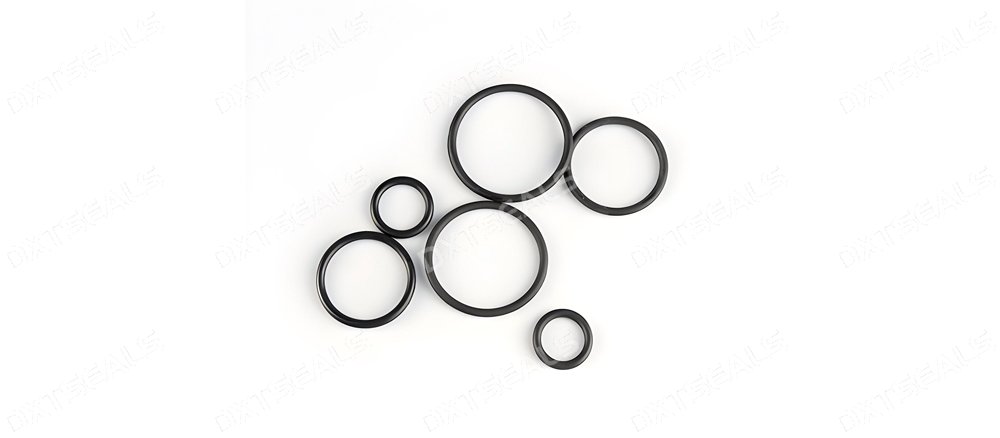
Sealing products are essential to the reliability, efficiency, and safety of industrial equipment. Whether the goal is to prevent fluid leakage, retain lubricants, exclude contaminants, or maintain process integrity, selecting the correct sealing solution has a direct impact on equipment performance, service life, and maintenance costs.
Among the many sealing technologies used in industrial systems, O-rings, oil seals, spring-energized seals, and mechanical seals are four of the most common and important categories. Although all of them serve a sealing function, they differ significantly in structure, sealing principle, pressure capability, speed resistance, chemical compatibility, and suitable applications.
Because different equipment and operating conditions require different sealing strategies, there is no universal sealing product that fits every situation. A sealing solution that performs well in a static hydraulic joint may be completely unsuitable for a high-speed chemical pump, while a seal designed for dynamic rotary shafts may not be the best choice for ultra-clean semiconductor equipment.
This article provides a comprehensive comparison of O-rings, oil seals, spring-energized seals, and mechanical seals, and explains how to select the right sealing solution based on actual operating conditions.
Why Different Sealing Products Exist
Industrial equipment operates under highly diverse conditions. Some systems involve static sealing, while others require dynamic sealing around reciprocating or rotating shafts. Some media are clean and non-corrosive, while others are abrasive, chemically aggressive, high-temperature, or under pressure.
As a result, sealing products have evolved into different categories, each optimized for a particular function.
In general:
- O-rings are widely used for static sealing and simple dynamic sealing.
- Oil seals are commonly used for lubricant retention and contamination exclusion in rotating shafts.
- Spring-energized seals are selected for demanding applications involving low friction, chemical resistance, or extreme temperatures.
- Mechanical seals are used where leakage control is critical in rotating process equipment such as pumps, compressors, and mixers.
Understanding these functional differences is the first step in selecting the correct seal.
1. O-Rings: Simple, Versatile, and Cost-Effective Sealing Elements
O-rings are among the most widely used sealing products in industrial applications. Their design is simple: a circular elastomer ring with a round cross-section that is compressed between two mating surfaces to create a seal.
Typical applications of O-rings
- Hydraulic systems
- Pneumatic systems
- Valves and fittings
- Static flange connections
- Cylinders and pistons
- Automotive components
- General industrial equipment
Main advantages of O-rings
- Simple structure
- Low manufacturing cost
- Easy installation
- Wide range of material options
- Effective for static sealing
- Suitable for some low-speed reciprocating or rotary applications
Main limitations of O-rings
- Limited performance in high-speed rotary sealing
- Potential extrusion under high pressure if groove design is inadequate
- Friction and wear in dynamic applications
- Material compatibility limitations depending on media and temperature
O-rings are often the first choice for standard static sealing because they are economical and easy to integrate into equipment design. However, when pressure, speed, chemical resistance, or motion complexity increases, more specialized sealing solutions may be required.
2. Oil Seals: Rotary Shaft Seals for Lubricant Retention
Oil seals, also known as radial shaft seals, are designed mainly for rotary shaft applications where the primary task is to keep lubricating oil or grease inside the housing while preventing dust, dirt, or moisture from entering.
A typical oil seal consists of:
- An elastomer sealing lip
- A metal reinforcement case
- A garter spring in many designs
Typical applications of oil seals
- Gearboxes
- Electric motors
- Bearings
- Automotive transmissions
- Agricultural machinery
- Industrial reducers
- Axles and wheel hubs
Main advantages of oil seals
- Compact design
- Cost-effective for rotary shaft sealing
- Good lubricant retention capability
- Effective contamination exclusion
- Easy replacement and installation
Main limitations of oil seals
- Not ideal for high-pressure sealing
- Lip wear can occur over time
- Shaft surface quality strongly affects performance
- Limited suitability for aggressive chemicals or very high temperatures unless special materials are used
Oil seals are highly effective in equipment where the sealing duty is mainly lubrication retention rather than sealing pressurized process fluids. This is why they are common in gearboxes and motors but not typically used as the primary seal in chemical pumps.
3. Spring-Energized Seals: High-Performance PTFE-Based Sealing for Extreme Conditions
Spring-energized seals, often called spring-energized PTFE seals, are advanced sealing products designed for applications where conventional elastomer seals are insufficient.
They usually consist of:
- A PTFE or other polymer sealing jacket
- An internal metal spring that provides continuous sealing force
The spring compensates for wear, thermal expansion, pressure variation, and low-elasticity behavior of PTFE, helping the seal maintain reliable contact over time.
Typical applications of spring-energized seals
- Semiconductor equipment
- Chemical processing systems
- Valves and pumps
- Medical and pharmaceutical equipment
- Aerospace systems
- Food processing machinery
- Cryogenic or high-temperature environments
Main advantages of spring-energized seals
- Excellent chemical resistance
- Very wide temperature capability
- Low friction performance
- Suitable for ultra-clean applications
- Good sealing performance in low-pressure and vacuum conditions
- Available for static, reciprocating, and some rotary applications depending on design
Main limitations of spring-energized seals
- Higher cost than standard O-rings and oil seals
- More complex design and manufacturing
- Application suitability depends heavily on seal profile and spring type
- Not a direct substitute for mechanical seals in high-speed rotating pump shaft applications
Spring-energized seals are especially valuable when elastomer seals cannot tolerate the media, temperature, cleanliness, or friction requirements of the application. In industries such as semiconductor, chemical, and pharmaceutical manufacturing, they are often used to solve sealing challenges that standard rubber seals cannot handle.
4. Mechanical Seals: Precision Dynamic Sealing for Rotating Process Equipment
Mechanical seals are highly specialized sealing devices used primarily in rotating equipment where fluid leakage must be tightly controlled.
A typical mechanical seal includes:
- A rotating seal face
- A stationary seal face
- Springs or bellows
- Secondary seals
- Metal hardware and drive components
Unlike oil seals or O-rings, mechanical seals are designed specifically to seal process fluids around rotating shafts in equipment such as pumps, compressors, and mixers.
Typical applications of mechanical seals
- Centrifugal pumps
- Chemical process pumps
- Compressors
- Agitators and mixers
- Reactors
- Water treatment equipment
- Food and pharmaceutical pumps
- Marine and energy systems
Main advantages of mechanical seals
- Very low leakage rates
- Excellent performance in pressurized fluid systems
- Suitable for demanding rotary applications
- Reduced shaft wear compared with packing seals
- Long service life when correctly selected and installed
- Capable of handling corrosive, high-temperature, or hazardous media with proper material selection
Main limitations of mechanical seals
- Higher initial cost
- More complex installation and alignment requirements
- Sensitive to dry running or improper operating conditions
- Usually unnecessary for simple lubricant-retention applications like standard gearboxes
Mechanical seals are typically selected when the sealed medium is a process fluid and when leakage control, environmental compliance, safety, and long-term reliability are critical.
Performance Comparison: O-Rings vs Oil Seals vs Spring-Energized Seals vs Mechanical Seals
To understand where each sealing solution fits best, it is helpful to compare them across key performance dimensions.
1. Sealing Function and Motion Type
O-Rings
Best suited for:
- Static sealing
- Some reciprocating sealing
- Limited low-speed dynamic applications
Oil Seals
Best suited for:
- Rotary shaft sealing
- Lubricant retention
- Dust exclusion
Spring-Energized Seals
Best suited for:
- Static sealing
- Reciprocating sealing
- Specialized low-friction rotary or linear sealing
- Chemical and high-temperature applications
Mechanical Seals
Best suited for:
- Dynamic sealing of rotating shafts
- Process fluid sealing in pumps, compressors, and mixers
2. Pressure Capability
O-Rings
O-rings can handle moderate pressure, and in some cases high pressure when properly supported by groove design and backup rings. However, they are not ideal for every high-pressure dynamic application.
Oil Seals
Oil seals are generally intended for low-pressure or near-zero-pressure environments. Excessive pressure can deform the sealing lip and reduce performance.
Spring-Energized Seals
Spring-energized seals can be designed for a wide range of pressures depending on profile, spring design, and support geometry. They often perform better than standard elastomer seals in demanding pressure environments.
Mechanical Seals
Mechanical seals are highly suitable for pressurized process systems and are widely used in medium- to high-pressure applications.
3. Speed Capability
O-Rings
Not ideal for high-speed rotary applications due to friction and heat buildup.
Oil Seals
Suitable for moderate shaft speeds, depending on shaft finish, lubrication, and material selection.
Spring-Energized Seals
Speed capability varies depending on seal design, material, and lubrication conditions. They can perform well in certain low-friction dynamic systems but are not automatically the best choice for every high-speed rotary shaft.
Mechanical Seals
Mechanical seals are specifically designed for high-speed rotating equipment and provide much better performance in pumps, compressors, and industrial process systems.
4. Chemical Resistance
O-Rings
Chemical resistance depends entirely on elastomer material such as NBR, EPDM, FKM, or FFKM.
Oil Seals
Oil seal performance also depends on elastomer choice. Standard NBR seals may not tolerate aggressive chemicals or extreme temperatures.
Spring-Energized Seals
This is one of the strongest areas of spring-energized PTFE seals. PTFE-based materials offer excellent chemical compatibility across a wide range of aggressive media.
Mechanical Seals
Mechanical seals can also achieve excellent chemical resistance through proper selection of face materials, elastomers, and metal parts, but the design is more complex because multiple materials are involved.
5. Temperature Capability
O-Rings
Temperature range depends on the elastomer used. Standard materials have limitations in very high or very low temperatures.
Oil Seals
Again, temperature performance depends on material selection, with standard designs generally limited compared with advanced PTFE-based seals.
Spring-Energized Seals
Spring-energized seals often offer the widest temperature range because PTFE and engineered polymers can perform in both high-temperature and cryogenic conditions.
Mechanical Seals
Mechanical seals can also handle a wide temperature range, especially when using specialized face materials and metal bellows designs.
6. Leakage Control
O-Rings
Very effective for static sealing when properly designed and installed.
Oil Seals
Good for lubricant retention but not intended for near-zero leakage of pressurized process fluids.
Spring-Energized Seals
Can provide excellent leakage control in static, reciprocating, and specialized applications, especially where chemical compatibility and low friction are required.
Mechanical Seals
Generally the best choice for minimizing leakage in rotating process equipment.
7. Cost and Complexity
O-Rings
Lowest cost and simplest design.
Oil Seals
Still relatively low cost and easy to replace.
Spring-Energized Seals
Higher cost because of advanced materials, precision manufacturing, and specialized design.
Mechanical Seals
Typically the most complex and expensive of the four, but often justified by the performance benefits in demanding applications.
Quick Comparison Table
| Seal Type | Main Function | Typical Motion | Pressure Capability | Speed Capability | Chemical Resistance | Cost Level | Typical Applications |
|---|---|---|---|---|---|---|---|
| O-Ring | Static and simple dynamic sealing | Static / reciprocating | Moderate | Low in rotary use | Depends on elastomer | Low | Valves, cylinders, fittings, flanges |
| Oil Seal | Lubricant retention and contamination exclusion | Rotary | Low | Moderate | Depends on elastomer | Low to medium | Gearboxes, motors, bearings |
| Spring-Energized Seal | High-performance sealing in harsh environments | Static / reciprocating / specialized dynamic | Medium to high | Application-dependent | Excellent | Medium to high | Semiconductor, chemical, pharmaceutical, valves |
| Mechanical Seal | Process fluid sealing in rotating equipment | Rotary | Medium to high | High | Excellent with correct material selection | High | Pumps, compressors, mixers, reactors |
How to Choose the Right Sealing Solution
Choosing the correct sealing product depends on the real operating conditions rather than product popularity alone.
Choose an O-Ring When:
- The application is primarily static sealing
- Cost control is important
- Groove design is standardized
- The medium and temperature are compatible with available elastomers
- Motion is limited or low-speed
Examples:
- Hydraulic fittings
- Pneumatic cylinders
- Valve bodies
- Flange joints
Choose an Oil Seal When:
- The main purpose is retaining oil or grease
- The shaft is rotating
- Internal pressure is low
- The equipment is a gearbox, motor, reducer, or bearing system
- Compact and economical sealing is needed
Examples:
- Industrial gearboxes
- Electric motors
- Automotive axles
- Agricultural rotating shafts
Choose a Spring-Energized Seal When:
- The application involves aggressive chemicals
- Temperature is too high or too low for normal elastomers
- Low friction is important
- Cleanliness or media purity is critical
- The system requires advanced PTFE-based sealing performance
Examples:
- Semiconductor equipment
- Chemical valves
- Pharmaceutical machinery
- Cryogenic systems
- High-purity fluid handling
Choose a Mechanical Seal When:
- The equipment contains a rotating shaft and process fluid
- Leakage control is critical
- The system operates under pressure
- The media may be hazardous, corrosive, or expensive
- Long-term reliability is more important than the lowest initial cost
Examples:
- Chemical pumps
- Compressors
- Mixers and agitators
- Water treatment pumps
- Food and pharmaceutical process equipment
Why Selection Must Be Based on Equipment Type and Operating Conditions
A common mistake in seal selection is to compare products only by material or price, without considering the actual function of the seal inside the equipment.
For example:
- An O-ring may work perfectly in a static valve body but fail quickly in a high-speed rotary shaft.
- An oil seal may be ideal for a gearbox but completely unsuitable for sealing a pressurized chemical pump.
- A spring-energized seal may outperform elastomer seals in a semiconductor valve, yet it is not a direct replacement for a mechanical seal in all pump applications.
- A mechanical seal may provide excellent process-fluid sealing, but it would be unnecessarily complex and expensive for a simple motor bearing housing.
The best sealing solution is always the one that matches the actual equipment design, motion type, media, temperature, pressure, and maintenance goals.
DXTSEALS: Comprehensive Sealing Solutions for Different Industrial Applications
At DXTSEALS, we provide a broad range of sealing products to meet the needs of different equipment and operating environments.
Our product capabilities include:
Traditional and Polymer Sealing Products
- O-rings
- Oil seals
- PTFE seals
- Spring-energized seals
- Custom sealing rings
Mechanical Sealing Solutions
- Standard mechanical seals
- Cartridge mechanical seals
- Double mechanical seals
- OEM-equivalent replacements
- Non-standard custom mechanical seals
Engineering and Manufacturing Support
- Material selection assistance
- Seal design optimization
- Reverse engineering from samples or drawings
- CNC precision machining
- Support for both standard models and custom applications
Whether the application requires a cost-effective O-ring, a rotary oil seal, a high-performance spring-energized seal, or a mechanical seal for demanding process equipment, DXTSEALS can help customers select and manufacture the right solution.
Conclusion
O-rings, oil seals, spring-energized seals, and mechanical seals each serve a different purpose in industrial sealing systems. They are not interchangeable in every situation because each technology is designed for a different balance of pressure resistance, speed capability, friction control, chemical compatibility, leakage performance, and cost.
O-rings remain the most economical choice for many static sealing applications. Oil seals are ideal for retaining lubricants in rotary shaft systems such as gearboxes and motors. Spring-energized seals offer advanced PTFE-based performance in harsh chemical, temperature, and clean-environment applications. Mechanical seals are the preferred solution for pumps, compressors, mixers, and other rotating equipment where process-fluid leakage must be minimized.
By understanding the strengths and limitations of each sealing technology, engineers and buyers can make more informed decisions and improve equipment reliability, service life, and overall operating efficiency.
With extensive product coverage and custom manufacturing capabilities, DXTSEALS provides reliable sealing solutions for diverse industrial applications—from standard sealing components to advanced mechanical seal systems.