
Introduction
High-end equipment manufacturing demands extreme precision, reliability, and consistency. Precision metal machining plays a critical role in producing complex components that meet strict performance and quality requirements.
This article explores how precision metal machining enables innovation and reliability in high-end equipment manufacturing across multiple industries.
What Is Precision Metal Machining?
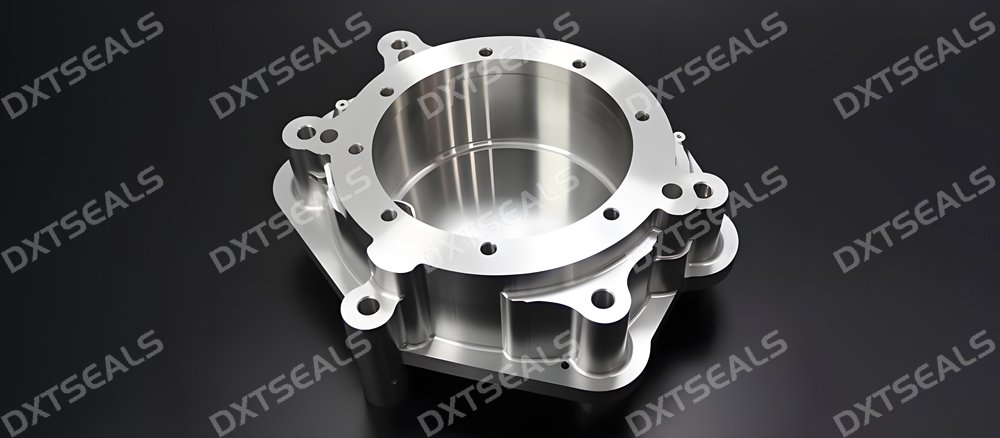
Precision metal machining refers to advanced CNC processes capable of producing parts with tight tolerances, complex geometries, and high-quality surface finishes. It integrates high-precision machines, advanced tooling, and strict process control.
Key Requirements in High-End Equipment Manufacturing
High-end equipment typically requires:
-
Tight dimensional tolerances
-
High structural strength
-
Long service life
-
Stable performance under extreme conditions
Precision machining ensures that these requirements are consistently met.
Key Advantages of Precision Metal Machining
High Dimensional Accuracy
Precision CNC machining achieves micron-level tolerances, ensuring accurate part assembly and reliable system performance.
Excellent Surface Quality
High-quality surface finishes reduce friction, wear, and fatigue, extending component lifespan.
Complex Geometry Capability
Multi-axis CNC machining enables the production of complex and integrated component designs.
Material Versatility
Precision machining supports a wide range of materials, including stainless steel, aluminum alloys, titanium alloys, and copper alloys.
At DXTSEALS, precision metal machining supports the production of high-performance components for demanding industrial environments.
Applications in High-End Equipment Manufacturing
Aerospace and Aviation
Precision-machined metal components are used in aircraft structures, engine systems, and critical assemblies where safety and reliability are paramount.
Energy and Power Equipment
High-precision components ensure stable operation in turbines, power generation systems, and high-pressure equipment.
Industrial Automation and Robotics
Precision machining enables compact, lightweight, and high-accuracy components for automation systems.
Medical and Scientific Equipment
Precision metal parts are essential for medical devices and scientific instruments requiring strict accuracy and cleanliness.
Sealing and Precision Hardware
Precision machining is widely applied in seal housings, glands, and support components used in high-performance sealing systems.
Precision Machining and Quality Control
High-end equipment manufacturing relies on strict quality control, including in-process inspection and final dimensional verification. Precision machining processes ensure repeatability and consistency in mass production.
Future Trends in Precision Metal Machining
As high-end equipment continues to evolve, precision machining is advancing toward higher accuracy, automation, and digital manufacturing technologies.
Conclusion
Precision metal machining is a foundational technology in high-end equipment manufacturing, enabling superior performance, reliability, and innovation.
By leveraging advanced machining processes and quality control, manufacturers can meet the growing demands of high-end industrial applications with confidence and efficiency.