
Introduction
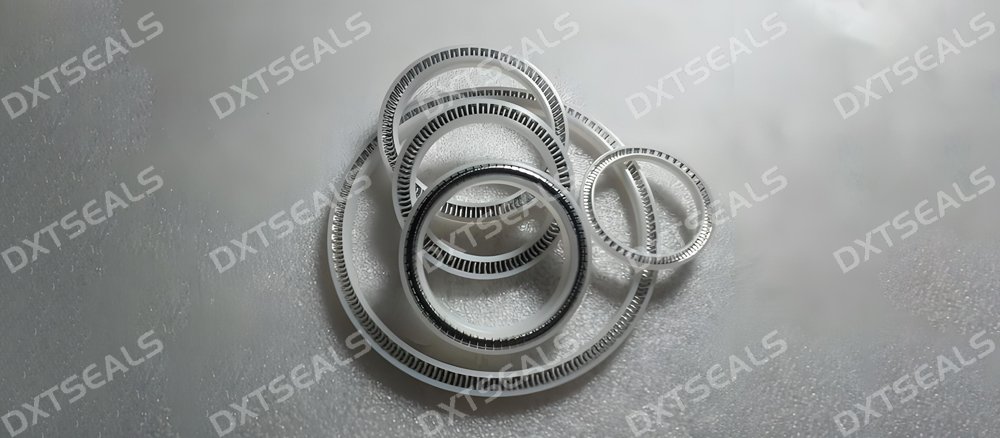
Spring energized seals are widely used in industries requiring high sealing reliability, chemical resistance, and low friction performance. The sealing jacket material plays a critical role in determining:
- Wear resistance
- Friction characteristics
- Pressure capability
- Temperature resistance
- Service life
Among the most commonly used materials are:
- Virgin PTFE (Pure PTFE)
- Glass-filled PTFE
- Carbon-filled PTFE
Each material offers different performance characteristics and is suitable for different operating conditions.
This article provides a detailed comparison of these common spring energized seal materials to help engineers select the most suitable solution. At DXTSEALS, we provide customized material recommendations based on specific industrial applications.
1. Why PTFE Is Widely Used in Spring Energized Seals
PTFE (Polytetrafluoroethylene) is one of the most important sealing materials because of its unique properties:
- Excellent chemical resistance
- Wide operating temperature range
- Extremely low friction coefficient
- Non-stick surface characteristics
However, pure PTFE also has certain limitations such as:
- Low mechanical strength
- High creep deformation under load
- Moderate wear resistance
To improve performance, fillers such as glass fiber and carbon are commonly added.
2. Virgin PTFE (Pure PTFE)
Main Characteristics
Virgin PTFE contains no fillers and offers the purest form of PTFE performance.
Advantages
- Outstanding chemical resistance
- Very low friction coefficient
- Excellent high and low temperature stability
- Suitable for high-purity applications
Limitations
- Lower wear resistance
- Higher creep under pressure
- Reduced dimensional stability under heavy load
Typical Applications
Virgin PTFE is commonly used in:
- Semiconductor equipment
- Pharmaceutical systems
- Food processing machinery
- Strong chemical environments
Performance Summary
| Property | Virgin PTFE |
|---|---|
| Chemical Resistance | Excellent |
| Friction Performance | Excellent |
| Wear Resistance | Moderate |
| Mechanical Strength | Low |
| Pressure Resistance | Moderate |
| Purity Level | Excellent |
3. Glass-Filled PTFE
Main Characteristics
Glass-filled PTFE typically contains glass fiber additives to improve structural strength and dimensional stability.
Advantages
- Improved compressive strength
- Better wear resistance
- Reduced creep deformation
- Enhanced dimensional stability
Limitations
- Slightly higher friction than virgin PTFE
- May increase wear on soft mating surfaces
- Slightly reduced chemical resistance in some environments
Typical Applications
Glass-filled PTFE is widely used in:
- Hydraulic systems
- Industrial pumps and valves
- Medium-to-high pressure applications
- General industrial machinery
Performance Summary
| Property | Glass-Filled PTFE |
|---|---|
| Chemical Resistance | Very Good |
| Friction Performance | Good |
| Wear Resistance | Good |
| Mechanical Strength | Good |
| Pressure Resistance | Good |
| Dimensional Stability | Excellent |
4. Carbon-Filled PTFE
Main Characteristics
Carbon-filled PTFE combines PTFE with carbon materials to improve wear resistance and thermal performance.
Advantages
- Excellent wear resistance
- Improved thermal conductivity
- Better resistance to deformation
- Lower friction under dynamic conditions
- Excellent performance in dry-running applications
Limitations
- Less suitable for strong oxidizing environments
- Slightly lower chemical resistance than virgin PTFE
Typical Applications
Carbon-filled PTFE is commonly used in:
- Compressors
- High-speed rotating equipment
- Dynamic sealing systems
- Aerospace and oil & gas equipment
Performance Summary
| Property | Carbon-Filled PTFE |
|---|---|
| Chemical Resistance | Good |
| Friction Performance | Excellent |
| Wear Resistance | Excellent |
| Mechanical Strength | Good |
| Pressure Resistance | Good |
| Thermal Conductivity | Excellent |
5. Overall Material Performance Comparison
| Property | Virgin PTFE | Glass-Filled PTFE | Carbon-Filled PTFE |
|---|---|---|---|
| Chemical Resistance | Excellent | Very Good | Good |
| Friction Level | Very Low | Medium | Low |
| Wear Resistance | Moderate | Good | Excellent |
| Mechanical Strength | Low | Good | Good |
| Pressure Capability | Moderate | Good | Good |
| Thermal Conductivity | Low | Moderate | Excellent |
| Dynamic Sealing Performance | Good | Moderate | Excellent |
6. Material Selection Based on Working Conditions
High Chemical Corrosion Environments
Recommended:
- Virgin PTFE
Reason: maximum chemical compatibility and purity.
High-Pressure Applications
Recommended:
- Glass-filled PTFE
Reason: improved compressive strength and dimensional stability.
Dynamic and High-Speed Applications
Recommended:
- Carbon-filled PTFE
Reason: excellent wear resistance and low friction under motion.
High-Purity Systems
Recommended:
- Virgin PTFE
Typical industries include semiconductor and pharmaceutical manufacturing.
Heavy Wear Conditions
Recommended:
- Carbon-filled PTFE
Especially suitable for dynamic industrial systems.
At DXTSEALS, we evaluate operating conditions carefully to select the optimal material solution.
7. Importance of Matching Materials with Spring Structures
Material performance must also be matched with the appropriate spring design.
V-Spring Structures
Often paired with:
- Carbon-filled PTFE
- Low-friction materials
for high-speed dynamic applications.
Helical Spring Structures
Often paired with:
- Glass-filled PTFE
- High-strength materials
for high-pressure and vacuum sealing.
U-Spring Structures
Typically used with balanced-performance material combinations for general industrial applications.
8. Common Material Selection Mistakes
Using Virgin PTFE in High-Load Systems
May lead to:
- Excessive creep
- Seal deformation
- Reduced lifespan
Using Glass-Filled PTFE in Sensitive Surface Applications
Glass fibers may increase wear on softer mating materials.
Ignoring Chemical Compatibility of Carbon Fillers
Certain oxidizing environments may not be suitable for carbon-filled PTFE.
Proper engineering evaluation is essential for reliable seal performance.
Conclusion
Virgin PTFE, glass-filled PTFE, and carbon-filled PTFE each offer unique advantages for spring energized seal applications.
- Virgin PTFE provides exceptional chemical resistance and purity
- Glass-filled PTFE improves strength and dimensional stability
- Carbon-filled PTFE delivers superior wear resistance and dynamic sealing performance
Selecting the right material depends on:
- Temperature
- Pressure
- Media compatibility
- Dynamic operating conditions
- Friction and wear requirements
At DXTSEALS, we specialize in customized spring energized seal solutions with optimized PTFE material selection for demanding industrial environments.
If you need assistance selecting the right PTFE material for your spring energized seals, contact DXTSEALS today for expert guidance and customized sealing solutions.