
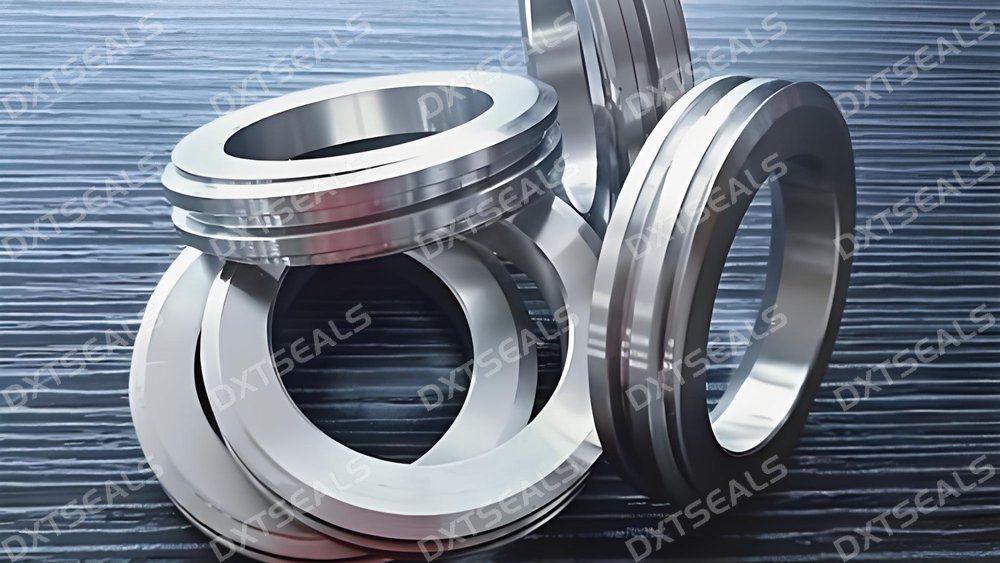
In industrial sealing applications, the mechanical performance of metals directly affects the reliability and service life of seals. When selecting a metal for sealing components or supporting structures, three key material properties must be evaluated: strength, toughness, and ductility.
This article from DXTSEALS provides a comparative overview of these properties across different metals and explains how they impact sealing performance in demanding environments.
1. Strength: Resistance to Deformation
Definition: Strength refers to a metal’s ability to withstand applied forces without permanent deformation.
-
High-Strength Metals:
-
Alloy steels and titanium alloys are known for exceptional tensile and yield strength.
-
These are ideal for high-pressure sealing systems, where dimensional stability is critical.
-
-
Moderate-Strength Metals:
-
Stainless steel (304/316) offers a good balance of strength and corrosion resistance.
-
Commonly used in marine sealing housings and chemical processing equipment.
-
-
Low-Strength Metals:
-
Aluminum alloys and pure copper have lower strength but are lightweight and conductive.
-
Best suited for low-load sealing applications or where weight reduction is essential.
-
2. Toughness: Resistance to Crack Propagation
Definition: Toughness measures a metal’s ability to absorb energy and resist fracture, especially under sudden impact or stress.
-
High Toughness Metals:
-
Nickel alloys, duplex stainless steel, and tempered steels provide excellent toughness.
-
Suitable for dynamic sealing systems exposed to shocks or vibration.
-
-
Medium Toughness Metals:
-
Aluminum alloys have moderate toughness but may suffer under high impact loads.
-
-
Lower Toughness Metals:
-
Cast iron and some brittle alloys may crack under stress, making them unsuitable for dynamic sealing.
-
3. Ductility: Ability to Deform Without Breaking
Definition: Ductility refers to a metal’s ability to stretch or deform plastically before fracture.
-
High Ductility Metals:
-
Copper, aluminum, and low-carbon steels are highly ductile.
-
Useful in gaskets, washers, and sealing rings where flexibility improves sealing contact.
-
-
Moderate Ductility Metals:
-
Stainless steels and titanium alloys maintain moderate ductility while offering higher strength.
-
-
Low Ductility Metals:
-
Hardened steels and certain ceramic-metal composites are strong but prone to brittle fracture.
-
4. How These Properties Affect Sealing Applications
-
High Strength + High Toughness:
-
Ensures seals can withstand high pressure and shock loads without deformation or fracture.
-
Example: Duplex stainless steel seals in offshore drilling equipment.
-
-
High Ductility + Moderate Strength:
-
Improves sealing adaptability and surface contact.
-
Example: Copper gaskets in automotive engines.
-
-
Balanced Performance:
-
Stainless steels and titanium alloys provide the best strength-toughness-ductility balance, making them the preferred materials for critical sealing systems.
-
5. Practical Selection Guidelines
-
For high-pressure environments → use titanium alloys or alloy steels.
-
For corrosive marine or chemical conditions → stainless steel (316, duplex) offers a strong balance.
-
For lightweight applications → consider aluminum alloys, provided strength demands are moderate.
-
For electrical or thermal sealing systems → copper and its alloys are optimal due to high ductility and conductivity.
Conclusion
Choosing the right metal for sealing components requires a clear understanding of mechanical properties. Strength ensures structural integrity, toughness resists crack propagation, and ductility enhances sealing adaptability.
At DXTSEALS, we specialize in precision sealing solutions that leverage the ideal combination of material properties to ensure durability, safety, and efficiency across industries.
📩 Contact DXTSEALS today to find the best metal sealing solutions for your specific operating conditions.