
Introduction
Extreme operating conditions—such as high temperature, high pressure, aggressive chemicals, cryogenic environments, and vacuum—place exceptional demands on sealing systems. Under these conditions, material performance becomes a decisive factor in seal reliability and service life.
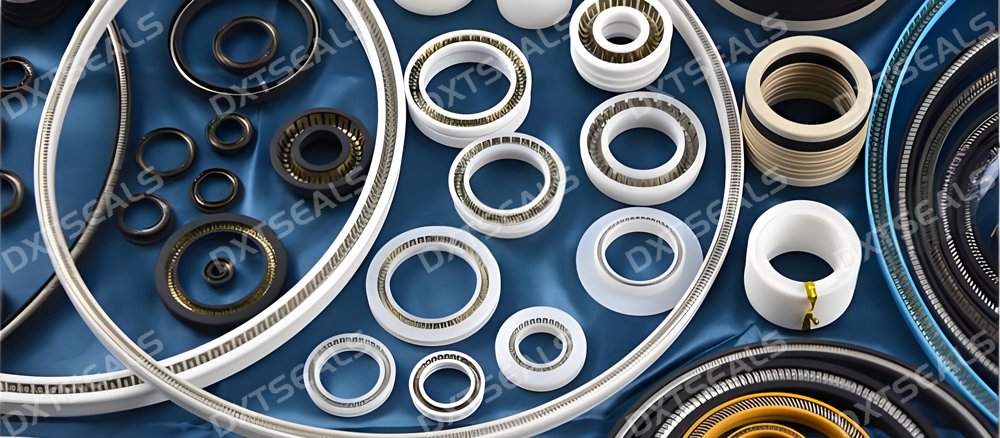
Spring-energized seals are available in a wide range of materials, each offering distinct advantages. This article compares the performance of different spring-energized seal materials when used in extreme conditions.
Why Material Selection Is Critical in Extreme Conditions
In harsh environments, sealing materials must resist:
-
Thermal expansion or contraction
-
Mechanical deformation and extrusion
-
Chemical corrosion and oxidation
-
Accelerated wear and aging
Improper material selection can lead to leakage, increased friction, or premature failure.
Common Materials Used in Spring-Energized Seals
Virgin PTFE
Virgin PTFE is widely used due to its outstanding chemical inertness and wide operating temperature range.
Performance characteristics:
-
Excellent chemical resistance
-
Very low friction
-
Suitable for extreme temperatures
Limitations:
-
Lower resistance to creep under high pressure
Filled PTFE Compounds
Filled PTFE materials incorporate fillers such as glass fiber, carbon, graphite, or bronze to enhance mechanical properties.
Performance characteristics:
-
Improved wear resistance
-
Better extrusion resistance under high pressure
-
Enhanced dimensional stability
These materials are commonly used in high-pressure and dynamic applications.
Modified PTFE
Modified PTFE materials are engineered to improve specific properties such as wear resistance, permeability, or surface hardness.
Performance characteristics:
-
Balanced chemical resistance and strength
-
Reduced gas permeability
-
Improved performance in vacuum and cryogenic environments
High-Performance Polymer Blends
In some extreme applications, advanced polymer blends are used alongside PTFE materials to achieve specialized performance.
Performance characteristics:
-
High mechanical strength
-
Excellent resistance to specific chemicals
-
Suitable for targeted extreme conditions
Performance Comparison under Extreme Conditions
| Extreme Condition | Virgin PTFE | Filled PTFE | Modified PTFE |
|---|---|---|---|
| High Temperature | Excellent | Excellent | Excellent |
| High Pressure | Moderate | Excellent | Good |
| Chemical Media | Excellent | Good–Excellent | Excellent |
| Cryogenic | Excellent | Good | Excellent |
| Vacuum | Good | Good | Excellent |
| Wear Resistance | Moderate | Excellent | Good–Excellent |
At DXTSEALS, material selection is optimized based on real operating conditions rather than a one-size-fits-all approach.
Matching Materials with Spring Design
Material performance must be evaluated together with spring type and preload. A high-strength material combined with improper spring force may increase friction, while a low-friction material with insufficient spring force may compromise sealing reliability.
Typical Extreme Condition Applications
-
Oil and gas processing equipment
-
Chemical reactors and valves
-
Cryogenic systems and LNG equipment
-
Aerospace and vacuum technology
-
Semiconductor manufacturing tools
These applications demand carefully engineered sealing solutions.
Conclusion
Different spring-energized seal materials exhibit distinct performance characteristics under extreme operating conditions. Virgin PTFE excels in chemical resistance and temperature stability, while filled and modified PTFE compounds provide enhanced mechanical strength and wear resistance.
By understanding these differences and matching materials to specific application requirements, engineers can achieve reliable sealing performance and extended service life in even the harshest environments.