
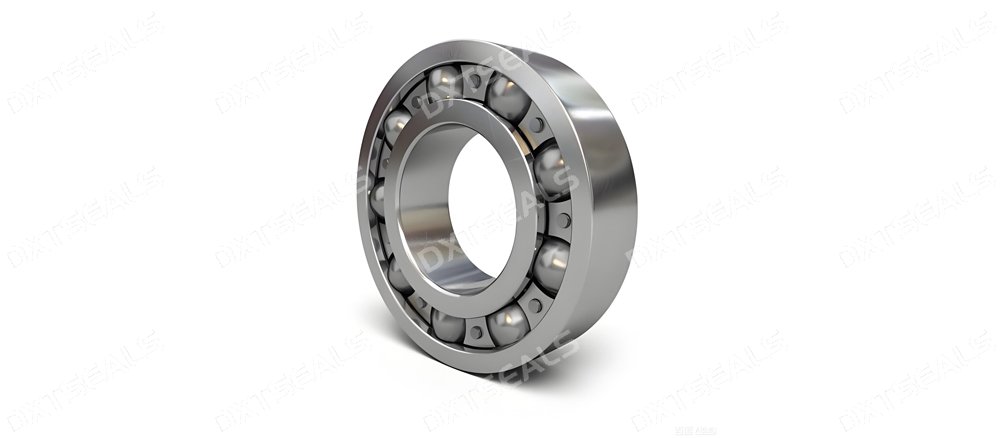
Bearings are among the most critical components in mechanical transmission systems, enabling smooth, efficient, and reliable rotation under various loads and speeds. While they may seem simple in structure, their engineering significance is huge. Bearings determine the stability, speed, and lifespan of machinery across countless industries—from automotive and compressors to robotics and heavy manufacturing. As a trusted sealing and mechanical components supplier, DXTSEALS provides precision-engineered bearings and supporting components that ensure long-term equipment stability.
1. Why Bearings Are Critical in Mechanical Transmission Systems
1.1 Supporting Rotational Motion
The primary function of a bearing is to support shafts and rotating elements, minimizing friction and allowing smooth, continuous rotation. By providing support, bearings ensure precise alignment between rotating and stationary parts.
1.2 Reducing Friction and Wear
Without bearings, metal-to-metal contact would cause rapid wear and overheating. Bearings reduce friction through rolling elements or specially designed sliding surfaces, helping machines maintain consistent performance and energy efficiency.
1.3 Improving Load-Bearing Capability
Mechanical transmission systems often face radial loads, axial loads, or a combination of both. High-quality bearings distribute these loads evenly, preventing shaft deformation and structural damage.
1.4 Ensuring Operational Stability and Safety
Machine vibrations, misalignment, and excessive friction can lead to failures or accidents. Bearings enhance stability by keeping motion accurate and controlled, which is especially important for high-speed and high-load applications.
2. Types of Bearings and Their Application Advantages
2.1 Ball Bearings
Ball bearings are used widely in electric motors, compressors, fans, and gearboxes. Their low friction and high-speed capability make them ideal for precision equipment.
2.2 Roller Bearings
Roller bearings offer greater load capacity and are suited for heavy-duty applications such as conveyors, industrial machinery, and automotive transmissions.
2.3 Thrust Bearings
Designed to support axial loads, thrust bearings are commonly found in rotating tables, automotive steering systems, and precision machine tools.
2.4 Needle Bearings
With compact sizes and high load capacity, needle bearings are essential in applications with limited space, such as power tools and automotive components.
2.5 Sliding Bearings (Plain Bearings)
These bearings provide stable support in low-speed or heavy-load environments, often used in pumps, turbines, and heavy-duty machinery.
3. Where Does Bearing Stability Come From? Key Factors Explained
3.1 Material Quality and Heat Treatment
High-grade steel or alloy materials enhance wear resistance, impact strength, and fatigue life. Proper heat treatment ensures uniform hardness and durability.
3.2 Precision Manufacturing
Stability greatly depends on tight tolerances and smooth raceway surfaces. Even minor deviations can lead to vibration, noise, and premature failure.
3.3 Lubrication Conditions
Correct lubrication reduces friction and protects bearing surfaces. Oil seals and sealing rings—such as those produced by DXTSEALS—play a key role in maintaining optimal lubrication.
3.4 Load Distribution and Alignment
Misalignment increases stress on both bearings and shafts. Proper installation and load design ensure stable, long-term performance.
3.5 Operating Environment
Temperature, humidity, dust, and chemical exposure all influence stability. Using sealed bearings or corrosion-resistant materials can significantly improve reliability.
4. Bearing Solutions from DXTSEALS
As part of our mission to support high-quality mechanical transmission systems, DXTSEALS offers:
-
Precision ball bearings and roller bearings
-
Custom bearing assemblies
-
Bearing seals and lubrication retention components
-
High-temperature and corrosion-resistant bearing solutions
-
OEM manufacturing support for specialized applications
With strict quality control and advanced material technology, DXTSEALS ensures that every bearing contributes to equipment stability and long service life.
Conclusion
The stability of mechanical transmission systems originates from the precision engineering, load capacity, and structural design of bearings. By minimizing friction, supporting rotation, and withstanding complex loads, bearings enable modern machinery to operate reliably and efficiently.
For industries seeking durable and high-performance bearing solutions, DXTSEALS provides professional products and technical support tailored to diverse application needs.