
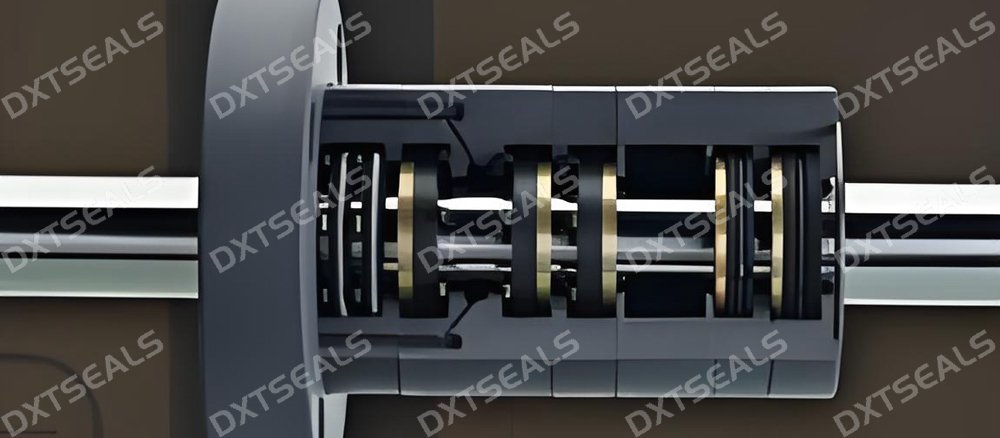
The sealing system is one of the most critical components in any air compressor. Whether it is a rotary screw compressor, piston compressor, or oil-free system, the performance of seals directly affects pressure stability, lubrication, energy efficiency, and overall equipment life. However, many compressor failures originate from seal wear, poor material choice, or improper installation. This article analyzes the most common sealing problems in air compressors and explains how selecting the right seal material can prevent downtime and extend service life. As a trusted manufacturer, DXTSEALS offers optimized sealing solutions tailored for industrial compressor applications.
1. Common Seal-Related Problems in Air Compressress
1. Oil Leakage at Shaft Seal
Shaft seals (also called oil seals) are responsible for preventing lubricating oil from escaping into the compression chamber. Oil leakage often occurs due to:
-
Seal hardening from high temperature
-
Shaft surface roughness or wear
-
Incorrect seal material selection
-
Overpressure inside the oil chamber
A leaking shaft seal not only wastes oil but also causes carbon buildup in the compression chamber and reduces efficiency.
2. Excessive Wear on Scraper Rings (Oil Scraper Rings)
Scraper rings remove excess oil from the shaft. Problems include:
-
Uneven wear due to misalignment
-
PTFE scraper rings damaged by particle contamination
-
Insufficient lubrication causing friction heat
This leads to increased oil consumption and oil carryover.
3. O-Ring Flattening or Cracking
O-rings are used in multiple sealing locations within the compressor. Common failures include:
-
Swelling in incompatible lubricants
-
Thermal aging in high-temperature zones
-
Compression set from prolonged pressure
Material mismatch—such as using NBR where FKM or HNBR is necessary—is a major cause of premature failure.
4. Pressure Loss and Air Leakage
Air leakage reduces output efficiency and increases power consumption. Typical causes:
-
Damaged housing gaskets
-
Worn PTFE seals in high-speed rotating parts
-
Installation errors or insufficient compression
Even small leaks can significantly impact compressor performance over time.
2. Why Seal Selection Is Critical for Compressor Reliability
Choosing the correct seal material and design is essential for stable operation, especially in high-speed, high-temperature, and oil-rich environments.
Key factors include:
-
Temperature resistance: PTFE and FKM outperform NBR for high-heat applications
-
Chemical compatibility: Lubricants and additives can degrade unsuitable materials
-
Wear resistance: PTFE and filled PTFE handle continuous friction better
-
Pressure tolerance: Back-pressure conditions require reinforced designs
-
Environmental conditions: Dust, moisture, and contaminants shorten seal life
A poor seal choice increases maintenance frequency, reduces energy efficiency, and risks catastrophic equipment failures.
3. Recommended Seal Types and Materials for Air Compressors
1. Shaft Seals (Oil Seals)
-
Best materials: FKM, HNBR, PTFE lip seals
-
Ideal for high temperature and oil exposure
2. PTFE Scraper Rings
-
Excellent wear resistance
-
Stable performance under high rotational speeds
-
Suitable for clean and lubricated environments
3. O-Rings
-
NBR for general use
-
FKM for high temperature
-
EPDM for water-based systems
-
HNBR for high-pressure oil contact
4. Gaskets and Static Seals
-
PTFE or graphite composites for high-temperature zones
-
Rubber-metal gaskets for housing interfaces
DXTSEALS offers customized seal materials, including filled PTFE, carbon-fiber-reinforced PTFE, and high-performance elastomers designed specifically for compressor requirements.
4. Practical Solutions to Common Sealing Problems
1. Reduce Overheating
-
Ensure proper lubrication
-
Use heat-resistant seals (FKM, PTFE)
-
Improve ventilation
2. Prevent Oil Leakage
-
Upgrade to PTFE shaft seals
-
Inspect shaft surface finish
-
Maintain proper oil pressure
3. Extend Seal Lifetime
-
Use wear-resistant PTFE components
-
Select materials based on lubricant compatibility
-
Avoid excessive compression of O-rings
4. Reduce Air Leakage
-
Replace damaged gaskets
-
Choose correct seal hardness and dimensions
-
Avoid installation misalignment
Conclusion
Air compressor sealing failures are often avoidable with the right combination of material selection, proper installation, and regular maintenance. Choosing high-quality seals—whether PTFE scraper rings, oil seals, or O-rings—directly improves compressor efficiency, reduces downtime, and extends equipment service life.
For reliable, precision-engineered sealing solutions, DXTSEALS provides customizable PTFE and rubber seals tailored specifically for modern air compressor applications.