
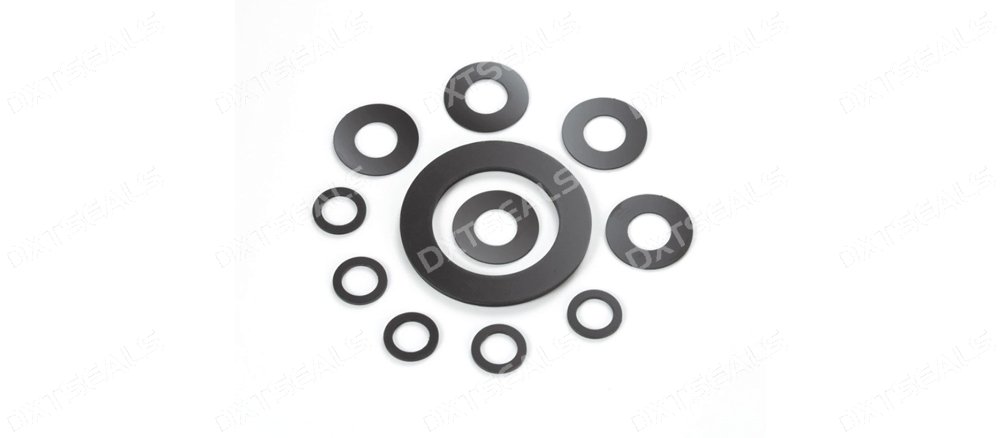
Selecting the right sealing material is essential for ensuring equipment reliability, reducing maintenance costs, and maximizing service life. Two of the most commonly used sealing materials are graphite and elastomers. While both are widely used across industrial applications, they are designed to perform under different operating conditions.
Graphite seals excel in high-temperature, high-speed, and chemically aggressive environments, while elastomer seals provide excellent flexibility and sealing performance in moderate operating conditions. Understanding the strengths and limitations of each material helps engineers and equipment manufacturers select the most suitable sealing solution.
What Are Graphite Seals?
Graphite seals are manufactured from carbon graphite materials and are commonly used in mechanical seals and rotating equipment. Their natural self-lubricating properties and excellent resistance to heat and chemicals make them ideal for demanding industrial applications.
Typical graphite sealing products include:
- Mechanical seal faces
- Graphite seal rings
- Carbon seal rings
- Graphite bushings
- Graphite bearings
- Wear rings
These components are usually precision-machined to achieve tight tolerances and reliable sealing performance.
What Are Elastomer Seals?
Elastomer seals are flexible sealing components manufactured from synthetic rubber materials. Their elasticity allows them to conform to mating surfaces, creating an effective seal even when small dimensional variations exist.
Common elastomer sealing products include:
- O-rings
- Oil seals
- Gaskets
- Lip seals
- Diaphragms
- Rubber sealing rings
Frequently used elastomer materials include:
- NBR (Nitrile Rubber)
- FKM (Fluoroelastomer)
- EPDM
- Silicone
- HNBR
- Neoprene
Each material is selected according to temperature, chemical compatibility, and environmental requirements.
Temperature Performance
Operating temperature is one of the most important factors when selecting sealing materials.
Graphite Seals
Graphite maintains stable mechanical properties under high temperatures and continues to perform where many elastomers lose elasticity or begin to degrade.
Graphite is commonly used in:
- High-temperature pumps
- Compressors
- Heat exchangers
- Chemical reactors
- Steam equipment
Elastomer Seals
Elastomer seals perform well within their specified temperature ranges, but prolonged exposure to excessive heat can lead to:
- Hardening
- Cracking
- Loss of elasticity
- Premature failure
Selecting the correct elastomer grade is essential for reliable operation.
Chemical Resistance
Chemical compatibility directly affects seal life and equipment reliability.
Graphite
Graphite provides excellent resistance to many:
- Acids
- Alkalis
- Organic solvents
- Industrial chemicals
- Corrosive process media
Its chemical stability makes it suitable for demanding chemical processing applications.
Elastomers
Chemical resistance depends on the elastomer material.
For example:
- FKM performs well with oils and fuels.
- EPDM is suitable for water and steam.
- NBR provides excellent resistance to petroleum-based fluids.
- Silicone offers good performance over a wide temperature range but limited resistance to certain chemicals.
Proper material selection is critical to prevent swelling, degradation, or leakage.
Friction and Wear Performance
Graphite Seals
Graphite naturally provides self-lubrication, reducing friction between sealing surfaces.
Advantages include:
- Lower operating temperatures
- Reduced wear
- Longer service life
- Improved efficiency
- Stable performance during continuous operation
These characteristics make graphite ideal for rotating equipment.
Elastomer Seals
Elastomers rely on their flexibility rather than low friction.
Although they provide excellent sealing performance in many applications, they generally experience greater wear in high-speed rotating environments compared with graphite.
Pressure and Speed Capability
Graphite components are commonly used in applications involving:
- High rotational speeds
- Continuous operation
- Elevated pressures
- Mechanical seal systems
Elastomer seals are well suited for:
- Static sealing
- Moderate pressure systems
- Low- to medium-speed applications
- General industrial equipment
The operating conditions determine which material provides the best overall performance.
Flexibility and Installation
One of the greatest strengths of elastomer seals is their flexibility.
Benefits include:
- Easy installation
- Excellent compression recovery
- Good sealing on uneven surfaces
- Effective sealing under moderate pressure
Graphite, being a rigid material, does not provide elastic deformation. Instead, it relies on precision machining and accurate equipment alignment to achieve effective sealing.
Typical Applications
Graphite Seals
Graphite seals are widely used in:
- Mechanical seals
- Chemical pumps
- Compressors
- Mixers
- Turbines
- High-temperature processing equipment
- Petrochemical systems
- Power generation equipment
Elastomer Seals
Elastomer seals are commonly found in:
- Hydraulic systems
- Pneumatic equipment
- Automotive components
- Pipe flanges
- Water treatment equipment
- Food processing machinery
- General industrial equipment
Graphite vs Elastomer Seals
| Feature | Graphite Seals | Elastomer Seals |
|---|---|---|
| Temperature Resistance | Excellent | Good (depends on material) |
| Chemical Resistance | Excellent | Material dependent |
| Self-Lubrication | Yes | No |
| Wear Resistance | Excellent | Moderate |
| Flexibility | Low | Excellent |
| Elastic Recovery | No | Yes |
| High-Speed Performance | Excellent | Moderate |
| Precision Machining Required | Yes | No |
| Service Life | Long | Moderate |
| Typical Cost | Higher | Lower |
Can Graphite and Elastomers Be Used Together?
Yes. Many advanced sealing systems combine graphite and elastomer materials to achieve optimal performance.
For example:
- Graphite seal faces provide low friction and wear resistance.
- Elastomer O-rings act as secondary seals, providing flexibility and compensating for thermal expansion and dimensional variations.
This combination improves sealing reliability while taking advantage of the strengths of both materials.
Custom Sealing Solutions
Every industrial application has unique operating requirements. Custom sealing solutions can be designed based on:
- Operating temperature
- Pressure
- Rotational speed
- Chemical media
- Equipment design
- Industry standards
Manufacturers can produce both standard and custom graphite components, elastomer seals, and complete sealing assemblies according to customer drawings or technical specifications.
Conclusion
Graphite and elastomer seals each offer distinct advantages depending on the operating environment. Graphite provides exceptional performance in high-temperature, high-speed, and chemically aggressive applications where low friction and long service life are essential. Elastomer seals remain the preferred solution for applications requiring flexibility, simple installation, and cost-effective sealing under moderate operating conditions.
By carefully evaluating operating conditions and equipment requirements, engineers can select the most suitable sealing material or combine graphite and elastomer components to achieve the best balance of performance, durability, and reliability.