
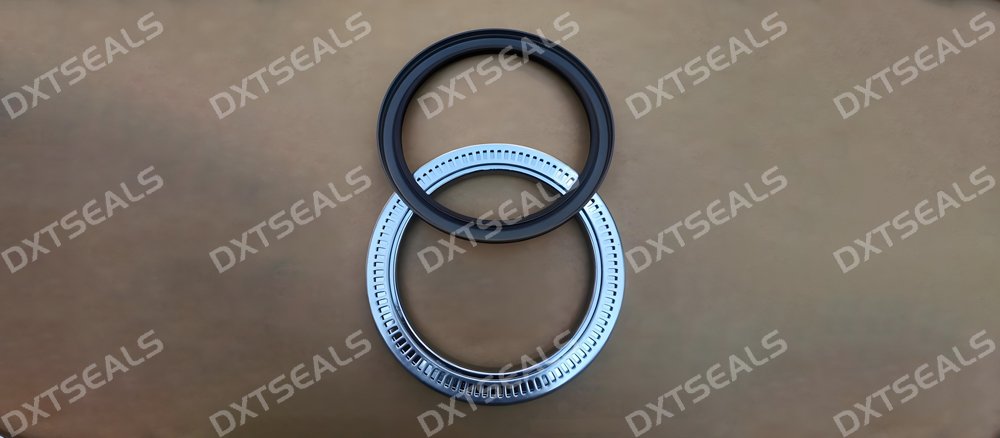
The automotive industry demands high-performance sealing components and bearings to ensure safety, durability, and long-term reliability. From engines and transmissions to wheels and cooling systems, every vehicle relies on precisely engineered components to withstand extreme temperatures, high rotational speeds, vibrations, and exposure to oils and chemicals.
This article from DXTSEALS provides an overview of the most commonly used sealing parts and bearing types in automotive applications, along with their key performance requirements and material considerations.
1. Common Sealing Components in the Automotive Industry
1.1 Oil Seals (Radial Shaft Seals)
Oil seals are widely used in:
-
Engines
-
Transmissions
-
Differentials
-
Power steering pumps
Their functions include:
-
Preventing lubricating oil leakage
-
Keeping contaminants out
-
Maintaining pressure stability
Typical materials:
-
NBR for general oil resistance
-
FKM (Viton®) for high-temperature and chemical-resistant applications
-
PTFE for low-friction and long-life performance
Performance requirements:
-
High rotational speed capability
-
Excellent heat resistance
-
Good wear resistance
-
Strong sealing stability under vibration
1.2 O-Rings and Gaskets
Used in various static sealing positions such as:
-
Fuel systems
-
Brake systems
-
Cooling circuits
-
Air conditioning systems
Material choices:
-
EPDM for coolant and steam resistance
-
HNBR for fuel and oil resistance
-
VMQ (Silicone) for high-temperature stability
-
PTFE for extreme chemical environments
Performance requirements:
-
Excellent compression set resistance
-
Chemical compatibility with fuel, coolant, and brake fluid
-
Wide operating temperature range
1.3 Valve Stem Seals
Found in the cylinder head, they regulate oil supply to the valve stem.
Key requirements:
-
High wear resistance
-
Ability to withstand high temperatures (up to 200–250°C)
-
Oil metering precision
-
Long-term elasticity
FKM and PTFE compounds are commonly used for their superior thermal endurance.
1.4 Dust Boots and Rubber Bushings
Used in suspension and steering systems to protect internal components.
Performance requirements:
-
Tear resistance
-
Ozone and UV resistance for outdoor durability
-
Flexibility even in cold climates
Materials like EPDM and NR/SBR blends are commonly selected.
2. Common Bearing Types in the Automotive Industry
2.1 Wheel Bearings
One of the most critical safety components in every vehicle.
Modern cars use hub unit bearings, which integrate:
-
Bearing
-
Seal
-
Sensor ring (ABS-compatible)
Performance requirements:
-
High load capacity
-
Resistance to mud, water, and dust
-
Long service life under continuous rotation
-
High sealing efficiency to maintain grease quality
2.2 Engine Bearings (Crankshaft & Connecting Rod Bearings)
These bearings operate under extreme load and lubrication conditions.
Key requirements:
-
Excellent fatigue strength
-
High wear resistance
-
Compatibility with engine oil
-
Superior heat dissipation
Bimetal and trimetal bearings (aluminum alloy, copper-lead alloy) are widely used.
2.3 Alternator and Electric Motor Bearings
Used in alternators, starters, and EV motors.
Requirements:
-
High-speed capability
-
Low noise and low friction
-
Precision tolerance
-
Long grease life
Hybrid ceramic bearings are increasingly common in electric vehicles.
2.4 Transmission Bearings
Manual and automatic transmissions use:
-
Needle roller bearings
-
Deep groove ball bearings
-
Tapered roller bearings
Performance requirements:
-
Resistance to high-speed rotation
-
Low friction for improved fuel economy
-
Thermal stability
-
High axial and radial load capacity
2.5 Clutch Release Bearings
These operate intermittently under high loads.
Requirements:
-
High-temperature resistance
-
Smooth rotation performance
-
Strong structural rigidity
3. Performance Requirements for Automotive Seals and Bearings
3.1 High Temperature and Thermal Cycling Resistance
Engine and transmission environments often exceed 150°C.
Materials must withstand:
-
Continuous heat
-
Rapid thermal changes
-
Oxidation and chemical attack
3.2 Superior Chemical Compatibility
Automotive fluids include:
-
Engine oil
-
ATF (Automatic Transmission Fluid)
-
Brake fluid
-
Fuel (gasoline, diesel, ethanol mixtures)
-
Coolant (glycol-based)
DXTSEALS recommends selecting materials specifically tested against these chemicals.
3.3 High Wear and Fatigue Resistance
Components must maintain long-term stability under:
-
High rotational speeds
-
Constant vibration
-
Mechanical stress
-
Contaminant exposure
3.4 Low Friction and Energy Efficiency
As automotive efficiency standards rise, seals and bearings must help reduce:
-
Energy loss
-
Fuel consumption
-
Heat generation
PTFE-based seals and precision bearings are increasingly used to meet these goals.
3.5 Long Maintenance Intervals
Automotive components must provide:
-
Extended service life
-
Reduced downtime
-
Lower total cost of ownership
Proper sealing and bearing selection directly impacts vehicle durability.
Conclusion
Sealing components and bearings are indispensable in modern automotive engineering. Their material selection, structural design, and performance characteristics directly influence vehicle safety, efficiency, and reliability. Whether it’s a high-speed wheel hub, a high-temperature engine environment, or a chemically aggressive fuel system, choosing the right components is crucial.
DXTSEALS provides high-quality sealing solutions tailored for automotive applications, offering:
-
Oil seals
-
O-rings and gaskets
-
PTFE components
-
Custom rubber and plastic parts
Engineered to meet the demanding requirements of the automotive sector.