
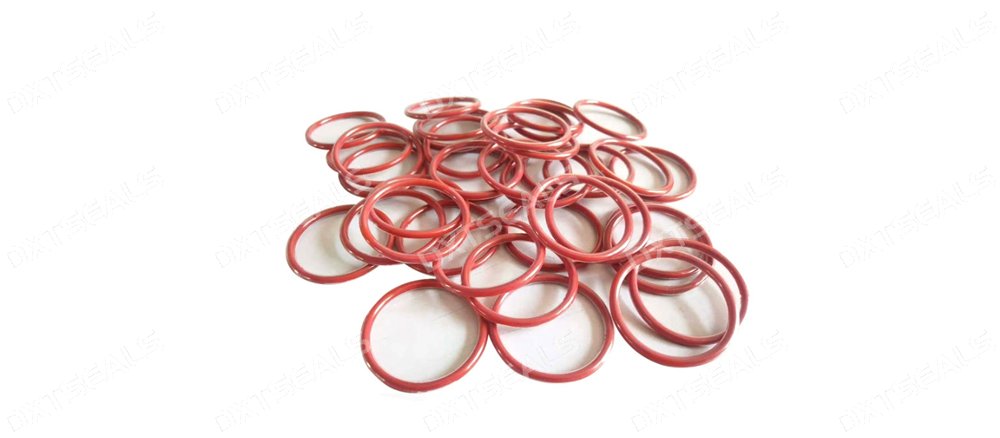
Standard seals are essential components in hydraulic systems, pneumatic equipment, pumps, valves, compressors, industrial machinery, and many other types of equipment. They are designed to prevent fluid or gas leakage, maintain system pressure, reduce contamination, and protect moving components.
Among the many sealing products available on the market, PTFE seals, Glyd rings, and Step Seals are widely used for dynamic sealing applications. Although these products may have similar appearances, their structures, sealing mechanisms, and typical applications are different.
Understanding the characteristics of each seal type can help engineers and maintenance teams select the appropriate sealing solution.
What Are Standard Seals?
Standard seals are sealing products manufactured according to commonly used industry dimensions and profiles.
Compared with fully customized seals, standard products generally offer:
- Standardized dimensions
- Easy replacement
- Broad equipment compatibility
- Lower production costs
- Faster sourcing
- Multiple material options
Common standard sealing products include:
- O-rings
- Oil seals
- V-rings
- PTFE seals
- Glyd rings
- Step Seals
- Rod seals
- Piston seals
- Wiper seals
- Guide rings
The appropriate product depends on the type of movement, pressure, temperature, working medium, and installation structure.
What Are PTFE Seals?
PTFE seals are sealing components manufactured from polytetrafluoroethylene or PTFE-based compounds.
PTFE is widely used in sealing applications because of its combination of low friction, chemical resistance, temperature resistance, and dimensional stability.
PTFE seals can be manufactured in different profiles for:
- Static sealing
- Reciprocating sealing
- Rotary sealing
- Hydraulic applications
- Pneumatic applications
Different PTFE compounds can also be developed by adding fillers such as glass fiber, carbon, graphite, or bronze.
Main Features of PTFE Seals
Very Low Friction
One of the main advantages of PTFE is its low coefficient of friction.
This makes PTFE seals suitable for dynamic applications where excessive friction could result in:
- Increased energy consumption
- Heat generation
- Stick-slip
- Accelerated wear
Excellent Chemical Resistance
PTFE provides excellent resistance to many chemicals, solvents, oils, and aggressive media.
This makes PTFE seals suitable for applications where conventional elastomer materials may have compatibility limitations.
Good Temperature Resistance
PTFE can maintain its sealing properties over a broad temperature range, depending on the specific compound and design.
This makes PTFE suitable for many high-temperature industrial applications.
Good Wear Resistance
Pure PTFE has relatively limited mechanical strength compared with some filled PTFE compounds. Adding suitable fillers can significantly improve wear resistance and load-bearing performance.
What Are Glyd Rings?
Glyd rings are dynamic sealing elements commonly used for piston sealing in hydraulic and pneumatic cylinders.
A typical Glyd ring consists of:
- PTFE or another polymer sealing ring
- Elastomer O-ring energizer
The O-ring provides the radial force required to maintain contact with the cylinder bore, while the PTFE sealing ring provides the main sliding sealing surface.
This combination provides a balance between elasticity and low-friction performance.
Features of Glyd Rings
Low Friction
The PTFE sealing ring provides a low-friction sliding surface, helping the piston move smoothly.
Good Wear Resistance
Suitable PTFE compounds can provide good wear resistance during repeated reciprocating movement.
Good Chemical Resistance
PTFE provides compatibility with a wide range of hydraulic fluids and industrial media, subject to the specific material formulation.
Suitable for Reciprocating Motion
Glyd rings are specifically designed for dynamic movement and are widely used in hydraulic and pneumatic cylinders.
Compact Installation
Glyd rings can provide effective piston sealing in relatively compact grooves.
Typical Applications of Glyd Rings
Glyd rings are commonly used in:
- Hydraulic cylinders
- Pneumatic cylinders
- Industrial actuators
- Mobile hydraulic machinery
- Automation equipment
- Injection molding machines
- Machine tools
They are particularly useful when low friction and reliable piston sealing are required.
What Are Step Seals?
Step Seals are dynamic seals commonly used for rod sealing applications.
A typical Step Seal combines a polymer sealing ring with an elastomer energizer.
The polymer sealing element provides the main sealing function, while the elastomer component maintains contact between the seal and the rod.
Step Seals are widely used in hydraulic and pneumatic cylinders.
Features of Step Seals
Low Friction
The polymer sealing element provides low sliding friction, helping reduce resistance during rod movement.
Good Wear Resistance
PTFE-based Step Seals can provide good resistance to wear under repeated reciprocating motion.
High-Pressure Applications
Depending on the profile, material, installation clearance, and operating conditions, Step Seals can be used in high-pressure hydraulic systems.
Good Dynamic Sealing
The design is optimized for reciprocating rod movement and can provide reliable sealing when correctly selected and installed.
Wide Material Options
Different PTFE compounds and elastomer energizers can be selected according to temperature, pressure, fluid, and speed requirements.
PTFE Seals vs Glyd Rings vs Step Seals
Although all three product categories can involve PTFE or polymer sealing materials, they are not interchangeable in every application.
| Feature | PTFE Seals | Glyd Rings | Step Seals |
|---|---|---|---|
| Main Material | PTFE/Polymer | PTFE/Polymer + O-ring | PTFE/Polymer + Elastomer |
| Typical Function | Various sealing applications | Piston sealing | Rod sealing |
| Movement | Static, rotary, or reciprocating depending on profile | Reciprocating | Reciprocating |
| Friction | Low | Low | Low |
| Chemical Resistance | Excellent | Good to Excellent | Good to Excellent |
| Wear Resistance | Material dependent | Good to Excellent | Good to Excellent |
| Hydraulic Applications | Yes | Yes | Yes |
| Pneumatic Applications | Yes | Yes | Yes |
The exact performance depends on the specific seal profile and material grade.
Common PTFE Seal Materials
Not all PTFE seals have identical properties.
Virgin PTFE
Virgin PTFE provides excellent chemical resistance and low friction.
It is commonly used for applications where chemical compatibility and clean sliding performance are the main priorities.
Glass-Filled PTFE
Glass fiber can improve:
- Wear resistance
- Compressive strength
- Dimensional stability
Carbon-Filled PTFE
Carbon-filled PTFE can provide improved:
- Wear resistance
- Mechanical strength
- Thermal conductivity
Bronze-Filled PTFE
Bronze-filled PTFE can provide improved:
- Load-bearing capacity
- Wear resistance
- Thermal conductivity
- Dimensional stability
The material should be selected according to the actual working environment.
Elastomer Energizers for Glyd Rings and Step Seals
The elastomer energizer plays an important role in sealing performance.
Common elastomer materials include:
NBR
NBR provides good oil resistance, elasticity, and mechanical properties.
It is widely used in general hydraulic applications.
FKM
FKM provides good resistance to high temperatures, oils, fuels, and many chemicals.
It is suitable for more demanding industrial environments.
EPDM
EPDM provides excellent resistance to water, steam, weathering, and many chemicals.
It is suitable for compatible water-based applications.
The energizer material must be compatible with the working fluid and temperature.
How to Select the Correct Standard Seal
Selecting a standard seal should start with the operating conditions.
1. Determine the Sealing Position
Identify whether the seal is used for:
- Piston sealing
- Rod sealing
- Rotary shaft sealing
- Static sealing
- Reciprocating sealing
This helps determine the appropriate seal profile.
2. Check Operating Pressure
The maximum system pressure should be considered together with the seal profile and installation clearance.
For high-pressure applications, extrusion resistance is particularly important.
3. Check Operating Temperature
Consider:
- Minimum operating temperature
- Normal operating temperature
- Maximum continuous temperature
- Temporary temperature peaks
Both the polymer and elastomer components must be suitable for the temperature range.
4. Check the Working Medium
Typical media include:
- Hydraulic oil
- Lubricating oil
- Water
- Air
- Steam
- Fuels
- Chemicals
Material compatibility should always be verified.
5. Check Movement Speed
Dynamic seals must be selected according to reciprocating or rotary speed.
Higher speeds can increase friction and heat generation, making material selection and surface finish more important.
6. Check Groove Dimensions
Correct installation dimensions are essential.
Important parameters include:
- Groove diameter
- Groove width
- Groove depth
- Rod diameter
- Bore diameter
- Installation clearance
Even a high-quality seal can perform poorly if the groove dimensions are incorrect.
Standard Seals and Custom Sealing Products
Standard seals are ideal when equipment uses commonly available dimensions and profiles.
However, some industrial applications require:
- Non-standard dimensions
- Special PTFE compounds
- Special energizer materials
- Modified sealing profiles
- Special operating temperature ranges
- Higher wear resistance
In these cases, custom seals can be manufactured according to technical drawings, samples, or OEM requirements.
A professional manufacturer can provide both standard market products and non-standard customized sealing components.
Applications of PTFE Seals, Glyd Rings, and Step Seals
These sealing products are used in a wide range of industries.
Hydraulic Cylinders
Glyd rings are commonly used for piston sealing, while Step Seals are frequently used for rod sealing.
Wiper seals and guide rings may be used together to form a complete hydraulic sealing system.
Pneumatic Cylinders
Low-friction polymer seals can help pneumatic cylinders achieve smooth and efficient reciprocating movement.
Industrial Machinery
PTFE sealing products are used in:
- Automation equipment
- Machine tools
- Injection molding equipment
- Industrial presses
- Material handling systems
Pumps and Valves
PTFE-based seals can be used in selected pump and valve applications where chemical resistance and low friction are required.
Chemical Equipment
PTFE seals can be advantageous in chemical processing environments because of their excellent resistance to many aggressive media.
Importance of Precision Manufacturing
For PTFE sealing products, dimensional accuracy and profile consistency are important factors affecting sealing performance.
Manufacturing quality can influence:
- Installation
- Contact pressure
- Friction
- Leakage resistance
- Wear
- Service life
Precision CNC machining is commonly used for non-standard PTFE seals and customized sealing profiles. Standard products can also be manufactured using dedicated tooling and controlled production processes.
Conclusion
PTFE seals, Glyd rings, and Step Seals are important standard sealing products for hydraulic, pneumatic, and industrial equipment.
PTFE seals provide excellent low-friction and chemical-resistant performance across a wide range of applications. Glyd rings are commonly used for piston sealing, combining a polymer sealing ring with an elastomer energizer. Step Seals are widely used for rod sealing, providing low-friction dynamic sealing in hydraulic and pneumatic cylinders.
The correct sealing product should be selected according to sealing position, pressure, temperature, working medium, movement speed, groove dimensions, and material compatibility.
For common applications, standard market sizes provide a convenient and cost-effective solution. When standard dimensions cannot meet equipment requirements, manufacturers with PTFE machining and sealing expertise can also provide non-standard and custom PTFE seals according to drawings, samples, and OEM specifications.