
Introduction
Metal machining is a comprehensive manufacturing process that transforms raw materials into high-precision finished components. From initial design concepts to final quality inspection, every stage plays a critical role in ensuring performance, durability, and dimensional accuracy.
Understanding the complete machining workflow helps manufacturers optimize efficiency, reduce errors, and maintain consistent quality. This article provides a step-by-step analysis of the entire metal machining process.
1. Design and Engineering
The process begins with product design and engineering evaluation. Engineers define:
-
Functional requirements
-
Dimensional tolerances
-
Material specifications
-
Surface finish standards
Design for Manufacturability (DFM) is essential at this stage to ensure the part can be efficiently machined without unnecessary complexity or cost.
At DXTSEALS, design reviews are conducted to optimize both performance and manufacturability before production begins.
2. Material Selection
Material selection directly impacts machining strategy, cost, and product performance. Common materials include:
-
Carbon steel
-
Alloy steel
-
Stainless steel
-
Aluminum alloys
-
Copper alloys
-
Titanium alloys
Factors such as strength, corrosion resistance, weight, and thermal properties are considered during selection.
3. Process Planning and Programming
Once the design and material are confirmed, engineers develop a machining plan, including:
-
Selection of machining processes (turning, milling, drilling)
-
Cutting tool selection
-
CNC programming
-
Fixture design
Accurate CNC programming ensures precision and repeatability during production.
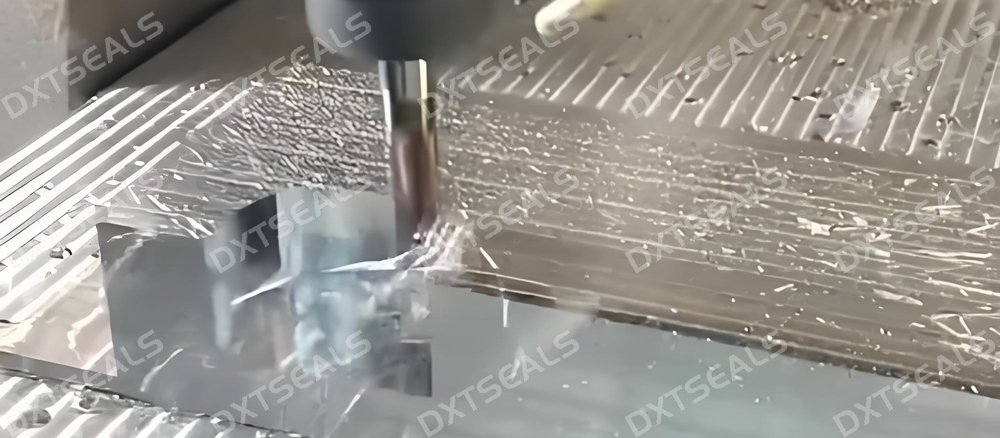
4. CNC Machining Operations
The core manufacturing stage involves CNC machining processes such as:
-
CNC turning for cylindrical components
-
CNC milling for complex geometries
-
Multi-axis machining for intricate structures
-
Drilling and tapping for assembly features
Stable machine setup, optimized cutting parameters, and tool management are critical for maintaining tolerance control and surface quality.
5. In-Process Inspection
During machining, in-process inspections are conducted to verify dimensional accuracy and detect deviations early. This step reduces scrap rates and ensures consistent production quality.
6. Surface Treatment and Finishing
After machining, surface treatments may be applied to enhance performance and appearance. Common methods include:
-
Anodizing
-
Electroplating
-
Heat treatment
-
Polishing
-
Passivation
Surface finishing improves corrosion resistance, wear resistance, and overall durability.
7. Final Quality Inspection
Before delivery, components undergo comprehensive inspection, including:
-
Dimensional measurement (calipers, micrometers, CMM)
-
Surface roughness testing
-
Hardness testing
-
Visual inspection
Strict quality control ensures the finished product meets all technical and functional requirements.
8. Assembly and Packaging
If required, components proceed to assembly before final packaging. Proper packaging prevents damage during transportation and maintains product integrity.
Key Success Factors in the Machining Process
To ensure high-quality results, manufacturers must focus on:
-
Clear communication between design and production teams
-
Accurate tolerance management
-
Advanced equipment and tooling
-
Skilled technical personnel
-
Continuous quality monitoring
Applications Across Industries
The complete metal machining workflow supports industries such as:
-
Aerospace
-
Energy and power equipment
-
Industrial automation
-
Medical devices
-
Precision sealing and mechanical systems
Each industry requires strict adherence to technical and quality standards.
Conclusion
From design concept to finished product, metal machining is a highly coordinated and technically demanding process. Every stage — including design, material selection, machining, finishing, and inspection — contributes to the final component's quality and performance.
By implementing systematic process control and precision manufacturing practices, companies can deliver reliable, high-performance metal components that meet the evolving demands of modern industrial applications.