
Introduction
Copper and copper alloys play a critical role in modern industrial manufacturing due to their exceptional electrical and thermal conductivity, combined with reliable corrosion resistance. These materials are widely used in electrical, thermal, and fluid-handling applications where performance and reliability are essential.
This article explores the key machining characteristics of copper and copper alloys and explains their advantages in demanding industrial environments.
Overview of Copper and Copper Alloys
Pure copper offers outstanding conductivity, while copper alloys such as brass and bronze improve strength, wear resistance, and machinability. By adjusting alloy composition, manufacturers can balance performance requirements with machining efficiency.
Key Machining Characteristics of Copper and Copper Alloys
Excellent Electrical Conductivity
Copper is one of the best electrical conductors among industrial metals, making it ideal for electrical components requiring low resistance and stable performance.
Superior Thermal Conductivity
Copper alloys effectively dissipate heat, reducing thermal buildup during both machining and service operation. This property is critical for heat exchangers and thermal management components.
Good Corrosion Resistance
Copper forms a protective oxide layer that provides resistance against moisture, chemicals, and marine environments, extending component service life.
Material Softness and Tool Adhesion
Pure copper is relatively soft and ductile, which may cause material adhesion to cutting tools. Proper tool geometry and cutting parameters are essential for stable machining.
Excellent Surface Finish Potential
With optimized machining strategies, copper alloys can achieve smooth surface finishes suitable for precision and sealing-related applications.
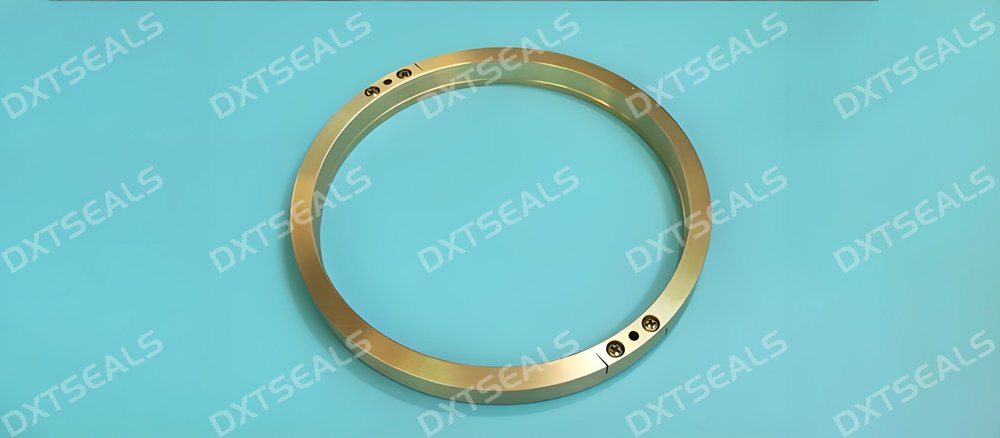
At DXTSEALS, copper alloy machining is optimized for high-precision components used in electrical, thermal, and sealing systems.
Common Copper Alloys Used in Machining
-
C11000 (Pure Copper) – Maximum electrical conductivity
-
Brass (Cu-Zn Alloys) – Improved machinability and strength
-
Bronze (Cu-Sn or Cu-Al Alloys) – Excellent wear and corrosion resistance
Each alloy is selected based on application demands and machining requirements.
Typical Machining Processes
-
CNC turning for conductive and cylindrical parts
-
CNC milling for complex geometries
-
Drilling and tapping for electrical connections
-
Precision finishing for sealing and contact surfaces
Typical Industrial Applications
Electrical and Electronics Industry
Copper is widely used for connectors, busbars, and conductive components.
Heat Exchange and Thermal Systems
Copper alloys are ideal for heat sinks, cooling plates, and thermal interfaces.
Marine and Chemical Equipment
Bronze and copper alloys perform reliably in corrosive environments.
Sealing and Precision Components
Copper alloys are used in sealing housings, backup rings, and support components where conductivity or corrosion resistance is required.
Comparison with Other Metals
Compared to steel and aluminum, copper offers superior conductivity and thermal performance, though it requires more careful machining control due to its softness.
Conclusion
Copper and copper alloy machining offers a unique combination of electrical conductivity, thermal efficiency, and corrosion resistance. Although machining requires specialized strategies, the performance advantages make these materials indispensable in many industrial applications.
By selecting the appropriate copper alloy and machining approach, manufacturers can achieve reliable, high-performance components with long-term value.