
Introduction
Water treatment equipment is widely used in municipal water supply, wastewater treatment, desalination plants, and industrial water recycling systems. These systems often operate in corrosive environments involving chemicals, saline water, moisture, and continuous exposure to aggressive media. As a result, corrosion resistance is a key requirement for both seals and bearings.
Effective corrosion protection solutions help extend service life, reduce maintenance costs, and ensure stable operation. DXTSEALS provides reliable sealing solutions designed to support corrosion-resistant bearing systems in water treatment applications.
Corrosive Challenges in Water Treatment Applications
Water treatment equipment faces multiple corrosion-related challenges:
-
Exposure to chlorinated water and disinfectants
-
Contact with acids, alkalis, and cleaning chemicals
-
High humidity and continuous moisture
-
Saltwater and brine in desalination systems
-
Microbial-induced corrosion in wastewater environments
Without proper protection, seals and bearings can suffer from material degradation, lubricant contamination, and premature failure.
Corrosion-Resistant Requirements for Seals
Seals are the first line of defense against corrosive media. Key requirements include:
1. Chemical Compatibility
Seal materials must resist swelling, cracking, and degradation when exposed to water treatment chemicals.
2. Low Permeability
Low permeability helps prevent chemical ingress and protects internal components.
3. Long-Term Elasticity
Seals must maintain flexibility and sealing force over long service periods in wet environments.
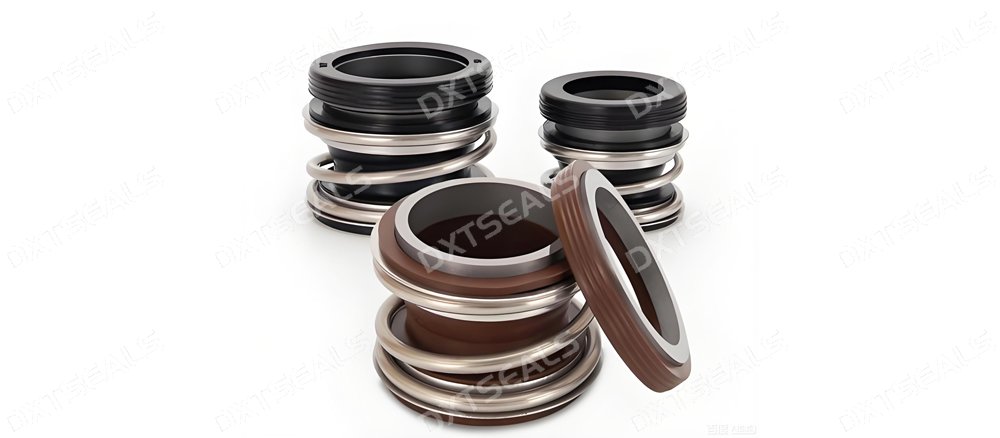
Common corrosion-resistant seal materials include EPDM, FKM, PTFE, and rubber-metal bonded seals. DXTSEALS offers customized material solutions based on specific water quality conditions.
Corrosion-Resistant Bearing Solutions
Bearings in water treatment equipment require additional protection due to constant moisture exposure.
1. Corrosion-Resistant Materials and Coatings
Stainless steel bearings and bearings with anti-corrosion coatings are widely used.
2. Sealed and Shielded Bearing Designs
Integrated sealing structures help prevent water and contaminants from entering the bearing.
3. Proper Lubrication Selection
Water-resistant and chemically stable lubricants reduce corrosion risk and extend bearing life.
Integrated Sealing and Bearing Protection Strategies
For optimal corrosion resistance, seals and bearings should be selected as a system:
-
High-performance seals to block corrosive media
-
Protective coatings on bearing surfaces
-
Optimized housing design to prevent water accumulation
-
Regular inspection and maintenance plans
DXTSEALS works closely with equipment manufacturers to provide integrated sealing solutions that enhance bearing protection.
Typical Applications in Water Treatment Equipment
Corrosion-resistant seals and bearings are commonly used in:
-
Water and wastewater pumps
-
Agitators and mixers
-
Filtration and membrane systems
-
Valves and actuators
-
Desalination equipment
Reliable sealing solutions ensure stable performance in both clean water and highly corrosive wastewater environments.
Benefits of Advanced Corrosion Protection Solutions
Implementing effective corrosion protection strategies delivers multiple benefits:
-
Extended service life of seals and bearings
-
Reduced unplanned downtime
-
Lower maintenance and replacement costs
-
Improved operational reliability and safety
DXTSEALS supports water treatment projects worldwide with durable, corrosion-resistant sealing solutions.
Conclusion
Corrosion is one of the main factors affecting the reliability of water treatment equipment. By selecting corrosion-resistant seal materials, protected bearing designs, and integrated sealing strategies, operators can significantly improve equipment durability and performance. Partnering with an experienced sealing manufacturer like DXTSEALS ensures reliable corrosion protection solutions tailored to water treatment applications.