
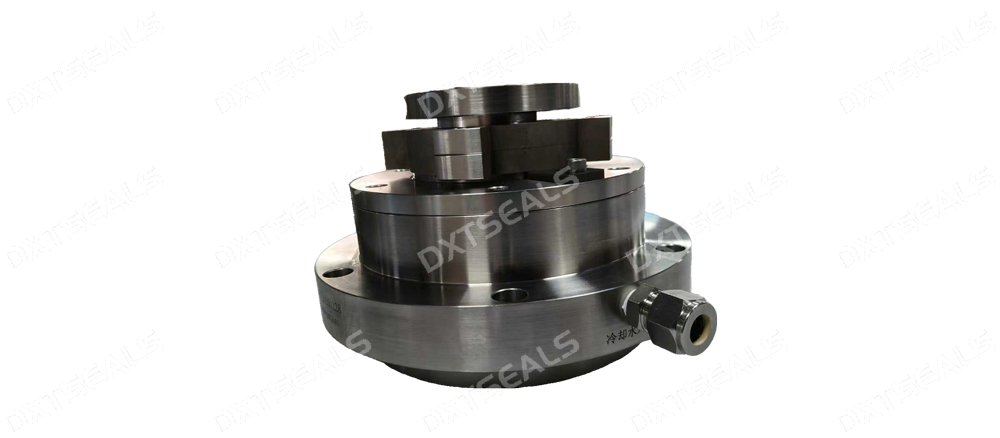
In today's industrial environment, standard mechanical seals cannot always meet the increasingly complex requirements of modern equipment. Industries such as chemical processing, oil and gas, pharmaceuticals, food manufacturing, mining, and power generation often face unique operating conditions involving extreme temperatures, high pressures, corrosive media, abrasive particles, and limited installation space.
To address these challenges, customized mechanical seals have become an essential solution. A professional custom mechanical seal manufacturer should provide more than just production capabilities—they should offer comprehensive engineering support, from initial design and material selection to prototype development and large-scale manufacturing.
This article explores the complete process of custom mechanical seal services and explains how a one-stop solution can help companies improve equipment reliability, reduce downtime, and optimize long-term operating costs.
Why Choose Custom Mechanical Seals?
While standard mechanical seals are suitable for many common applications, certain operating conditions require a more specialized approach.
Custom mechanical seals are often needed when:
- Standard dimensions are unavailable
- Equipment designs are unique
- Process media are highly corrosive
- Operating pressures exceed standard limits
- High temperatures affect seal performance
- Abrasive particles accelerate wear
- Strict industry regulations must be met
By tailoring the seal design to specific operating conditions, manufacturers can significantly improve sealing performance and service life.
The Complete Custom Mechanical Seal Development Process
A professional customization project typically involves several key stages, each contributing to the final product's performance and reliability.
Step 1: Technical Requirement Analysis
Every successful custom seal project begins with a detailed evaluation of operating conditions.
Key information includes:
- Equipment type
- Shaft dimensions
- Pressure range
- Operating temperature
- Rotational speed
- Process media
- Installation space
- Maintenance requirements
This information helps engineers determine the most appropriate sealing solution.
At DXTSEALS, technical analysis forms the foundation of every customization project.
Step 2: Engineering Design and Drawing Development
Once application requirements are defined, engineers begin developing the seal design.
The design process may include:
Structural Design
Engineers determine:
- Seal type
- Face configuration
- Spring arrangement
- Balance ratio
- Installation method
Dimensional Design
Precise dimensions are developed based on:
- Equipment drawings
- Existing seal samples
- OEM specifications
- Customer requirements
3D Modeling
Modern CAD software enables engineers to create detailed 3D models for design verification and manufacturing preparation.
This stage helps identify potential issues before production begins.
Step 3: Material Selection Optimization
Material selection is one of the most important aspects of custom mechanical seal development.
Different applications require different combinations of materials to ensure optimal performance.
Seal Face Materials
Common options include:
Silicon Carbide (SiC)
Advantages:
- Excellent wear resistance
- Superior chemical resistance
- High thermal conductivity
Applications:
- Chemical processing
- Pharmaceutical manufacturing
- High-purity systems
Tungsten Carbide (TC)
Advantages:
- High mechanical strength
- Outstanding abrasion resistance
Applications:
- Mining
- Slurry pumps
- Wastewater treatment
Carbon Graphite
Advantages:
- Self-lubrication
- Low friction
Applications:
- General industrial pumps
- Water systems
- Food processing
Ceramic
Advantages:
- Cost-effective
- Good corrosion resistance
Applications:
- Water pumps
- Light industrial equipment
Secondary Seal Material Selection
Depending on media compatibility and temperature requirements, engineers may choose:
- NBR
- EPDM
- FKM
- FFKM
- PTFE
Selecting the proper elastomer is critical for long-term sealing reliability.
Step 4: Prototype Manufacturing
Before mass production begins, prototype samples are often manufactured for evaluation and testing.
Prototype development allows customers to:
- Verify dimensional compatibility
- Evaluate installation requirements
- Confirm sealing performance
- Validate design improvements
This stage helps reduce project risks and ensures the final design meets application expectations.
Step 5: Performance Testing and Validation
Testing is essential for confirming seal reliability.
Depending on application requirements, testing may include:
Pressure Testing
Verifies sealing performance under operating pressure.
Leakage Testing
Ensures acceptable leakage levels.
Dynamic Operation Testing
Evaluates performance during rotation and shaft movement.
Thermal Testing
Assesses stability under temperature fluctuations.
Material Compatibility Testing
Confirms resistance to process chemicals.
These tests help ensure the seal performs as expected in real-world conditions.
Step 6: Precision Manufacturing
Once the design is validated, production moves to full-scale manufacturing.
CNC Precision Machining
Advanced CNC equipment enables:
- Tight dimensional tolerances
- High repeatability
- Complex geometry manufacturing
Precision Grinding and Lapping
Seal faces are processed to achieve:
- Exceptional flatness
- Controlled surface roughness
- Optimal sealing performance
These manufacturing processes are critical to achieving consistent product quality.
Step 7: Quality Control and Inspection
Comprehensive quality control ensures every seal meets design specifications.
Inspection procedures typically include:
Dimensional Verification
Measurements of:
- Face dimensions
- Shaft interfaces
- Critical tolerances
Material Inspection
Verification of:
- Material grades
- Hardness
- Physical properties
Surface Quality Inspection
Evaluation of:
- Face flatness
- Surface roughness
- Machining quality
Strict inspection standards help ensure long-term reliability.
Step 8: Mass Production and Supply Management
After successful validation, the project enters mass production.
A reliable manufacturer should be capable of:
- Stable batch production
- Consistent product quality
- Inventory support
- Flexible order quantities
- Global logistics coordination
This ensures customers receive reliable supply throughout the product lifecycle.
Benefits of One-Stop Custom Mechanical Seal Services
Working with a supplier that offers complete customization services provides several advantages.
Faster Project Execution
Integrated engineering and manufacturing reduce communication delays and improve efficiency.
Improved Product Performance
Design, materials, and manufacturing processes are optimized as a complete system.
Reduced Procurement Complexity
Customers work with a single supplier throughout the project.
Better Quality Control
Every stage is managed under a unified quality system.
Lower Total Cost of Ownership
Improved reliability helps reduce maintenance expenses and equipment downtime.
Industries That Benefit from Custom Mechanical Seals
Chemical Processing
Requirements:
- Corrosion resistance
- Chemical compatibility
- Safety compliance
Oil and Gas
Requirements:
- High-pressure capability
- Extreme temperature resistance
Food and Beverage
Requirements:
- Hygienic design
- FDA-compliant materials
Pharmaceutical Manufacturing
Requirements:
- Cleanability
- Product purity
- Sterilization resistance
Mining and Mineral Processing
Requirements:
- Abrasion resistance
- Heavy-duty durability
Power Generation
Requirements:
- Thermal stability
- Long service life
Each industry benefits from customized sealing solutions tailored to specific operating conditions.
DXTSEALS Custom Mechanical Seal Capabilities
At DXTSEALS, we provide comprehensive custom mechanical seal services covering every stage of product development and manufacturing.
Our capabilities include:
Engineering Support
- Application analysis
- Design optimization
- Reverse engineering
- Technical consultation
Manufacturing Expertise
- CNC precision machining
- Seal face lapping
- Multiple material processing
- Prototype production
Customization Services
- Non-standard dimensions
- OEM replacement solutions
- Specialized material combinations
- Industry-specific designs
Production Support
- Small-batch production
- Large-volume manufacturing
- Consistent quality management
- Global delivery capability
From concept development to mass production, DXTSEALS provides complete sealing solutions designed to meet demanding industrial requirements.
Conclusion
Custom mechanical seals offer significant advantages when standard products cannot satisfy complex operating conditions. Through a structured development process that includes engineering design, material optimization, prototype validation, precision manufacturing, and quality-controlled mass production, customized seals can deliver superior performance and longer service life.
A one-stop customization partner simplifies project management while ensuring product quality and technical consistency throughout the entire process.
With extensive engineering expertise, advanced manufacturing technology, and comprehensive customization capabilities, DXTSEALS delivers reliable custom mechanical seal solutions that help customers improve equipment performance, reduce maintenance costs, and achieve long-term operational success.