
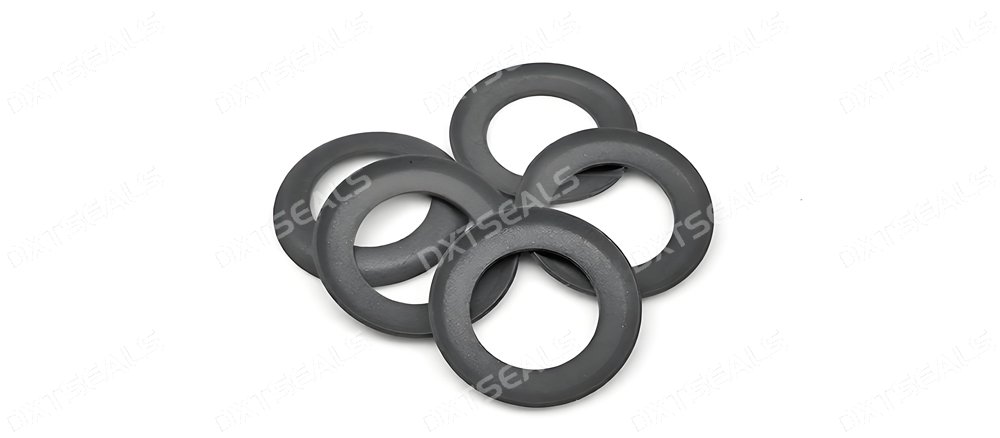
Air compressors rely on precise sealing systems to maintain pressure, control oil flow, and prevent contamination. Whether used in industrial manufacturing, energy systems, or automation equipment, sealing components directly determine the stability, efficiency, and lifespan of an air compressor.
This article from DXTSEALS explains the characteristics and working principles of the most common sealing parts and how they ensure reliable system performance.
1️⃣ Why Sealing Components Are Critical for Air Compressors
In an air compressor, proper sealing affects:
-
Internal pressure retention
-
Oil circulation and lubrication efficiency
-
Air purity and filtration quality
-
Cooling and temperature control
-
Prevention of internal and external leakage
-
Overall mechanical reliability
A failure in any sealing point can lead to overheating, oil loss, reduced air output, or complete equipment shutdown.
2️⃣ Key Types of Air Compressor Sealing Components
1. Shaft Seals (Rotary Seals)
Main Features
-
Designed for high-speed rotation
-
Withstand pressure differences between inner and outer chambers
-
Resist oil exposure and temperature fluctuations
-
Low friction design to reduce heat generation
Working Principle
Shaft seals use a flexible lip or mechanical sealing interface that forms a tight barrier around the rotating shaft.
The sealing lip presses onto the shaft surface, keeping oil inside and blocking air from escaping.
Common Materials
-
NBR for standard oil-based applications
-
FKM for high temperature & chemical resistance
-
PTFE for ultra-low friction and long service life
2. Oil Seals
Features
-
Primary barrier preventing oil leakage
-
Internal spring keeps uniform contact pressure
-
Protects against dust and contaminants
-
Ideal for both low and high-speed conditions
Working Principle
Oil seals rely on an elastic sealing lip supported by a metal frame. The spring ensures the lip maintains constant pressure on the shaft, forming an oil-tight seal.
Typical Failure Signs
-
Oil stains around bearing housings
-
Higher oil consumption
-
Temperature rise due to insufficient lubrication
3. Oil Scraper Rings (刮油环)
Features
-
Excellent wear resistance
-
Stable operation under high temperature
-
Designed to remove excess oil film
-
Prevent burnt oil deposits and carbon buildup
Working Principle
Oil scraper rings scrape excess oil from the rotating shaft or piston rod, ensuring a controlled lubrication layer while preventing oil from entering the compression chamber.
Best Material Options
-
PTFE (pure or filled)
-
Bronze-filled PTFE
-
Stainless steel for high-load applications
4. O-Rings
Features
-
Cost-effective and versatile
-
Suitable for static and low-speed dynamic sealing
-
Wide material selection
-
Excellent pressure resistance
Working Principle
When installed in a groove, O-rings compress and deform, forming a sealing barrier that prevents air or oil leakage under pressure.
Typical Materials
-
NBR for general oil applications
-
FKM for heat resistance
-
EPDM for moisture-related sealing
-
Silicone for low-temperature environments
3️⃣ How Do Sealing Components Ensure Stable Air Compressor Operation?
Air compressors operate under demanding conditions—high speed, high temperature, pressure fluctuations, and constant lubrication cycles.
Sealing components ensure stability through:
✔ Leakage control
Preventing air leakage preserves compression efficiency.
✔ Lubrication management
Oil scraper rings and oil seals ensure proper lubrication without contamination.
✔ Thermal stability
High-temperature-resistant materials like FKM and PTFE maintain sealing performance even under heat.
✔ Wear resistance
Properly selected materials prevent premature wear and ensure consistent sealing over long periods.
✔ Contamination protection
Dust lip structures and sealing interfaces block dirt from entering the system.
✔ Pressure balancing
Shaft seals and O-rings maintain pressure differentials between chambers.
4️⃣ Material Selection: A Key Factor in Seal Performance
Using the right material is essential for long-lasting sealing performance.
DXTSEALS recommends materials based on:
| Material | Temperature Resistance | Oil Resistance | Chemical Resistance | Applications |
|---|---|---|---|---|
| NBR | Good | Excellent | Moderate | General compressor oil seals & O-rings |
| FKM | Excellent | Excellent | High | High-temp or synthetic oil environments |
| PTFE | Outstanding | Outstanding | Outstanding | Shaft seals, scraper rings, high-speed points |
| EPDM | Good | Poor | Excellent | Moisture or water-side components |
Choosing the wrong material can lead to oil leakage, hardened seals, deformation, and reduced efficiency.
5️⃣ How to Ensure Long-Term Stability of Sealing Components
✔ Regular inspection of oil seals and shaft seals
Look for wear, cracking, or leakage.
✔ Maintain proper lubrication
Using the wrong oil can damage seals.
✔ Monitor operating temperature
Overheating accelerates seal aging.
✔ Replace O-rings during major maintenance
Low-cost part, high impact on performance.
✔ Keep contaminants out
Dust or metal particles can scratch sealing surfaces.
✔ Choose high-quality seals from reliable suppliers
DXTSEALS provides long-life, precision-engineered sealing components for all major air compressor types.
⭐ Conclusion
Sealing components are essential for ensuring the stability, efficiency, and reliability of air compressors. Understanding the features and working principles of shaft seals, oil scraper rings, oil seals, and O-rings helps you choose the right solutions and prevent common machine failures.
For professional and customized sealing solutions, DXTSEALS offers high-performance materials and engineered seals designed specifically for demanding air compressor environments.