
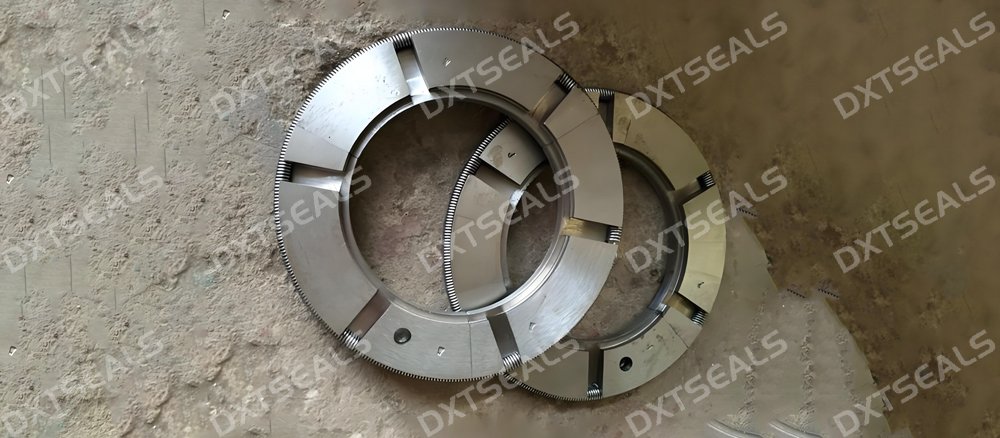
In air compressor systems, sealing components play a decisive role in keeping lubrication oil inside the compressor and preventing contaminants from entering. Among these components, oil scraper rings, shaft seals, and oil seals are the key elements that form a complete sealing system.
This article explains how each sealing component works, why they are essential, and how to select suitable materials for different operating conditions.
All sealing technologies shared here are supported by DXTSEALS, a professional manufacturer of oil seals, PTFE seals, and customized sealing solutions.
1️⃣ What Is the Purpose of a Sealing System in an Air Compressor?
The sealing system ensures:
-
Preventing oil leakage
-
Maintaining lubrication around bearings
-
Keeping contaminants and moisture out
-
Improving compressor efficiency and lifespan
A failure in the sealing system may lead to:
-
Oil consumption increase
-
Bearing overheating
-
Reduced compression efficiency
-
Unexpected shutdowns
2️⃣ Main Components of the Air Compressor Sealing System
🔧 1. Oil Scraper Ring — Controls Oil Return and Prevents Oil Migration
The oil scraper ring is installed near the shaft or piston to scrape excess lubrication oil and ensure the oil returns to the lubrication chamber.
Functions:
-
Removes excess oil from the rotating shaft
-
Prevents oil from entering the air compression chamber
-
Reduces oil carryover and oil consumption
Common materials:
| Material | Features |
|---|---|
| Stainless Steel | Strong wear resistance |
| PTFE | Low friction, suitable for high-temperature applications |
🔒 2. Shaft Seal — Blocks Oil Leakage Along the Shaft
The shaft seal (also known as a mechanical shaft seal) ensures that oil cannot leak along the rotating shaft.
Key characteristics:
-
Works under high pressure and high speed
-
Maintains oil film stability
-
Prevents gas leakage and oil loss
Material options (DXTSEALS supply):
-
NBR — economical, good oil resistance
-
FKM / Viton — heat-resistant, suitable for high-temperature compressors
-
PTFE — excellent chemical and wear resistance
🟢 3. Oil Seal — The Primary Barrier Against Leakage
Oil seals are the main component preventing oil leakage at the rotating shaft exit.
Advantages of quality oil seals:
-
Maintain lubrication integrity
-
Reduce friction and heat
-
Extend bearing life
DXTSEALS produces standard and non-standard oil seals that meet OEM replacement requirements.
3️⃣ How These Components Work Together
A complete sealing system operates like this:
| Component | Location | Main Function |
|---|---|---|
| Oil Scraper Ring | Near piston or shaft | Scrapes excess oil and returns it to lubrication space |
| Shaft Seal | Shaft exit area | Blocks leakage along shaft |
| Oil Seal | Final sealing at shaft passage | Prevents oil escaping into environment |
➡ When combined, they create a multi-stage sealing barrier that ensures stable compressor performance.
4️⃣ Material Selection Guide for Sealing Components
Operating conditions should determine the material selection:
| Operating Condition | Recommended Material |
|---|---|
| High temperature | FKM / PTFE |
| High speed | PTFE / PEEK |
| Oil resistance required | NBR / FKM |
| Chemical exposure | PTFE |
DXTSEALS supports custom materials, CNC machined PTFE seals, and non-standard dimensions.
5️⃣ Why Choose DXTSEALS for Air Compressor Sealing Solutions?
✅ Experience in sealing design for air compressor OEMs
✅ Custom production of oil scraper rings, shaft seals, PTFE seals
✅ Fast delivery for prototype and small-batch customization
From sealing material selection to production and final installation, DXTSEALS provides a one-stop sealing solution.
✅ Conclusion
A reliable sealing system is the key to ensuring stable air compressor operation. Oil scraper rings, shaft seals, and oil seals work together to:
-
Minimize oil leakage
-
Maintain lubrication efficiency
-
Reduce maintenance frequency
-
Extend equipment life
Whether you need standard oil seals or high-performance PTFE shaft seals, DXTSEALS can provide the right material and design for your application.