
Selecting the right sealing material is essential for ensuring reliable equipment performance, minimizing maintenance, and reducing operating costs. Among the many sealing materials available, graphite and rubber are two of the most commonly used. Each material offers unique advantages and is designed for different operating conditions.
Understanding the differences between graphite and rubber seals can help engineers and equipment manufacturers choose the most suitable solution for pumps, compressors, valves, mixers, and other industrial equipment.
Understanding Graphite Seals
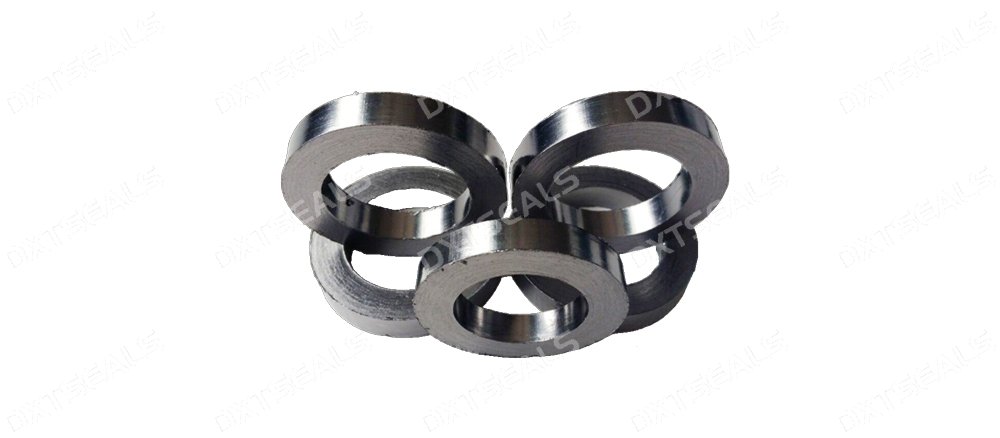
Graphite seals are manufactured from carbon graphite materials and are widely used in demanding industrial environments. They are especially popular in mechanical seals and rotating equipment because of their excellent self-lubricating properties and high resistance to heat and chemicals.
Common graphite sealing products include:
- Mechanical seal faces
- Carbon seal rings
- Graphite bushings
- Graphite bearings
- Wear rings
- Custom graphite sealing components
Graphite seals are typically precision machined to achieve high dimensional accuracy and excellent sealing performance.
Understanding Rubber Seals
Rubber seals are flexible sealing components made from elastomer materials. They are commonly used in static and low-to-medium dynamic sealing applications where elasticity and ease of installation are important.
Common rubber sealing products include:
- O-rings
- Oil seals
- Gaskets
- Lip seals
- Diaphragms
- Rubber washers
Different rubber materials are available for specific operating environments, including NBR, FKM (Viton®), EPDM, Silicone, HNBR, and Neoprene.
Advantages of Graphite Seals
Graphite offers several performance advantages in demanding industrial applications.
Excellent High-Temperature Resistance
Graphite maintains stable mechanical properties under extremely high temperatures where many rubber materials begin to lose elasticity or degrade.
Outstanding Chemical Resistance
Graphite is highly resistant to many acids, alkalis, solvents, and aggressive process chemicals, making it suitable for chemical processing and petrochemical industries.
Self-Lubricating Properties
Its natural lubricating characteristics reduce friction between sealing surfaces without requiring additional lubrication.
Superior Wear Resistance
Graphite provides excellent wear resistance in rotating applications, extending the service life of mechanical seals.
Dimensional Stability
Graphite maintains its shape under thermal cycling and demanding operating conditions, contributing to reliable sealing performance.
Advantages of Rubber Seals
Rubber seals remain the preferred choice for many industrial applications due to their flexibility and cost-effectiveness.
Excellent Elasticity
Rubber easily conforms to mating surfaces, creating effective sealing even when small dimensional variations exist.
Low Manufacturing Cost
Rubber sealing products are generally less expensive to manufacture, making them suitable for high-volume applications.
Easy Installation
Rubber seals are lightweight, flexible, and simple to install or replace.
Good Low-Pressure Sealing
For static sealing and moderate operating conditions, rubber provides excellent leakage prevention.
Wide Material Selection
Different elastomers are available to suit various temperatures, chemicals, and environmental conditions.
Limitations of Graphite Seals
Although graphite offers outstanding performance in many applications, it also has certain limitations.
- More brittle than rubber
- Less suitable for applications requiring high flexibility
- Higher manufacturing cost due to precision machining
- May require careful handling during installation
Graphite is generally best suited for precision mechanical sealing rather than applications requiring elastic deformation.
Limitations of Rubber Seals
Rubber materials also have performance limitations that should be considered.
- Limited operating temperature range
- Can age and harden over time
- May swell when exposed to incompatible chemicals
- Lower wear resistance in high-speed rotating equipment
- Shorter service life under severe operating conditions
Proper material selection is essential to maximize the performance of rubber seals.
Graphite vs Rubber: Key Comparison
| Feature | Graphite Seals | Rubber Seals |
|---|---|---|
| Temperature Resistance | Excellent | Moderate to Good (depends on material) |
| Chemical Resistance | Excellent | Material dependent |
| Wear Resistance | Excellent | Moderate |
| Self-Lubrication | Yes | No |
| Flexibility | Low | Excellent |
| Elastic Sealing | Limited | Excellent |
| Pressure Capability | High | Moderate to High |
| Cost | Higher | Lower |
| Service Life | Long | Moderate |
| Precision Applications | Excellent | Limited |
How to Choose the Right Material
The best sealing material depends on your equipment, operating conditions, and performance requirements.
Graphite is generally recommended when:
- Operating temperatures are very high.
- Equipment runs continuously.
- Low friction is essential.
- Chemical resistance is required.
- Mechanical seals are used in rotating equipment.
- Long service life is a priority.
Rubber is generally recommended when:
- Flexible sealing is required.
- Static sealing applications are involved.
- Moderate temperatures are expected.
- Installation needs to be simple.
- Cost is an important consideration.
- Standard O-rings or gaskets are sufficient.
Can Graphite and Rubber Be Used Together?
Yes. Many modern sealing systems combine graphite and rubber to achieve optimal performance.
For example, a mechanical seal may use:
- Graphite as the sealing face for low friction and wear resistance.
- Rubber O-rings or secondary seals to provide elasticity and compensate for dimensional tolerances.
This combination takes advantage of the strengths of both materials while minimizing their individual limitations.
Custom Sealing Solutions
Every industrial application has unique operating requirements. An experienced sealing manufacturer can provide customized solutions based on:
- Operating temperature
- Pressure
- Rotational speed
- Chemical media
- Equipment design
- Industry standards
Custom services may include precision-machined graphite components, molded rubber seals, OEM manufacturing, replacement parts, and non-standard sealing designs.
Conclusion
Both graphite and rubber are essential materials in industrial sealing technology, but they serve different purposes. Graphite excels in high-temperature, high-speed, and chemically aggressive environments where durability and low friction are critical. Rubber, on the other hand, provides excellent flexibility, easy installation, and cost-effective sealing for a wide range of general industrial applications.
Choosing the right material requires careful evaluation of operating conditions, equipment requirements, and expected service life. In many cases, combining graphite and rubber within the same sealing system provides the best balance of performance, reliability, and cost-effectiveness.