
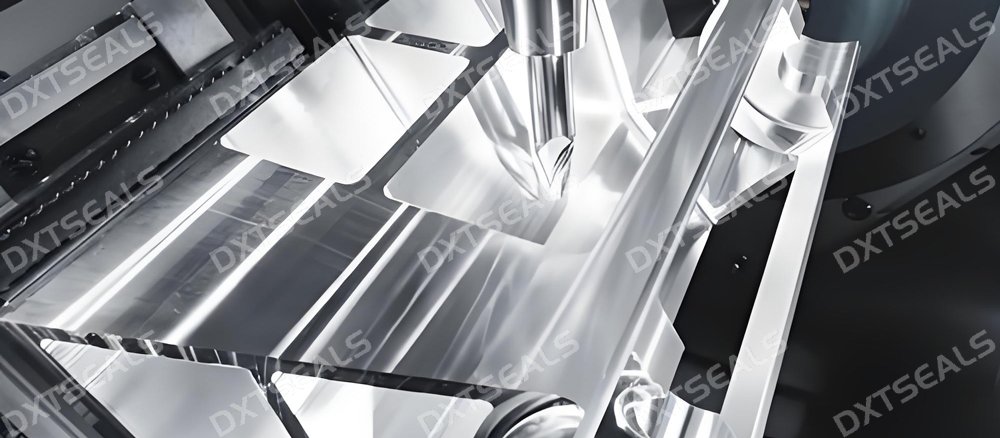
Introduction
High-hardness metal materials are widely used in industries requiring superior strength, wear resistance, and durability. Examples include hardened tool steels, alloy steels after heat treatment, and certain high-performance alloys.
However, while these materials provide outstanding mechanical properties, they present significant challenges during machining. This article analyzes the main machining difficulties of high-hardness metals and introduces effective technical solutions.
Common High-Hardness Metal Materials
High-hardness materials typically include:
-
Hardened carbon steel
-
Alloy steel after heat treatment
-
Tool steel
-
Certain stainless steels
-
High-strength special alloys
These materials often exceed 45–60 HRC, making them difficult to machine using conventional methods.
Key Machining Challenges
1. Rapid Tool Wear
High hardness increases friction and cutting resistance, causing accelerated tool wear and reduced tool life.
2. High Cutting Forces
Hard materials require greater cutting forces, which may lead to vibration, reduced accuracy, and machine stress.
3. Heat Accumulation
Low thermal conductivity and high cutting resistance generate significant heat at the cutting zone, affecting tool performance and surface integrity.
4. Surface Integrity Risks
Improper machining parameters may cause micro-cracks, burns, or residual stress, reducing component lifespan.
At DXTSEALS, advanced machining strategies are implemented to maintain dimensional stability and surface quality when processing hardened materials.
Effective Machining Solutions
Advanced Cutting Tool Materials
Using carbide, ceramic, or cubic boron nitride (CBN) tools significantly improves wear resistance and performance when machining hardened metals.
Optimized Cutting Parameters
Lower cutting speeds combined with controlled feed rates help manage heat generation and maintain cutting stability.
Rigid Machine Setup
High-rigidity CNC machines and stable fixturing systems minimize vibration and improve dimensional accuracy.
Controlled Cooling Strategies
High-pressure coolant systems or minimum quantity lubrication (MQL) help reduce heat buildup and extend tool life.
Hard Milling and Grinding Integration
In many cases, hard milling replaces traditional grinding for improved efficiency, while precision grinding ensures final dimensional accuracy.
Industry Applications
High-hardness metal machining is widely applied in:
Mold and Die Manufacturing
Tool steels require precise machining to ensure durability and dimensional accuracy.
Energy and Heavy Equipment
Hardened components are used in high-load and high-pressure environments.
Aerospace and Industrial Systems
High-strength alloys provide reliability in extreme operating conditions.
Precision Sealing and Structural Components
Hardened materials are used in demanding mechanical systems requiring wear resistance and long service life.
Quality Control Considerations
For high-hardness materials, strict inspection is essential:
-
Dimensional verification
-
Surface roughness measurement
-
Hardness testing
-
Residual stress monitoring
Careful quality control ensures long-term performance and reliability.
Conclusion
Machining high-hardness metal materials presents challenges such as tool wear, high cutting forces, and heat management. However, with advanced tooling, optimized parameters, rigid equipment, and effective cooling strategies, these challenges can be successfully overcome.
By implementing proper machining solutions, manufacturers can achieve high precision, extended tool life, and superior component performance in demanding industrial applications.