
Introduction
Heavy-duty equipment used in industries such as mining, steel production, construction, and energy generation operates under extreme conditions. High loads, continuous operation, vibration, and harsh environments place enormous stress on mechanical components. Among these components, bearings play a critical role in maintaining stable, reliable, and efficient operation.
This article explores how bearings function in heavy-load applications and highlights key application scenarios where bearing performance is essential.
Challenges Faced by Bearings in Heavy-Duty Equipment
Bearings in heavy-duty machinery must withstand multiple operational challenges, including:
-
Extremely high radial and axial loads
-
Continuous or long-duty cycles
-
Shock loads and vibrations
-
High temperatures and contaminated environments
-
Misalignment and structural deformation
To ensure stability, bearing design, material selection, lubrication, and installation accuracy must be carefully optimized.
How Bearings Ensure Stable Operation Under Heavy Loads
1. Optimized Load Distribution
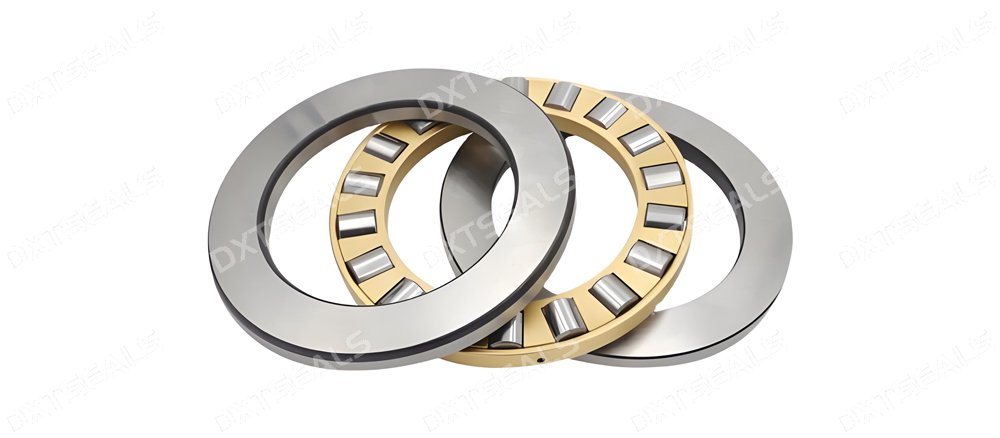
Heavy-duty bearings are engineered to distribute loads evenly across rolling elements and raceways. Designs such as spherical roller bearings, tapered roller bearings, and cylindrical roller bearings are commonly used to handle high loads without premature fatigue.
2. High-Strength Materials and Heat Treatment
Bearings for heavy-load applications are manufactured from high-quality alloy steels with advanced heat treatment processes. This improves fatigue resistance, wear resistance, and load-carrying capacity, ensuring long-term stability under demanding conditions.
3. Precision Manufacturing and Clearance Control
Proper internal clearance allows bearings to accommodate thermal expansion and deformation under load. Precision manufacturing reduces friction, minimizes vibration, and enhances operational stability.
4. Effective Lubrication Systems
Adequate lubrication reduces metal-to-metal contact, controls temperature, and protects against corrosion. In heavy-duty equipment, grease or oil circulation systems are often used to maintain consistent lubrication even under extreme loads.
Key Applications of Bearings in Heavy-Duty Equipment
Mining and Quarry Machinery
Equipment such as crushers, conveyors, and grinding mills rely on heavy-duty bearings to support massive loads and continuous operation. Bearing stability directly impacts productivity and equipment lifespan.
Steel and Metallurgical Equipment
Rolling mills, continuous casting machines, and furnaces operate under high temperatures and loads. Specialized bearings ensure smooth rotation, accurate alignment, and reduced downtime.
Construction and Earthmoving Equipment
Excavators, cranes, and loaders require bearings that can handle shock loads and frequent directional changes. Robust bearing solutions improve safety and operational reliability.
Energy and Power Generation
Wind turbines, hydropower units, and thermal power equipment depend on high-load bearings to maintain rotational stability and reduce maintenance costs over long service intervals.
Selecting the Right Bearing Solution
Choosing the correct bearing for heavy-duty equipment requires consideration of:
-
Load type and magnitude
-
Operating speed and temperature
-
Environmental conditions
-
Expected service life and maintenance intervals
At DXTSEALS, we provide industrial bearing and sealing solutions designed to support heavy-load applications, helping customers improve equipment stability, efficiency, and reliability.
Conclusion
Bearings are essential components that enable heavy-duty equipment to operate smoothly under extreme loads. Through optimized design, high-strength materials, precise manufacturing, and effective lubrication, bearings maintain stability even in the harshest industrial environments.
Understanding bearing performance and application requirements is key to extending equipment life and reducing operational risk.