
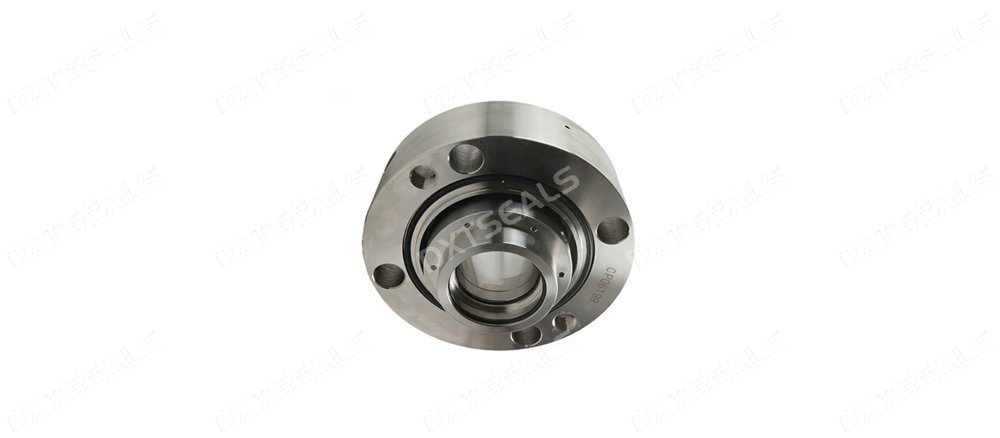
Mechanical seals play a vital role in preventing fluid leakage and ensuring the reliable operation of pumps, compressors, mixers, and other rotating equipment. While seal design and manufacturing precision are important, the performance of a mechanical seal largely depends on the materials used for its sealing faces.
Different operating conditions require different material combinations. Factors such as temperature, pressure, chemical exposure, rotational speed, and abrasive particles can significantly affect seal life and reliability.
Among the most commonly used mechanical seal face materials are Silicon Carbide (SiC), Carbon Graphite, Ceramic, and Tungsten Carbide (TC). Each material offers unique advantages and is suited to specific applications.
This article compares these four widely used materials and helps engineers and buyers select the most suitable solution for their sealing requirements.
Why Material Selection Matters in Mechanical Seals
Mechanical seal faces operate under continuous friction while maintaining a microscopic fluid film between rotating and stationary surfaces.
The selected materials directly influence:
- Wear resistance
- Friction characteristics
- Chemical compatibility
- Thermal stability
- Mechanical strength
- Service life
- Maintenance frequency
Improper material selection may result in:
- Excessive wear
- Leakage
- Face cracking
- Thermal damage
- Premature seal failure
Therefore, understanding the properties of different seal materials is essential for achieving optimal performance.
Silicon Carbide (SiC)
Overview
Silicon Carbide is considered one of the highest-performance materials used in modern mechanical seals.
It is available in several grades, including:
- Reaction-Bonded Silicon Carbide (RB SiC)
- Sintered Silicon Carbide (SSiC)
- Pressureless Sintered Silicon Carbide
Among these, sintered silicon carbide generally provides the highest performance.
Key Advantages of Silicon Carbide
Exceptional Wear Resistance
Silicon carbide is extremely hard, making it highly resistant to wear even under demanding operating conditions.
Outstanding Chemical Resistance
It resists most acids, alkalis, solvents, and aggressive process chemicals.
Excellent Thermal Conductivity
Efficient heat dissipation helps reduce thermal distortion and improves seal stability.
Low Thermal Expansion
Dimensional stability is maintained even during temperature fluctuations.
Limitations of Silicon Carbide
- Higher material cost
- Relatively brittle compared to tungsten carbide
- Sensitive to severe mechanical impact
Typical Applications
Silicon carbide is commonly used in:
- Chemical processing pumps
- Pharmaceutical equipment
- Semiconductor systems
- Oil and gas applications
- High-purity fluid handling systems
Performance Summary
| Property | Silicon Carbide |
|---|---|
| Wear Resistance | Excellent |
| Corrosion Resistance | Excellent |
| Thermal Conductivity | Excellent |
| Impact Resistance | Moderate |
| Cost | High |
Carbon Graphite
Overview
Carbon Graphite is one of the most widely used materials for mechanical seal faces.
Unlike hard-face materials, carbon graphite provides self-lubricating properties that make it ideal for many dynamic sealing applications.
Key Advantages of Carbon Graphite
Self-Lubrication
Carbon graphite naturally reduces friction and helps maintain stable operation.
Low Friction Coefficient
Lower friction minimizes heat generation and wear.
Good Dry-Running Capability
Carbon materials can tolerate temporary lubrication interruptions better than many other seal materials.
Thermal Shock Resistance
The material handles rapid temperature changes effectively.
Limitations of Carbon Graphite
- Lower hardness than carbide materials
- Limited abrasion resistance
- May wear more quickly in dirty or slurry applications
Typical Applications
Carbon graphite is commonly paired with:
- Silicon carbide
- Tungsten carbide
- Ceramic
Applications include:
- Water pumps
- Food processing equipment
- HVAC systems
- General industrial pumps
Performance Summary
| Property | Carbon Graphite |
|---|---|
| Friction Control | Excellent |
| Self-Lubrication | Excellent |
| Wear Resistance | Good |
| Abrasion Resistance | Moderate |
| Cost | Moderate |
Ceramic (Alumina)
Overview
Ceramic seal faces, typically made from alumina oxide, are among the most economical sealing materials.
For decades, ceramic materials have been widely used in standard industrial and commercial pumps.
Key Advantages of Ceramic
Cost-Effective Solution
Ceramic provides good performance at a relatively low cost.
Corrosion Resistance
Suitable for many water-based and mildly corrosive fluids.
Good Hardness
Offers acceptable wear resistance in clean operating environments.
Limitations of Ceramic
- Lower mechanical strength than silicon carbide
- Susceptible to cracking under impact
- Limited performance in abrasive environments
- Lower thermal conductivity
Typical Applications
Ceramic seals are often used in:
- Water pumps
- Residential systems
- HVAC equipment
- Light-duty industrial applications
Performance Summary
| Property | Ceramic |
|---|---|
| Cost Efficiency | Excellent |
| Corrosion Resistance | Good |
| Wear Resistance | Moderate |
| Mechanical Strength | Moderate |
| Thermal Conductivity | Low |
Tungsten Carbide (TC)
Overview
Tungsten Carbide is one of the toughest materials used in mechanical seal manufacturing.
It is highly valued for its mechanical strength and ability to withstand severe operating conditions.
Key Advantages of Tungsten Carbide
Exceptional Mechanical Strength
Tungsten carbide is highly resistant to impact and mechanical shock.
Superior Abrasion Resistance
It performs extremely well in applications containing solid particles and abrasive media.
High Pressure Capability
Its structural strength makes it suitable for demanding industrial applications.
Long Service Life
When properly matched to operating conditions, tungsten carbide offers excellent durability.
Limitations of Tungsten Carbide
- Higher density and weight
- Higher friction than carbon-based materials
- More expensive than ceramic solutions
- Lower chemical resistance than silicon carbide in certain media
Typical Applications
Tungsten carbide is commonly used in:
- Mining equipment
- Slurry pumps
- Wastewater treatment systems
- Pulp and paper processing
- Heavy industrial machinery
Performance Summary
| Property | Tungsten Carbide |
|---|---|
| Mechanical Strength | Excellent |
| Abrasion Resistance | Excellent |
| Impact Resistance | Excellent |
| Corrosion Resistance | Good |
| Cost | High |
Comparison of Common Mechanical Seal Materials
| Property | Silicon Carbide | Carbon Graphite | Ceramic | Tungsten Carbide |
|---|---|---|---|---|
| Wear Resistance | Excellent | Good | Moderate | Excellent |
| Corrosion Resistance | Excellent | Good | Good | Good |
| Friction Control | Good | Excellent | Moderate | Good |
| Thermal Conductivity | Excellent | Good | Low | Good |
| Impact Resistance | Moderate | Good | Low | Excellent |
| Abrasion Resistance | Excellent | Moderate | Moderate | Excellent |
| Cost | High | Moderate | Low | High |
How to Select the Right Mechanical Seal Material
Material selection should always be based on operating conditions.
For Corrosive Chemicals
Recommended:
- Silicon Carbide
- Silicon Carbide + Silicon Carbide
For General Industrial Pumps
Recommended:
- Carbon Graphite + Silicon Carbide
- Carbon Graphite + Ceramic
For Abrasive Slurries
Recommended:
- Tungsten Carbide + Tungsten Carbide
- Carbon Graphite + Tungsten Carbide
For Cost-Sensitive Applications
Recommended:
- Carbon Graphite + Ceramic
For High-Purity Applications
Recommended:
- Silicon Carbide + Silicon Carbide
Why Material Pairing Is More Important Than Individual Materials
The performance of a mechanical seal depends not only on individual materials but also on how they work together as a friction pair.
Common combinations include:
Carbon Graphite + Silicon Carbide
- Low friction
- Excellent wear resistance
- Widely used across industries
Silicon Carbide + Silicon Carbide
- Maximum chemical resistance
- Superior durability
Carbon Graphite + Tungsten Carbide
- Strong wear resistance
- Good impact tolerance
Carbon Graphite + Ceramic
- Economical solution
- Suitable for general applications
Selecting the right combination often delivers better performance than simply choosing the most expensive material.
Why DXTSEALS Offers Multiple Material Solutions
At DXTSEALS, we understand that every application has unique sealing requirements.
Our manufacturing capabilities support a wide range of material options, including:
- Silicon Carbide (SiC)
- Tungsten Carbide (TC)
- Carbon Graphite
- Ceramic
- Stainless Steel Components
- Advanced Elastomers
We help customers optimize material combinations based on:
- Process media
- Temperature
- Pressure
- Shaft speed
- Equipment type
- Service life expectations
This customized approach ensures maximum sealing performance and cost efficiency.
Conclusion
Silicon Carbide, Carbon Graphite, Ceramic, and Tungsten Carbide are among the most important materials used in modern mechanical seals. Each offers unique strengths in terms of wear resistance, corrosion protection, friction control, and durability.
Understanding the characteristics of these materials and selecting the appropriate material pairing can significantly improve seal reliability, reduce maintenance costs, and extend equipment service life.
With extensive material expertise and precision manufacturing capabilities, DXTSEALS provides optimized mechanical seal solutions for demanding industrial applications worldwide.