
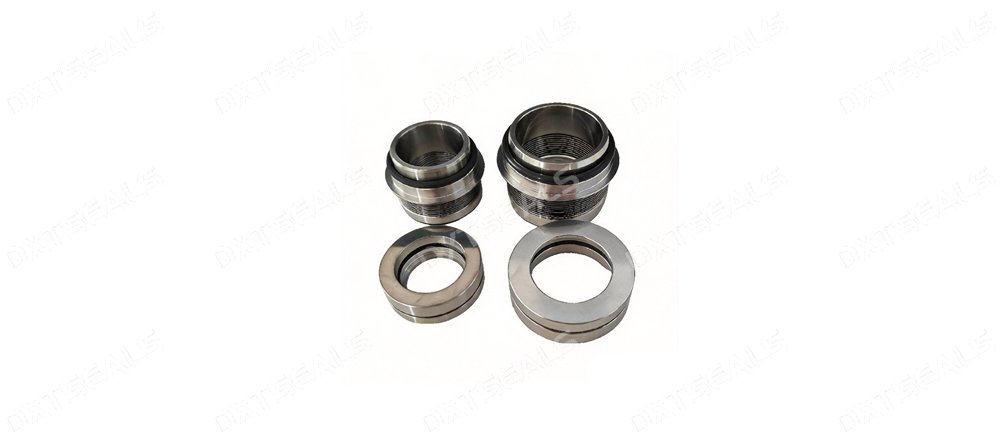
Mechanical seals are essential components in rotating equipment, providing reliable sealing between rotating shafts and stationary housings. They are widely used in pumps, compressors, mixers, agitators, and many other industrial machines to prevent leakage, improve efficiency, and extend equipment life.
With increasing demands for higher operating pressures, temperatures, and chemical compatibility, modern mechanical seals must combine advanced materials with precision manufacturing to ensure long-term performance.
Why Mechanical Seals Are Important
Compared with traditional packing seals, mechanical seals offer significant advantages:
- Excellent leakage control
- Longer service life
- Reduced maintenance costs
- Lower energy consumption
- Improved equipment reliability
- Enhanced environmental protection
These benefits make mechanical seals the preferred sealing solution for a wide range of industrial applications.
Applications of Mechanical Seals
Mechanical seals are used in many types of rotating equipment.
Pumps
Mechanical seals are commonly installed in centrifugal pumps, chemical pumps, slurry pumps, and process pumps. They prevent fluid leakage while protecting bearings and shafts from contamination.
Compressors
Compressor seals operate under high rotational speeds and pressure conditions. High-quality sealing solutions help improve efficiency and reduce gas leakage.
Mixers and Agitators
Mixers often process abrasive, corrosive, or high-viscosity media. Mechanical seals for these applications must provide reliable sealing while accommodating shaft movement.
Other Rotating Equipment
Mechanical seals are also widely used in:
- Blowers
- Reactors
- Gearboxes
- Hydraulic equipment
- Turbines
- Food processing machinery
- Pharmaceutical equipment
Common Mechanical Seal Types
The most common mechanical seal designs include:
- Single mechanical seals
- Double mechanical seals
- Cartridge mechanical seals
- Balanced mechanical seals
- Unbalanced mechanical seals
- Split mechanical seals
Each design is suitable for different operating pressures, temperatures, and process requirements.
Material Selection
Choosing the proper seal materials is essential for reliable performance.
Common sealing face materials include:
- Silicon Carbide (SiC)
- Tungsten Carbide (WC)
- Carbon Graphite
- Ceramic
Common secondary sealing materials include:
- PTFE
- FKM (Viton)
- EPDM
- NBR
Material selection should consider operating temperature, pressure, shaft speed, media compatibility, and wear resistance.
Precision Manufacturing
Mechanical seals require extremely high machining accuracy. Precision manufacturing helps ensure excellent sealing performance and longer service life.
Typical manufacturing processes include:
- CNC turning
- CNC milling
- Precision grinding
- Lapping
- Surface polishing
- Quality inspection
Strict dimensional control and surface finish are critical for minimizing leakage and extending seal life.
Custom Mechanical Seal Solutions
Many industrial applications require customized sealing solutions instead of standard products.
An experienced manufacturer can provide:
- OEM mechanical seal production
- Replacement seals
- Reverse engineering from samples
- Custom dimensions
- Special material combinations
- Non-standard seal designs
Custom manufacturing allows equipment operators to optimize sealing performance for specific operating conditions.
Industries Served
Mechanical seals are widely used in industries such as:
- Chemical processing
- Oil and gas
- Water treatment
- Food and beverage
- Pharmaceutical manufacturing
- Mining
- Power generation
- Marine engineering
- Semiconductor manufacturing
Maintenance Recommendations
Proper maintenance helps maximize seal life.
Recommended practices include:
- Maintain correct shaft alignment.
- Avoid dry running.
- Keep flushing systems clean.
- Monitor vibration and temperature.
- Replace worn sealing components promptly.
- Perform regular inspections.
Preventive maintenance can significantly reduce unexpected equipment downtime.
Choosing the Right Mechanical Seal Manufacturer
When selecting a mechanical seal supplier, consider the following factors:
- Precision machining capability
- Experience with custom manufacturing
- Wide material selection
- Strict quality control
- OEM and replacement manufacturing capability
- Fast technical support
- Stable product quality
A reliable manufacturer can provide sealing solutions that improve equipment reliability while reducing operating costs.
Conclusion
Mechanical seals play a vital role in pumps, compressors, mixers, and other rotating equipment. Selecting the right seal design, materials, and manufacturing process helps improve sealing performance, reduce maintenance costs, and extend equipment service life.
Whether you require standard replacement seals or fully customized mechanical seal solutions, partnering with a precision manufacturer ensures reliable performance across a wide range of industrial applications.