
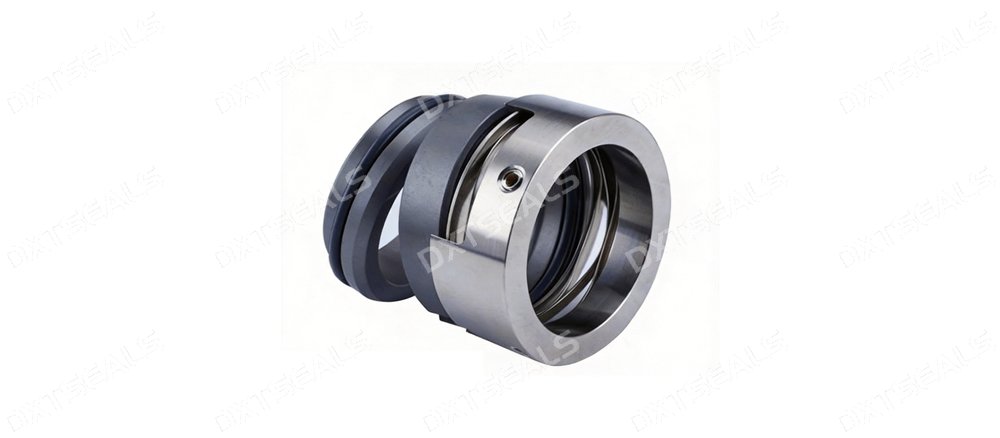
Mechanical seals are often discussed as if they are single sealing products installed on rotating equipment. In reality, a mechanical seal is usually part of a larger sealing system made up of multiple precision components and supporting sealing elements. In many industrial machines, the mechanical seal itself does not work alone. It operates together with O-rings, gaskets, oil seals, sleeves, gland plates, and other conventional sealing components to form a complete and reliable sealing arrangement.
This is one of the most important ideas in industrial sealing design: mechanical seals and conventional seals are not competing systems in every situation—they often work together inside the same equipment. A pump, mixer, compressor, or reactor may use a mechanical seal as the primary dynamic seal for process fluid containment, while relying on elastomer seals, gaskets, and auxiliary sealing parts to support installation, static sealing, contamination control, and overall system stability.
Understanding the structure of a mechanical seal system and the role of each supporting sealing element helps engineers and buyers make better decisions when selecting, maintaining, or upgrading industrial sealing solutions.
This article explains the key structural components of a mechanical seal system and analyzes how mechanical seals cooperate with conventional sealing products in real equipment applications.
A Mechanical Seal Is More Than Just Two Seal Faces
When people refer to a “mechanical seal,” they often focus only on the rotating ring and stationary ring that create the main sealing interface. These are indeed the core functional elements, but a complete mechanical sealing arrangement includes much more than that.
A mechanical seal system generally contains:
- Primary seal faces
- Springs or bellows
- Secondary sealing elements such as O-rings or gaskets
- Metal hardware for positioning and driving
- Shaft sleeves or seal sleeves
- Gland plates and housings
- In some cases, auxiliary systems such as flushing, cooling, or barrier fluid arrangements
Because of this layered structure, the reliability of a mechanical seal depends not only on the seal faces themselves, but also on the performance of the supporting conventional sealing components around them.
Core Structure of a Mechanical Seal System
To understand how the system works, it is useful to break it down into its major structural elements.
1. Seal Faces: The Core Dynamic Sealing Interface
The most critical part of a mechanical seal is the pair of seal faces:
- Rotary seal face – rotates with the shaft
- Stationary seal face – remains fixed in the housing or gland
These two faces are lapped to a very high degree of flatness and run against each other to create the main sealing interface.
Main function of the seal faces
- Prevent process fluid leakage along the shaft
- Maintain a controlled sealing gap with a very thin lubricating film
- Withstand pressure, speed, and thermal load during operation
The face materials are selected according to the operating conditions and may include:
- Silicon Carbide
- Tungsten Carbide
- Carbon Graphite
- Ceramic
- Special engineered materials for corrosive or abrasive service
The seal faces are the heart of the mechanical seal, but they cannot function correctly without the support of other structural and sealing elements.
2. Springs or Bellows: Maintaining Face Contact and Compensation
Mechanical seals require a controlled closing force to keep the two seal faces in contact during operation. This force is provided by springs or by a metal bellows structure in some designs.
Main function of springs or bellows
- Maintain contact pressure between the rotating and stationary faces
- Compensate for wear of the seal faces
- absorb small shaft movements or axial displacement
- support stable sealing during pressure fluctuations
Spring arrangements may be:
- Single-spring designs
- Multiple-spring designs
- Wave spring structures
- Metal bellows constructions for high-temperature or corrosive applications
Without these components, the seal faces would not maintain the correct contact relationship, and sealing performance would quickly deteriorate.
3. Secondary Seals: O-Rings, Gaskets, and Elastomer Elements
One of the most important links between mechanical seals and ordinary sealing components is the use of secondary seals.
A mechanical seal does not only seal at the face interface. It must also prevent leakage between static or semi-static components such as:
- seal face and shaft sleeve
- stationary ring and gland plate
- hardware and housing
- seal assembly and equipment casing
This is where O-rings, gaskets, PTFE rings, or other elastomeric seals play a critical role.
Main function of secondary seals
- Seal between the mechanical seal components and the equipment structure
- prevent bypass leakage around the main seal faces
- compensate for manufacturing tolerances and assembly gaps
- provide static or limited dynamic sealing inside the seal assembly
Common secondary sealing elements in mechanical seals:
- O-rings
- PTFE wedges
- elastomer bellows
- flat gaskets
- rubber cups
- custom polymer sealing rings
These conventional sealing parts are essential to the performance of the mechanical seal system. Even if the seal faces are perfectly designed, leakage can still occur if the secondary sealing elements are poorly selected, damaged, or chemically incompatible.
4. Metal Hardware: Holding, Driving, and Positioning the Seal Assembly
Mechanical seals also rely on metal structural parts to keep all sealing elements correctly aligned and functioning as a system.
These metal components may include:
- Drive collars
- Retainers
- Set screws
- Springs seats
- Gland plates
- Stationary seats
- Locking rings
Main function of metal hardware
- Transmit torque from the shaft to the rotating seal face
- hold the stationary and rotating elements in the correct position
- support spring loading
- ensure dimensional stability under operating conditions
- allow installation of the seal into the equipment
The metal hardware does not provide the sealing function by itself, but it is essential for maintaining the geometry and integrity of the seal system.
5. Shaft Sleeves and Seal Sleeves: Protecting the Shaft and Supporting the Seal
In many pumps and industrial machines, the mechanical seal is mounted on a shaft sleeve rather than directly on the shaft.
Main function of a shaft sleeve
- Provide a precision mounting surface for the seal
- protect the shaft from wear and corrosion
- simplify maintenance and replacement
- improve dimensional consistency for the seal assembly
This is especially important in process equipment where the medium is corrosive or abrasive. A replaceable sleeve is often more economical than replacing the entire shaft.
In some equipment, the sleeve itself may require additional sealing support through O-rings or gaskets, again showing the cooperative relationship between mechanical seals and conventional sealing elements.
6. Gland Plates and Seal Chambers: Integrating the Seal with the Equipment
The mechanical seal must be mounted securely into the equipment, and this is typically achieved through a gland plate or seal chamber structure.
Main function of the gland and seal chamber
- Hold the stationary part of the seal
- connect the seal assembly to the pump or equipment housing
- provide a sealed interface between the seal and the machine casing
- create space for flushing, cooling, or barrier fluid if needed
To prevent leakage at these joints, gaskets or O-rings are often used between:
- gland plate and pump casing
- stationary seat and housing
- seal cover and chamber components
Again, this illustrates that a mechanical seal system depends heavily on conventional sealing parts for its complete performance.
7. Auxiliary Support Systems in Advanced Mechanical Seal Arrangements
In demanding applications, the sealing system may also include auxiliary support systems that are not part of a basic seal but are essential for performance.
These may include:
- Flush systems
- Quench systems
- Barrier fluid systems
- Cooling jackets
- Instrumentation ports
These support systems are often used in:
- High-temperature service
- high-pressure process pumps
- hazardous chemical applications
- slurry or dirty fluid handling
- double mechanical seal arrangements
Although these systems are not “ordinary seals,” they further demonstrate that a mechanical seal is part of a larger engineered sealing system rather than an isolated component.
How Mechanical Seals Work Together with Conventional Sealing Components
A common misunderstanding in industrial sealing is to treat mechanical seals and conventional seals as completely separate product families with no overlap. In actual equipment design, they often cooperate closely.
Below are the main ways this collaboration happens.
1. O-Rings as Secondary Seals Inside Mechanical Seal Assemblies
O-rings are one of the most common supporting elements in mechanical seal systems.
They may be used to seal between:
- rotating ring and sleeve
- stationary ring and gland
- seal seat and housing
- cartridge seal components
Without these O-rings, the mechanical seal could suffer from internal bypass leakage even if the seal faces themselves remain intact.
In this sense, O-rings are not an alternative to the mechanical seal—they are part of the mechanical seal system.
2. Gaskets for Static Sealing Around the Seal Chamber
Flat gaskets or elastomer gaskets are often used at the external mounting surfaces of the seal system.
Typical gasket locations include:
- between gland plate and pump casing
- between seal housing and equipment cover
- in auxiliary piping or flush connections
These seals ensure that the mechanical seal assembly is properly integrated into the equipment without leakage at static joints.
3. Oil Seals for Auxiliary Shaft Protection Outside the Main Process Seal Area
In some industrial equipment, an oil seal may still be used in a section adjacent to a mechanical seal, especially where the equipment contains:
- bearing lubrication zones
- gearbox sections
- contamination-exclusion requirements
- dust protection needs outside the process-fluid area
For example, a rotating machine may use:
- a mechanical seal to seal the main process fluid
- an oil seal to protect the bearing chamber or retain lubricating grease in another section of the machine
This does not mean the two products perform the same task. Instead, they serve different sealing roles within the same system.
4. PTFE or Special Polymer Seals for Chemical Resistance Support
In corrosive or high-purity applications, conventional elastomer O-rings may not provide enough chemical resistance. In such cases, the mechanical seal system may incorporate:
- PTFE wedges
- PTFE secondary seals
- spring-energized PTFE elements
- special polymer backup rings
These components help the mechanical seal function reliably in aggressive media where standard rubber-based sealing elements may fail.
Why Mechanical Seal Performance Depends on Conventional Sealing Components
A mechanical seal is only as reliable as the entire sealing system around it. Even if the seal faces are high quality, system failure can still occur if supporting conventional sealing elements are not correctly selected.
Common failure causes related to supporting components include:
- O-ring chemical swelling or hardening
- gasket compression failure
- sleeve corrosion or wear
- improper gland sealing
- installation damage to secondary seals
- elastomer incompatibility with temperature or media
This is why seal selection should never focus only on the face material or mechanical seal model. Engineers must also evaluate:
- O-ring material compatibility
- gasket design
- shaft sleeve condition
- gland plate sealing surfaces
- auxiliary sealing needs in the equipment
A properly designed sealing system requires the mechanical seal and its supporting conventional seals to work as one coordinated assembly.
Mechanical Seal System vs Standalone Conventional Seal: Key Difference in Function
It is also important to understand the functional distinction between a mechanical seal system and a single conventional sealing component.
A conventional seal such as an O-ring or oil seal is usually:
- a single sealing element
- installed for one sealing function
- relatively simple in structure
- used for static sealing, lubricant retention, or basic shaft sealing
A mechanical seal system is usually:
- a multi-component sealing assembly
- designed for dynamic process-fluid sealing
- integrated with hardware, secondary seals, and mounting structures
- intended for more demanding pressure, speed, and leakage-control conditions
In other words, a mechanical seal system often includes conventional seals as part of its structure, but it performs a broader and more complex sealing function.
Typical Equipment Example: How Multiple Seals Work Together in a Pump
A centrifugal pump is a good example of how mechanical seals and conventional seals cooperate.
A pump may contain:
Mechanical seal
Used at the shaft passage to prevent pumped fluid from leaking out of the pump casing.
O-rings
Used inside the seal assembly to seal the rotary ring, stationary ring, or sleeve interfaces.
Gaskets
Used between gland plate and pump casing.
Oil seals or bearing isolators
Used at the bearing housing to retain lubricant and block contamination.
Additional elastomer seals
Used in flush systems, cartridge assemblies, or auxiliary components.
This illustrates that the sealing system of one machine may involve several different sealing products, each performing a specific task.
Benefits of Understanding the Full Mechanical Seal System
For buyers, maintenance teams, and equipment designers, understanding the full structure of a mechanical seal system brings several advantages:
More accurate seal selection
You can evaluate not only the main seal type, but also the compatibility of O-rings, sleeves, and gaskets.
Better failure analysis
Leakage may come from secondary seals or gland joints—not only from the seal faces.
Improved maintenance planning
Supporting components such as elastomers, sleeves, and gaskets can be replaced before they cause seal failure.
Better custom design decisions
When designing non-standard mechanical seals, the supporting sealing elements are just as important as the face materials and hardware geometry.
DXTSEALS: Integrated Sealing Solutions for Mechanical Seal Systems and Conventional Seals
At DXTSEALS, we understand that a reliable sealing solution is rarely just one part. It is a coordinated system of primary sealing faces, secondary seals, metal hardware, and supporting sealing components.
Our product and manufacturing capabilities include:
Mechanical Seal Solutions
- Standard mechanical seals
- Cartridge mechanical seals
- Double mechanical seals
- OEM-equivalent replacements
- Custom non-standard mechanical seals
Conventional and Supporting Sealing Products
- O-rings
- Oil seals
- PTFE seals
- Spring-energized seals
- Gaskets and custom polymer sealing elements
Engineering and Manufacturing Support
- Material selection for both seal faces and secondary seals
- Reverse engineering from samples or drawings
- CNC precision machining
- Seal system optimization for different media, pressures, and temperatures
- Support for both standard and custom industrial applications
Whether the requirement is a standalone mechanical seal or a complete sealing system combining multiple sealing technologies, DXTSEALS can help customers build a more reliable and efficient solution.
Conclusion
A mechanical seal system is far more than a pair of sealing faces. It is a coordinated assembly of dynamic sealing faces, springs or bellows, secondary seals, sleeves, gland components, and other supporting parts that work together to prevent leakage and maintain equipment reliability.
Conventional sealing products such as O-rings, gaskets, PTFE rings, and even oil seals often play an essential supporting role within or around the mechanical seal system. Rather than replacing one another, these products frequently cooperate in the same machine, each performing a different sealing function.
Understanding this relationship is essential for proper seal selection, maintenance planning, failure analysis, and custom sealing design. By looking at the entire sealing system rather than only the main seal face, engineers and buyers can make better decisions and improve the performance of pumps, compressors, mixers, and other industrial equipment.
With broad manufacturing capabilities in both mechanical seals and conventional sealing products, DXTSEALS provides integrated sealing solutions for customers seeking reliability, flexibility, and long-term performance across diverse industrial applications.