
Introduction
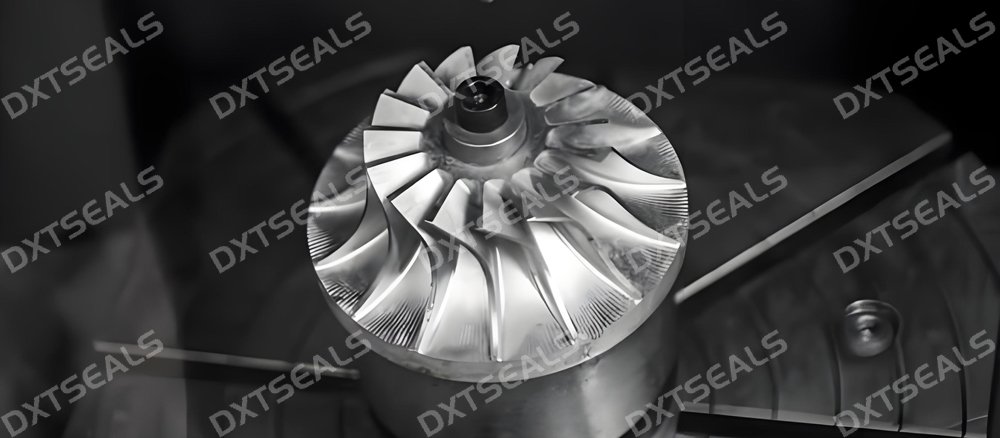
Metal machining is a fundamental manufacturing process used across industries such as automotive, aerospace, energy, and industrial equipment. From simple components to high-precision parts, machining plays a critical role in achieving tight tolerances and complex geometries.
This article provides a comprehensive overview of metal machining basics, including commonly used materials and the most widely applied machining processes.
What Is Metal Machining?
Metal machining is a subtractive manufacturing process in which material is removed from a workpiece to achieve the desired shape, size, and surface finish. The process relies on cutting tools, controlled motion, and precise equipment such as CNC machines.
Common Metal Materials Used in Machining
Carbon Steel
Carbon steel is widely used due to its good machinability and mechanical strength.
Key characteristics:
-
Cost-effective
-
Suitable for structural and general-purpose components
-
Moderate corrosion resistance
Stainless Steel
Stainless steel offers excellent corrosion resistance and strength, making it ideal for harsh environments.
Key characteristics:
-
High durability
-
Good heat resistance
-
More challenging to machine than carbon steel
Aluminum Alloys
Aluminum alloys are popular for lightweight and high-speed machining applications.
Key characteristics:
-
Low density
-
Excellent machinability
-
Good thermal and electrical conductivity
Copper and Brass
Copper and brass are commonly used for electrical and fluid-related components.
Key characteristics:
-
Excellent conductivity
-
Good corrosion resistance
-
Smooth surface finish after machining
Titanium Alloys
Titanium is used in high-performance applications where strength-to-weight ratio is critical.
Key characteristics:
-
High strength and low weight
-
Excellent corrosion resistance
-
Difficult and costly to machine
At DXTSEALS, precision metal machining supports the production of high-quality sealing components and customized industrial parts.
Common Metal Machining Processes
Turning
Turning is performed on a lathe, where the workpiece rotates while a cutting tool removes material.
Typical applications:
-
Shafts
-
Bushings
-
Cylindrical components
Milling
Milling uses rotating cutting tools to remove material from a stationary workpiece.
Typical applications:
-
Complex geometries
-
Slots and pockets
-
Flat and contoured surfaces
Drilling
Drilling creates holes of various diameters and depths.
Typical applications:
-
Fastener holes
-
Fluid passages
Grinding
Grinding is a finishing process used to achieve high dimensional accuracy and surface quality.
Typical applications:
-
Precision components
-
Hardened materials
CNC Machining
CNC (Computer Numerical Control) machining integrates turning, milling, and drilling with automated control for high precision and repeatability.
Key advantages:
-
Tight tolerances
-
Consistent quality
-
Suitable for complex parts and batch production
Factors Influencing Machining Method Selection
Choosing the right machining process depends on:
-
Material type and hardness
-
Required tolerance and surface finish
-
Part geometry and complexity
-
Production volume and cost considerations
A well-matched machining strategy improves efficiency and product quality.
Typical Applications of Metal Machining
-
Industrial machinery components
-
Hydraulic and pneumatic systems
-
Automotive and aerospace parts
-
Sealing hardware and precision housings
In these applications, machining accuracy directly affects performance and reliability.
Conclusion
Metal machining is a cornerstone of modern manufacturing, enabling the production of precise and reliable components across a wide range of industries. Understanding common materials and machining processes helps engineers and buyers make informed decisions during design and production.
By combining appropriate material selection with the right machining method, manufacturers can achieve optimal performance, efficiency, and product longevity.