
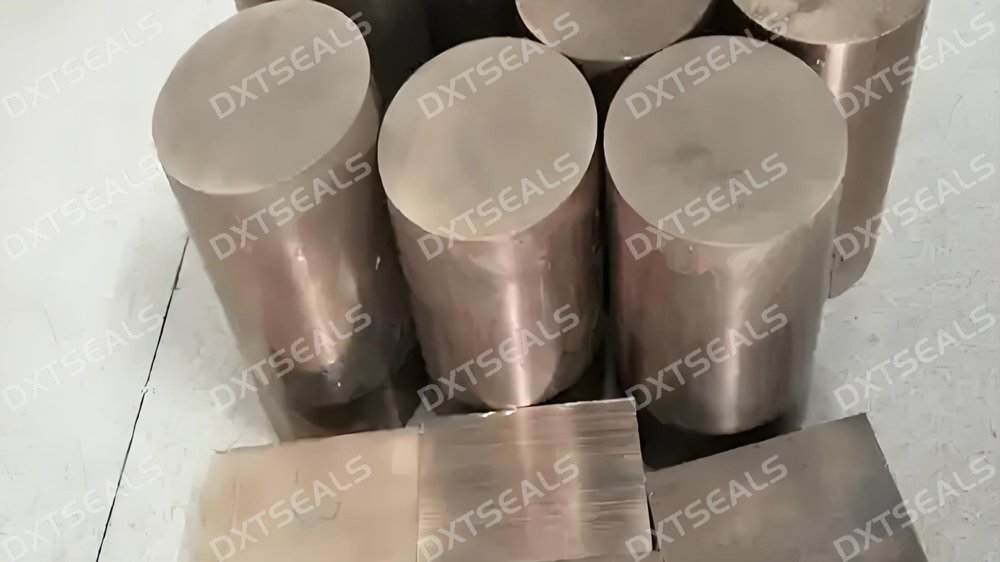
Sealing components in the chemical industry are constantly exposed to corrosive fluids, extreme temperatures, and high pressures. Under such demanding conditions, the choice of metal materials for sealing structures—such as retainers, flanges, and housings—plays a decisive role in ensuring long-term reliability and safety.
This article from DXTSEALS examines how different metals perform in chemical environments and provides practical guidance on sealing material selection.
1. Challenges of Chemical Environments
-
Corrosion from strong acids and alkalis (sulfuric acid, hydrochloric acid, caustic soda).
-
Oxidation and stress corrosion cracking under high temperature and high pressure.
-
Erosion and wear caused by fluid flow containing abrasive particles.
-
Chemical compatibility between metal substrates and sealing elastomers/plastics.
To overcome these challenges, selecting the right metal and seal combination is essential.
2. Performance of Common Metals in Chemical Conditions
(1) Stainless Steel (304, 316, Duplex, Super Duplex)
-
Strengths: Good general corrosion resistance; 316 stainless steel resists chlorides better. Duplex grades resist stress corrosion cracking.
-
Weaknesses: Vulnerable to strong reducing acids (e.g., hydrochloric acid).
-
Applications: Storage tanks, piping, sealing housings in moderate to aggressive chemical plants.
(2) Alloy Steel
-
Strengths: High strength and hardness; performs well under pressure.
-
Weaknesses: Susceptible to chemical corrosion without coatings or linings.
-
Applications: High-pressure vessels and sealing supports with protective surface treatments.
(3) Titanium and Titanium Alloys
-
Strengths: Outstanding corrosion resistance in both oxidizing and reducing environments; resistant to seawater and chlorinated solvents.
-
Weaknesses: Higher cost, limited machinability.
-
Applications: Critical sealing components in chemical reactors, desalination plants, and aerospace-grade chemical systems.
(4) Nickel Alloys (Hastelloy, Inconel, Monel)
-
Strengths: Excellent resistance to strong acids (HCl, H2SO4) and extreme heat.
-
Weaknesses: Very expensive.
-
Applications: Harsh chemical environments, high-temperature sealing housings.
(5) Copper and Its Alloys (Brass, Bronze)
-
Strengths: Good thermal conductivity, moderate corrosion resistance.
-
Weaknesses: Not suitable for strong acids; prone to dezincification in brass.
-
Applications: Heat exchangers, low-corrosion chemical processes.
(6) Aluminum and Magnesium Alloys
-
Strengths: Lightweight, cost-effective, good resistance to mild chemicals.
-
Weaknesses: Poor resistance to strong alkalis and acids.
-
Applications: Non-critical chemical equipment where weight reduction is a priority.
3. Matching Sealing Materials with Metals
Sealing reliability depends on metal + sealing material synergy:
-
Stainless Steel + PTFE (or Modified PTFE): Excellent chemical resistance; ideal for acid/alkali applications.
-
Titanium + FKM (Viton®): Superior for aggressive solvents and high-temperature sealing.
-
Nickel Alloys + Perfluoroelastomers (FFKM): Best for extreme chemical resistance but high cost.
-
Copper Alloys + NBR (Nitrile Rubber): Suitable for oil-based media in less corrosive chemical systems.
-
Alloy Steel + Coated Seals (PTFE-lined or PEEK support): Improves corrosion resistance in harsh environments.
4. Practical Guidelines for Metal and Seal Selection
-
Identify the medium: Acid, alkali, solvent, or gas?
-
Evaluate temperature and pressure: Some metals lose stability at high temperatures.
-
Consider cost-performance balance: Titanium and nickel alloys excel in extreme cases but increase costs.
-
Ensure compatibility: Both the metal and seal material must resist the same medium.
-
Apply protective coatings where needed: Nitriding, plating, or PVD can extend lifespan.
Conclusion
Different metals show distinct advantages and limitations in chemical environments. The key to long-lasting sealing performance lies in selecting both the right metal substrate and the matching sealing material.
At DXTSEALS, we specialize in providing optimized sealing solutions for the chemical industry, helping customers balance corrosion resistance, durability, and cost-effectiveness.
📩 Contact DXTSEALS for tailored metal and sealing material recommendations for your specific chemical application.