
Introduction
In rubber seal manufacturing, it may seem cost-effective to use a single mold for multiple materials. However, in practice, this approach often leads to dimensional inaccuracies, defects, and inconsistent product performance.
Different rubber materials exhibit unique physical and chemical behaviors during molding, making it essential to design molds specifically for each material. This article explains why one mold cannot be used for different rubber sealing materials and highlights the key engineering principles behind this requirement.
Fundamental Differences Between Rubber Materials
Common rubber materials used in sealing applications include:
-
NBR (Nitrile Rubber)
-
EPDM Rubber
-
FKM (Fluorocarbon Rubber)
-
Silicone Rubber
Each material differs in:
-
Shrinkage rate
-
Flowability
-
Curing temperature
-
Elastic recovery
-
Chemical and thermal properties
These differences directly affect the molding process and final product dimensions.
Key Reasons Why One Mold Cannot Be Shared
1. Different Shrinkage Rates
Each rubber compound has a specific shrinkage rate during vulcanization and cooling.
-
NBR: Moderate shrinkage
-
EPDM: Variable shrinkage depending on formulation
-
FKM: Lower shrinkage but tighter tolerance requirements
-
Silicone: Higher shrinkage and elasticity
Mold cavities are designed with precise shrinkage compensation. Using the same mold for different materials will result in incorrect final dimensions.
2. Variations in Flow Behavior
Rubber materials have different viscosities and flow characteristics under heat and pressure.
-
High-flow materials may cause flash or overflow
-
Low-flow materials may lead to incomplete filling
Gate design, cavity structure, and pressure distribution must be tailored to each material.
3. Different Curing Conditions
Each rubber type requires specific curing temperatures and times.
-
FKM requires higher curing temperatures
-
Silicone may require post-curing
-
NBR and EPDM have different curing cycles
A mold designed for one curing condition may not perform correctly with another material.
4. Elastic Recovery After Demolding
Rubber materials exhibit different levels of elastic rebound after being removed from the mold.
-
High elasticity can lead to dimensional expansion
-
Low elasticity results in more stable dimensions
Mold design must account for this behavior to maintain precision.
5. Surface Quality and Defect Control
Material-specific properties influence surface finish and defect formation.
Using an unsuitable mold may cause:
-
Flash formation
-
Air trapping
-
Surface imperfections
-
Incomplete curing
These defects reduce sealing performance and product reliability.
Risks of Using a Shared Mold
Attempting to use one mold for different rubber materials can lead to:
-
Dimensional deviations
-
Increased rejection rates
-
Reduced sealing performance
-
Higher production costs due to rework
-
Shortened mold life
These risks often outweigh any initial cost savings.
Importance of Customized Mold Design
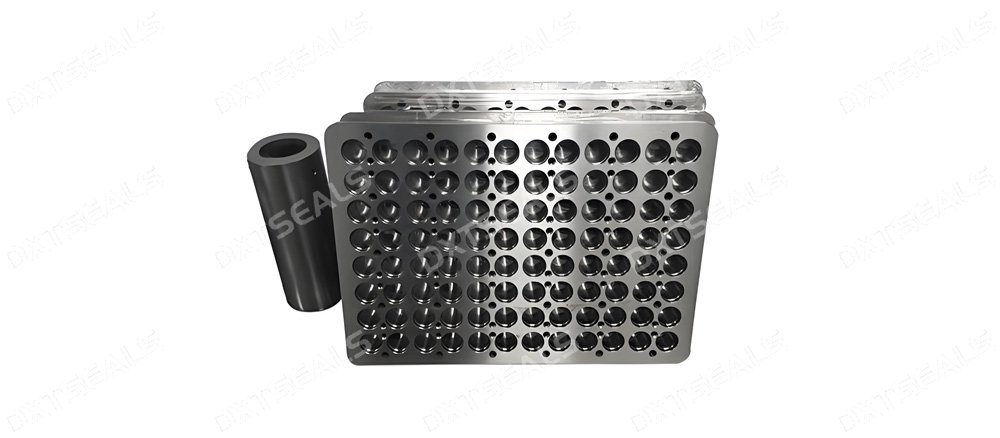
Professional manufacturers design molds based on the selected rubber material. Key considerations include:
-
Accurate shrinkage compensation
-
Optimized cavity geometry
-
Proper venting and gating systems
-
Temperature control design
-
Demolding structure
At DXTSEALS, each mold is engineered according to the specific rubber compound to ensure precision, consistency, and long-term reliability.
Engineering Workflow for Rubber Seal Production
A typical process includes:
-
Define application requirements (temperature, pressure, media)
-
Select the appropriate rubber material
-
Analyze material processing characteristics
-
Design and manufacture a customized mold
-
Optimize molding parameters through testing
This systematic approach ensures high-quality sealing products.
Applications Requiring High Precision
Material-specific mold design is especially important in:
-
Hydraulic sealing systems
-
Automotive engine seals
-
Chemical processing equipment
-
Food and medical sealing components
-
High-temperature industrial applications
In these fields, even small dimensional errors can compromise system performance.
Conclusion
Rubber seal manufacturing requires precise coordination between material selection and mold design. Because different rubber materials exhibit unique shrinkage rates, flow behavior, curing conditions, and elasticity, a mold designed for one material cannot reliably produce parts from another.
By using material-specific mold designs, manufacturers can achieve accurate dimensions, consistent quality, and reliable sealing performance.
With advanced engineering expertise and customized production solutions, DXTSEALS delivers high-quality rubber sealing components tailored to diverse industrial applications.