
Introduction
Stainless steel is one of the most widely used materials in industrial manufacturing due to its excellent corrosion resistance, mechanical strength, and durability. From precision components to heavy-duty industrial parts, stainless steel machining plays a vital role in modern manufacturing.
This article explores the key characteristics of stainless steel machining and highlights its typical applications across various industrial fields.
What Makes Stainless Steel Unique in Machining
Stainless steel is an alloy primarily composed of iron, chromium, and other elements such as nickel and molybdenum. While it offers outstanding performance in service, it also presents specific challenges during machining.
Key Characteristics of Stainless Steel Machining
High Strength and Toughness
Stainless steel exhibits higher strength compared to many carbon steels, which increases cutting forces and tool wear during machining.
Excellent Corrosion Resistance
The chromium-rich oxide layer provides outstanding resistance to corrosion, making stainless steel ideal for harsh or corrosive environments.
Work Hardening Tendency
Many stainless steel grades harden rapidly during machining, requiring optimized cutting parameters and sharp tooling to maintain surface quality.
Heat Resistance and Poor Thermal Conductivity
Stainless steel retains heat near the cutting zone, which can affect tool life and machining stability if not properly managed.
Superior Surface Finish Potential
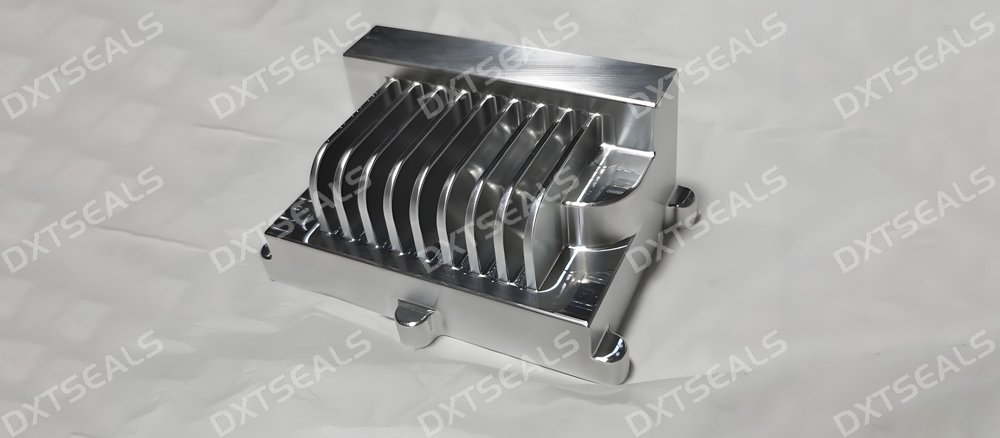
With proper machining strategies, stainless steel can achieve excellent surface finishes suitable for precision and hygienic applications.
At DXTSEALS, stainless steel machining processes are optimized to support high-performance sealing components and precision industrial parts.
Common Stainless Steel Grades Used in Machining
-
304 Stainless Steel – General-purpose grade with good machinability and corrosion resistance
-
316 / 316L Stainless Steel – Enhanced corrosion resistance for chemical and marine environments
-
410 / 420 Stainless Steel – Higher hardness, suitable for wear-resistant components
Each grade requires tailored machining strategies to achieve optimal results.
Typical Machining Processes for Stainless Steel
CNC Turning
Used for producing shafts, bushings, and cylindrical components with tight tolerances.
CNC Milling
Suitable for complex geometries, slots, and precision surfaces.
Drilling and Tapping
Applied to create accurate holes and threaded features in stainless steel parts.
Grinding
Used for final finishing when high dimensional accuracy and surface quality are required.
Typical Industrial Applications of Stainless Steel Machining
Chemical and Process Industries
Stainless steel components are widely used in pumps, valves, and fittings due to their corrosion resistance.
Food, Pharmaceutical, and Medical Equipment
Hygienic properties and ease of cleaning make stainless steel ideal for sanitary applications.
Oil and Gas Industry
Machined stainless steel parts are used in harsh environments where strength and corrosion resistance are critical.
Automotive and Aerospace
Precision stainless steel components are used in structural, fluid, and fastening systems.
Sealing and Precision Hardware
Stainless steel is commonly machined into housings, glands, and support components for advanced sealing systems.
Advantages of Stainless Steel Machining in Industrial Use
Compared to other metals, stainless steel machining offers:
-
Long service life
-
Reduced maintenance requirements
-
High reliability in extreme environments
-
Broad application versatility
These benefits justify its widespread use despite higher machining complexity.
Conclusion
Stainless steel machining combines material strength, corrosion resistance, and precision manufacturing to meet the demands of modern industrial applications. Although it presents machining challenges, proper tooling, process control, and expertise enable the production of high-quality components.
By understanding the characteristics and application potential of stainless steel machining, manufacturers can make informed decisions that enhance performance, reliability, and long-term value.