
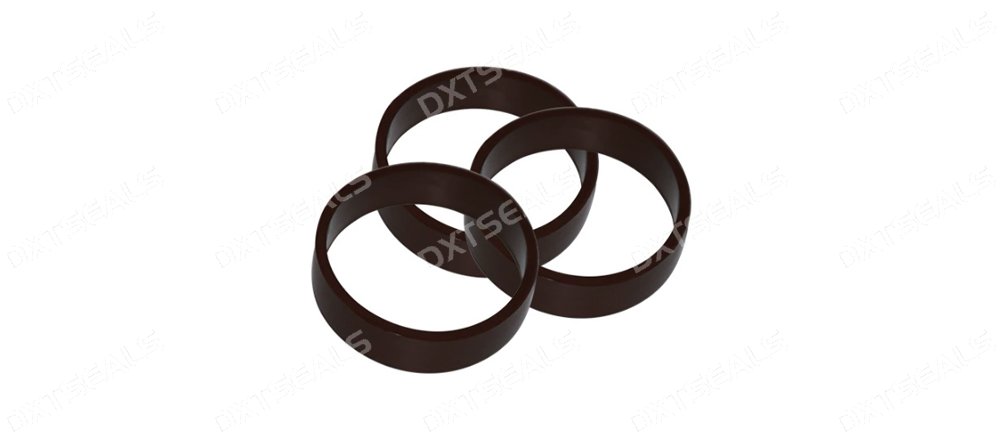
Standard rubber and plastic seals are essential components in industrial machinery, hydraulic systems, pneumatic equipment, pumps, compressors, automotive systems, and fluid handling equipment. Their primary function is to prevent leakage, maintain pressure, exclude contaminants, and protect internal components.
Different sealing profiles are designed for different operating conditions. Common standard products include O-rings, oil seals, V-rings, Glyd rings, Step Seals, wiper seals, rod seals, piston seals, and various custom sealing elements.
Choosing the correct seal requires consideration of the sealing profile, material, pressure, temperature, speed, working medium, and installation conditions.
What Are Standard Rubber and Plastic Seals?
Standard rubber and plastic seals are sealing components manufactured according to commonly used industrial dimensions and profiles.
Compared with fully customized sealing products, standard seals offer several advantages:
- Easy availability
- Standardized dimensions
- Simple replacement
- Lower production costs
- Wide material selection
- Compatibility with common equipment designs
Rubber materials are generally selected for their elasticity and sealing ability, while engineering plastics such as PTFE and polyurethane are often selected for their low friction, wear resistance, chemical resistance, or high mechanical strength.
Common Types of Rubber and Plastic Seals
O-Rings
O-rings are one of the most widely used sealing products.
They have a simple circular cross-section and can be used for both static and dynamic sealing applications.
Typical applications include:
- Hydraulic equipment
- Pneumatic systems
- Pumps
- Valves
- Automotive components
- Industrial machinery
Common O-ring materials include NBR, FKM, EPDM, silicone, and other specialized elastomers.
Oil Seals
Oil seals are commonly used to prevent lubricating oil or grease from leaking along rotating shafts.
Typical applications include:
- Motors
- Gearboxes
- Pumps
- Bearings
- Automotive equipment
- Industrial machinery
Common oil seal materials include NBR, FKM, silicone, and polyurethane.
Oil seals may be available in different structural designs, including metal-reinforced and fully rubber-covered configurations.
V-Rings
V-rings are flexible rubber seals designed primarily for rotating shaft applications.
They provide axial sealing and can help prevent:
- Oil leakage
- Dust contamination
- Water ingress
- Dirt entering the bearing area
V-rings are commonly used in motors, bearings, agricultural machinery, and rotating equipment.
Glyd Rings
Glyd rings are commonly used as piston sealing elements in hydraulic and pneumatic cylinders.
They typically combine a PTFE sealing ring with an elastomer energizer.
The PTFE sealing element provides:
- Low friction
- Good wear resistance
- Chemical resistance
The elastomer energizer provides the necessary sealing force.
Glyd rings are widely used where low friction and reliable dynamic sealing are required.
Step Seals
Step Seals are commonly used as rod seals in hydraulic cylinders.
A typical Step Seal design combines a PTFE or polymer sealing element with an elastomer energizer.
Advantages include:
- Low friction
- Good wear resistance
- High-pressure capability
- Good dynamic sealing performance
They are widely used in hydraulic cylinders, mobile equipment, and industrial hydraulic systems.
Wiper Seals
Wiper seals, also called scraper seals or dust seals, are designed to prevent contaminants from entering hydraulic and pneumatic cylinders.
They remove:
- Dust
- Dirt
- Mud
- Moisture
- Other external contaminants
Wiper seals are especially important in construction machinery and outdoor hydraulic equipment.
Common Rubber Seal Materials
Different rubber materials provide different performance characteristics.
NBR
Nitrile rubber is one of the most widely used materials for general industrial sealing.
Advantages include:
- Good oil resistance
- Good abrasion resistance
- Good mechanical strength
- Cost effectiveness
NBR is commonly used for hydraulic seals, oil seals, O-rings, and general industrial applications.
FKM
FKM provides excellent resistance to high temperatures, oils, fuels, and many chemicals.
It is commonly used in:
- Automotive equipment
- Pumps
- Chemical equipment
- High-temperature applications
- Industrial machinery
EPDM
EPDM provides excellent resistance to water, steam, weathering, and many chemicals.
It is commonly used in:
- Water systems
- Cooling systems
- Pneumatic equipment
- Outdoor applications
EPDM should not normally be selected for applications involving petroleum-based oils unless the specific compound is designed for that purpose.
Silicone
Silicone rubber provides excellent flexibility and a wide operating temperature range.
It is commonly used in:
- General industrial applications
- Electrical equipment
- Temperature-sensitive environments
- Specialized sealing applications
Common Plastic Seal Materials
PTFE
PTFE is widely used for seals requiring:
- Very low friction
- Excellent chemical resistance
- Wide temperature resistance
- Good non-stick properties
PTFE is commonly used in Glyd rings, Step Seals, piston seals, rod seals, and specialized industrial sealing components.
Polyurethane
Polyurethane offers excellent wear resistance, tensile strength, and tear resistance.
It is widely used for:
- Hydraulic rod seals
- Piston seals
- Wiper seals
- Pneumatic seals
- Heavy-duty hydraulic applications
PEEK
PEEK provides excellent mechanical strength, dimensional stability, and high-temperature performance.
It is used in more demanding applications where standard elastomers or PTFE compounds may not provide sufficient mechanical performance.
Rubber Seals vs. Plastic Seals
Rubber and plastic seals each have their own advantages.
| Feature | Rubber Seals | Plastic Seals |
|---|---|---|
| Elasticity | Excellent | Material dependent |
| Low Friction | Moderate | Often excellent |
| Wear Resistance | Good to Excellent | Excellent for selected materials |
| Chemical Resistance | Material dependent | Often excellent |
| High-Temperature Performance | Material dependent | Material dependent |
| Dynamic Sealing | Excellent | Excellent for suitable designs |
| Cost | Generally economical | Depends on material |
| Applications | Very broad | Very broad |
The best material depends on the actual operating environment rather than simply choosing rubber or plastic.
Industrial Applications
Standard rubber and plastic seals are used across many industries.
Hydraulic Equipment
Common products include:
- O-rings
- Rod seals
- Piston seals
- Step Seals
- Glyd rings
- Wiper seals
- Guide rings
They help maintain hydraulic pressure and prevent fluid leakage.
Pneumatic Equipment
Pneumatic cylinders and valves commonly use:
- O-rings
- Rod seals
- Piston seals
- Wiper seals
Low friction and good dynamic performance are particularly important for high-cycle pneumatic equipment.
Pumps and Compressors
Sealing components are used to prevent fluid, oil, gas, or lubricant leakage.
Depending on the equipment, common products include O-rings, shaft seals, oil seals, and specialized polymer seals.
Automotive Equipment
Rubber and plastic seals are widely used in:
- Engines
- Transmissions
- Hydraulic systems
- Pumps
- Bearings
- Rotating shafts
Construction Machinery
Excavators, loaders, cranes, and other heavy equipment require durable sealing components capable of operating under high pressure, vibration, dust, and temperature changes.
How to Choose the Right Standard Seal
Selecting the correct seal requires several technical factors to be evaluated.
1. Sealing Application
Determine whether the seal is used for:
- Static sealing
- Reciprocating movement
- Rotary movement
- Pneumatic sealing
- Hydraulic sealing
The application determines which profile is appropriate.
2. Working Pressure
Hydraulic systems may operate at significantly higher pressures than many pneumatic systems.
The seal profile and material must be capable of maintaining reliable sealing under the maximum working pressure.
3. Operating Temperature
Temperature affects the elasticity, hardness, friction, and service life of sealing materials.
Always consider both the normal operating temperature and possible temperature peaks.
4. Working Medium
Check compatibility with:
- Hydraulic oil
- Lubricating oil
- Water
- Air
- Steam
- Fuels
- Chemicals
- Special process fluids
Material compatibility is essential for long-term seal performance.
5. Movement Speed
Dynamic seals must be selected according to the movement type and speed.
High-speed rotary or reciprocating applications require careful consideration of friction, heat generation, and wear.
6. Groove Dimensions
The seal must match the installation groove.
Important dimensions include:
- Shaft diameter
- Bore diameter
- Groove width
- Groove depth
- Seal cross-section
- Installation clearance
Incorrect dimensions can cause leakage, excessive friction, or premature seal failure.
Standard Sizes and Custom Seals
Standard sealing products provide a cost-effective solution for many applications. However, some equipment requires non-standard dimensions or specialized materials.
Professional manufacturers can provide both:
- Standard market sizes
- Non-standard custom seals
Custom manufacturing can be based on:
- Technical drawings
- Samples
- Customer specifications
- OEM requirements
- Special operating conditions
This allows sealing components to be optimized for specific equipment.
Why Choose an Experienced Seal Manufacturer?
A professional sealing manufacturer should be capable of supplying different types of rubber and plastic sealing products while providing technical support for material and profile selection.
Important capabilities include:
- Standard seal production
- Non-standard customization
- Multiple rubber materials
- PTFE and polyurethane machining
- Precision CNC machining
- Mold manufacturing
- Quality inspection
- OEM production
This combination allows customers to source standard replacement seals as well as customized components from the same supplier.
Conclusion
Standard rubber and plastic seals are fundamental components in modern industrial equipment. O-rings, oil seals, V-rings, Glyd rings, Step Seals, wiper seals, and other sealing profiles each serve specific sealing requirements.
Rubber materials such as NBR, FKM, EPDM, and silicone provide different combinations of elasticity, oil resistance, temperature resistance, and chemical compatibility. Plastic materials such as PTFE, polyurethane, and PEEK provide advantages including low friction, high wear resistance, chemical resistance, and mechanical strength.
By evaluating the sealing type, pressure, temperature, working medium, movement speed, groove dimensions, and required service life, users can select the appropriate standard seal for their application. For equipment requiring special dimensions or performance, custom rubber and plastic seals can also be manufactured according to drawings, samples, and OEM specifications.