
Air compressors rely heavily on high-performance sealing components to maintain pressure, prevent leakage, and ensure long-term operational stability. As industries demand higher efficiency, lower energy consumption, and reduced maintenance costs, the structural design and material selection of seals have become more critical than ever.
In this article, DXTSEALS explores the structural characteristics of modern air compressor seals, their functional advantages, and the latest trends that help improve the overall efficiency of compressor systems.
1. Structural Features of Air Compressor Sealing Components
1.1 Multi-Lip Oil Seals for Enhanced Leakage Prevention
Air compressor oil seals often adopt single-lip, double-lip, or multi-lip designs.
-
Main lip provides primary sealing
-
Dust lip prevents contaminants from entering
-
Additional lips enhance oil retention and pressure capacity
This structure improves sealing stability under fluctuating temperatures and high rotational speeds.
1.2 Shaft Seals Designed for Dynamic Performance
Shaft seals in air compressors must withstand:
-
High-speed rotation
-
Temperature rise caused by friction
-
Continuous interaction with lubricating oil
Key structural features include:
-
Optimized lip angle to reduce friction
-
Spring-loaded reinforcement for stable radial force
-
Precision cutting edges for sealing consistency
These features help maintain sealing performance over long periods of mechanical stress.
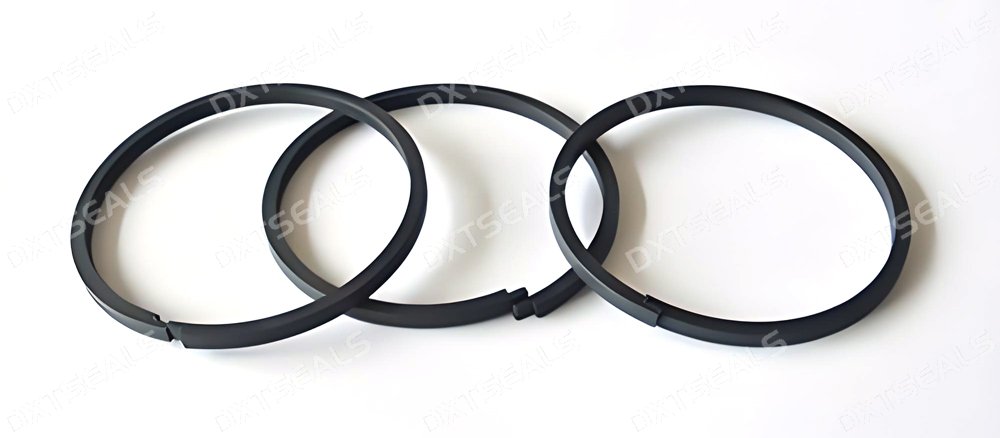
1.3 PTFE Wiper Rings for Low-Friction Operation
PTFE sealing elements (such as wiper rings or guide rings) are widely used in high-speed compressors because of their:
-
Extremely low friction coefficient
-
Excellent wear resistance
-
High temperature stability
-
Chemical resistance
PTFE rings are often structured with split, step-cut, or scarf-cut designs to ensure easy installation and excellent dynamic performance.
1.4 O-Rings and Static Seals with Optimized Compression
Static sealing components—O-rings, flat gaskets, and customized profiles—use controlled compression ratios to ensure sealing integrity.
A well-designed O-ring groove prevents:
-
Extrusion
-
Over-compression
-
Early aging
-
Leakage under vibration
These simple but effective structures remain essential in every part of air compressor systems.
2. How Seal Structure Affects Overall Compressor Efficiency
2.1 Reduced Leakage = Higher Pressure Stability
A properly designed seal minimizes internal air loss and maintains consistent operating pressure. This directly reduces:
-
Energy waste
-
Load on the compressor motor
-
Overall operating cost
Even minor leakage can significantly increase energy consumption in long-running systems.
2.2 Lower Friction = Less Heat + Longer Component Life
Improved lip geometry and advanced materials (like PTFE or FKM) reduce friction, which leads to:
-
Lower heat generation
-
Reduced wear
-
Longer maintenance intervals
-
Greater mechanical efficiency
Better lubrication management through sealing design further improves compressor performance.
2.3 Better Dust & Oil Separation Improves Lubrication Efficiency
High-efficiency dust lips and wiper rings keep contaminants out of the system.
Cleaner lubrication means:
-
Smoother operation
-
Less shaft wear
-
Longer oil lifespan
-
Improved machine reliability
Seal structure plays a direct role in maintaining system cleanliness.
2.4 Precision Seal Fit Minimizes Vibration and Noise
Seal design affects shaft alignment and vibration control.
Features like:
-
Guide rings
-
Special groove designs
help stabilize internal motion, reducing noise and improving energy efficiency.
3. Future Trends in Air Compressor Seal Technology
3.1 Use of High-Performance Materials
More compressors adopt advanced materials such as:
-
PTFE composites (glass-filled, carbon-filled, bronze-filled)
-
HNBR and FKM blends for high-temperature stability
-
Engineered thermoplastics like PEEK for structural sealing parts
These materials provide better performance at higher pressures, higher speeds, and harsher environments.
3.2 Custom-Engineered Seals Based on Operating Conditions
Instead of standard components, industries are moving toward:
-
Customized grooves
-
Tailored PTFE formulas
-
Reinforced structures
-
Application-specific lip profiles
Customized seals from DXTSEALS allow compressors to achieve maximum efficiency.
3.3 Low-Friction and Energy-Saving Seal Designs
Future trends include:
-
Micro-textured sealing surfaces
-
Self-lubricating materials
-
Optimized lip geometry for lower torque loss
These innovations contribute directly to energy savings in industrial compressors.
3.4 Integration of Smart Monitoring
Smart seals with embedded sensors (temperature, pressure, vibration) are gradually emerging.
These components allow predictive maintenance and improve uptime in automated factories.
Conclusion
Air compressor sealing components are more than just consumables—they are crucial elements that affect operational stability, energy efficiency, and long-term reliability. By understanding their structural features and staying ahead of application trends, companies can significantly extend compressor lifespan and reduce total operating cost.
For high-performance and custom-designed air compressor seals, DXTSEALS provides:
-
Advanced materials
-
Optimized structural designs
-
Engineering support based on real operating conditions
Helping customers achieve higher efficiency across their entire compressor system.