
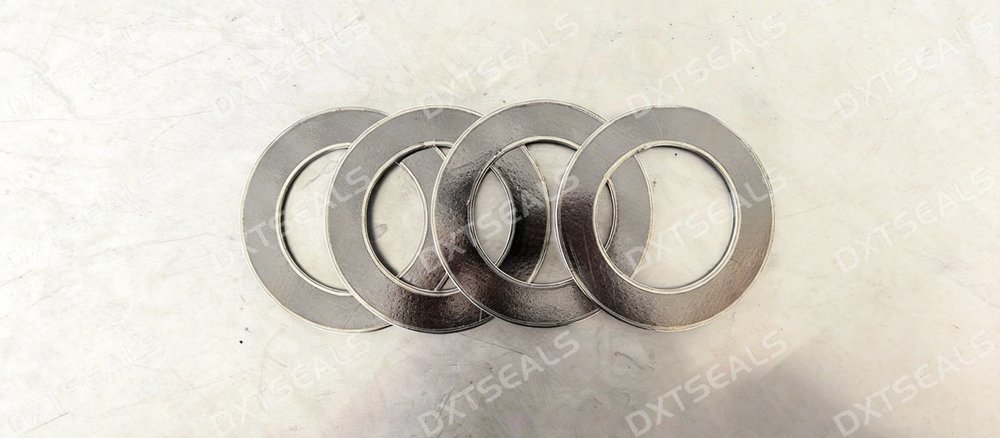
In modern industrial applications, sealing materials must withstand increasingly demanding operating conditions, including extreme temperatures, aggressive chemicals, high pressures, and continuous operation. Traditional sealing materials such as rubber and plastics may experience performance limitations under these conditions.
Graphite sealing materials have become a preferred choice for many industrial sealing applications due to their excellent thermal stability, chemical resistance, self-lubricating properties, and long service life. They are widely used in mechanical seals, pumps, compressors, valves, chemical processing equipment, and other critical systems.
Why Graphite Is Suitable for Extreme Sealing Conditions
Graphite has a unique layered carbon structure that provides outstanding physical and chemical properties.
The main benefits of graphite sealing materials include:
- Excellent high-temperature resistance
- Superior chemical corrosion resistance
- Low friction performance
- Self-lubricating characteristics
- Excellent wear resistance
- Good thermal conductivity
- Stable dimensional performance
- Long operating life
These properties make graphite an ideal material for sealing applications where reliability and durability are essential.
High-Temperature Resistance of Graphite Seals
One of the most important advantages of graphite sealing materials is their ability to perform under high temperatures.
Many elastomer sealing materials lose elasticity, harden, or degrade when exposed to elevated temperatures. Graphite, however, maintains its mechanical properties and sealing performance over a much wider temperature range.
High-temperature graphite seals are commonly used in:
- Industrial furnaces
- Heat exchangers
- Power generation equipment
- High-temperature pumps
- Chemical reactors
- Compressor systems
The excellent thermal stability of graphite helps prevent seal failure caused by heat exposure.
Excellent Chemical Resistance
Chemical compatibility is a critical factor when selecting sealing materials. Industrial equipment often handles corrosive fluids that can damage conventional sealing materials.
Graphite provides excellent resistance against many chemical media, including:
- Acids
- Alkalis
- Solvents
- Hydrocarbons
- Process chemicals
This makes graphite sealing components especially suitable for:
- Chemical processing industries
- Petrochemical equipment
- Pharmaceutical machinery
- Laboratory systems
- Corrosive fluid applications
Proper graphite grade selection ensures reliable performance even in aggressive environments.
Low Friction and Self-Lubricating Performance
Graphite naturally provides lubrication due to its layered structure. This allows sealing surfaces to operate with reduced friction without relying heavily on external lubrication.
The low friction characteristics of graphite provide several benefits:
- Reduced heat generation
- Lower energy consumption
- Less wear between sealing surfaces
- Extended component life
- Improved equipment efficiency
For rotating equipment such as pumps and compressors, graphite seal faces help maintain stable operation and reduce maintenance requirements.
Wear Resistance and Long Service Life
Industrial sealing components often experience continuous contact, rotation, vibration, and pressure changes.
Graphite offers excellent wear resistance, making it suitable for applications requiring long-term reliability.
Common graphite wear-resistant components include:
- Mechanical seal faces
- Carbon seal rings
- Graphite bearings
- Bushings
- Wear rings
- Compressor sealing elements
High-quality graphite components can significantly reduce replacement frequency and equipment downtime.
Applications of Graphite Sealing Materials
Graphite sealing materials are widely used across multiple industries.
Mechanical Seals
Graphite is one of the most common materials used for mechanical seal faces. Its low friction and wear resistance provide reliable sealing performance for pumps, mixers, and compressors.
Pumps
Graphite components are used in chemical pumps, process pumps, and high-temperature pumps where traditional materials may fail.
Typical applications include:
- Pump seal rings
- Mechanical seal faces
- Graphite bushings
- Wear components
Compressors
Compressors require sealing materials that can withstand high speeds, pressure fluctuations, and continuous operation.
Graphite components help improve:
- Gas sealing performance
- Operating efficiency
- Component durability
Chemical Processing Equipment
Due to its chemical resistance, graphite is widely used in equipment handling corrosive fluids and aggressive chemicals.
Applications include:
- Reactors
- Valves
- Pipeline sealing systems
- Chemical pumps
Graphite vs Traditional Sealing Materials
Compared with rubber and plastic sealing materials, graphite offers advantages in extreme environments.
Graphite advantages:
- Higher temperature resistance
- Better chemical stability
- Lower friction
- Longer service life
- Better performance under continuous operation
Rubber advantages:
- Excellent elasticity
- Easy installation
- Lower cost
- Good performance in moderate conditions
The correct material choice depends on operating temperature, pressure, chemical media, and equipment requirements.
Precision Manufacturing of Graphite Sealing Components
The performance of graphite seals depends not only on material quality but also on manufacturing accuracy.
Precision graphite components are commonly produced through:
- CNC turning
- CNC milling
- Precision grinding
- Surface lapping
- Polishing
- Dimensional inspection
Because graphite is relatively brittle, professional machining technology is required to achieve accurate dimensions and prevent cracking or damage.
Custom Graphite Sealing Solutions
Different industrial applications often require customized graphite components.
Custom manufacturing services include:
- Graphite seal rings
- Mechanical seal faces
- Custom graphite bushings
- Pump components
- Compressor sealing parts
- Replacement graphite components
Manufacturers can produce graphite parts according to customer drawings, samples, or specific operating requirements.
How to Choose the Right Graphite Sealing Material
Selecting the correct graphite material requires consideration of:
- Operating temperature
- Pressure conditions
- Chemical environment
- Rotational speed
- Wear requirements
- Equipment design
Different graphite grades, such as carbon graphite, resin-impregnated graphite, and metal-impregnated graphite, provide different performance characteristics.
Choosing the right graphite grade ensures maximum sealing reliability and service life.
Conclusion
Graphite sealing materials provide outstanding performance in high-temperature and chemical environments where traditional sealing materials may not be suitable. Their excellent thermal stability, chemical resistance, self-lubrication, and wear resistance make them an ideal solution for mechanical seals, pumps, compressors, and other industrial equipment.
With precision machining technology and proper material selection, graphite sealing components can deliver reliable operation, reduced maintenance costs, and extended equipment service life in the most demanding industrial applications.