
Sealing technology is a fundamental part of industrial equipment design. Whether the goal is to retain lubricants, prevent fluid leakage, exclude contaminants, or protect process safety, the right sealing solution directly affects equipment performance, service life, maintenance cost, and operational reliability.
In industrial systems, traditional sealing products—such as oil seals, O-rings, gaskets, and packing seals—still play an essential role. At the same time, mechanical seals have become the preferred solution for many types of rotating equipment, especially where leakage control, pressure resistance, and long-term reliability are critical.
Rather than one technology completely replacing the other, traditional seals and mechanical seals each have their own role. Different machines use different sealing solutions because their operating principles, shaft structures, pressure conditions, media characteristics, and maintenance requirements are different.
This article explains the division of roles between traditional sealing devices and mechanical seals, and analyzes why pumps, compressors, mixers, gearboxes, and other industrial equipment rely on different sealing methods.
Understanding the Two Main Categories of Sealing Solutions
Before comparing their applications, it is important to understand the difference between traditional sealing devices and mechanical seals.
Traditional Sealing Devices
Traditional sealing products usually include:
- Oil seals (radial shaft seals)
- O-rings
- Gaskets
- V-rings
- Braided packing seals
- Lip seals
- Static elastomer seals
These products are generally characterized by:
- Simple structures
- Lower manufacturing costs
- Easy installation and replacement
- Suitability for low to medium operating demands
They are widely used in both static sealing and relatively simple rotary sealing applications.
Mechanical Seals
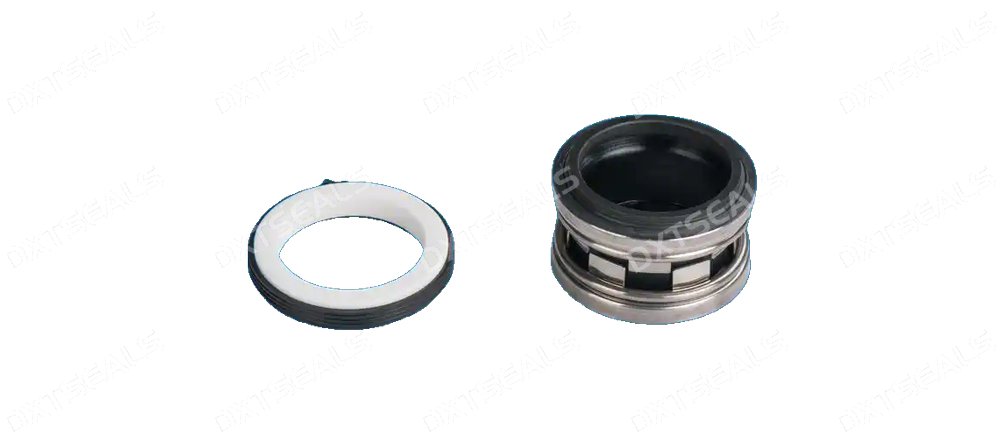
Mechanical seals are specialized sealing devices designed mainly for rotating equipment where fluid leakage must be tightly controlled.
A typical mechanical seal consists of:
- A rotating seal face
- A stationary seal face
- Springs or bellows
- Secondary seals such as O-rings or elastomers
- Metal hardware and drive components
Mechanical seals work by creating a precision sealing interface between two lapped faces. This design allows them to operate effectively under more demanding conditions than many traditional seals.
Why Different Equipment Requires Different Sealing Solutions
Different industrial machines operate in different ways. Some systems mainly need to retain lubricating oil, while others must seal pressurized process fluids. Some run at low speed and low pressure, while others work under high temperature, high pressure, corrosive media, or continuous-duty conditions.
Because of these differences, no single sealing method is ideal for every machine.
The choice between traditional seals and mechanical seals is usually based on several factors:
- Whether the equipment is static or rotating
- Whether the sealed medium is lubricant, water, slurry, gas, or chemical fluid
- The pressure level
- The shaft speed
- The temperature range
- The acceptable level of leakage
- Maintenance and service life expectations
- Installation space and structural design of the equipment
The Role of Traditional Seals in Industrial Equipment
Traditional seals remain indispensable because many machines do not require the complexity or cost of a mechanical seal.
1. Oil Seals for Lubricant Retention in Gearboxes, Bearings, and Motors
One of the most common traditional sealing products is the oil seal, also known as a radial shaft seal.
Typical applications:
- Gearboxes
- Electric motors
- Speed reducers
- Bearing housings
- Automotive systems
- Agricultural equipment
Why oil seals are used here:
These machines primarily need to retain grease or lubricating oil and prevent dust or moisture from entering the housing. They usually operate under low internal pressure, and the medium being sealed is not a pressurized process fluid.
In these cases, oil seals are ideal because they offer:
- Compact design
- Low cost
- Easy installation
- Sufficient sealing performance for lubrication systems
A gearbox, for example, does not normally require a mechanical seal because it is not sealing a high-pressure chemical fluid. Its main sealing task is simply to keep lubricating oil inside while keeping contaminants out.
2. O-Rings and Gaskets for Static Sealing
Traditional seals are also widely used in static sealing applications where there is no rotating shaft.
Common examples:
- Pipe flange connections
- Valve covers
- Hydraulic cylinder joints
- Pump casings
- Heat exchanger flanges
- Instrument housings
Why these seals are used:
O-rings and gaskets are highly effective when two stationary surfaces need to be sealed against fluid leakage. In such applications, there is no relative shaft rotation, so a dynamic sealing device like a mechanical seal is unnecessary.
Advantages include:
- Simple design
- Low replacement cost
- Broad material availability
- Easy compatibility with many fluids and temperatures
For static sealing, traditional elastomer and gasket products remain the most practical and economical solution.
3. Packing Seals for Certain Low-Speed and Utility Equipment
Braided packing is another traditional sealing method still used in some equipment, especially where:
- Operating pressure is moderate
- Shaft speed is relatively low
- Leakage is acceptable at a controlled level
- Maintenance access is easy
Typical applications:
- Utility pumps
- Older industrial pumps
- Valves
- Marine equipment
- Low-cost process systems
Packing remains useful because it is simple, adjustable, and relatively inexpensive. However, compared with mechanical seals, it typically produces more leakage and more shaft wear.
The Role of Mechanical Seals in Industrial Equipment
Mechanical seals are selected when the sealing duty becomes more demanding and traditional seals can no longer provide sufficient performance.
1. Pumps: The Largest Application Area for Mechanical Seals
Pumps are the most common application for mechanical seals.
Why pumps often use mechanical seals:
A pump shaft passes through the pump casing while the pump handles liquids under pressure. In many industrial systems, the pumped fluid may be:
- Corrosive
- Toxic
- High-temperature
- High-pressure
- Abrasive
- Expensive or environmentally sensitive
In these situations, leakage must be minimized. Traditional lip seals or packing systems are often not enough.
Mechanical seals are preferred in pumps because they provide:
- Much lower leakage rates
- Better pressure resistance
- Reduced shaft wear
- Longer service life
- Better compliance with environmental and safety requirements
Common pump applications using mechanical seals:
- Chemical process pumps
- Centrifugal pumps
- Boiler feed pumps
- Slurry pumps
- Water treatment pumps
- Food and pharmaceutical pumps
2. Compressors: Sealing Pressurized Gases and Process Media
Compressors often handle gases under pressure, which creates a much more demanding sealing challenge than retaining oil in a gearbox.
Why compressors use mechanical seals:
Compressors may operate with:
- High internal pressure
- High rotational speed
- Volatile gases
- Hazardous hydrocarbons
- Strict emission-control requirements
In these applications, sealing performance directly affects safety, environmental compliance, and process efficiency.
Mechanical seals are used because they can provide:
- Tight leakage control
- High-speed stability
- Better resistance to pressure fluctuations
- Longer maintenance intervals
In gas compression systems, the consequences of leakage are often much more serious than in a simple lubricated drive system, which is why more advanced sealing solutions are required.
3. Mixers, Agitators, and Reactors: Sealing Rotating Shafts in Process Equipment
Mixers and agitators are common in chemical, pharmaceutical, and food-processing industries. These machines use rotating shafts that enter tanks or vessels containing process fluids.
Why mechanical seals are used:
Unlike a gearbox or motor, a mixer may need to seal:
- Corrosive chemicals
- Sterile pharmaceutical fluids
- Food ingredients
- Hot or viscous media
- Pressurized tank contents
A mechanical seal helps maintain product integrity and process safety by preventing leakage around the rotating shaft.
In many cases, double mechanical seals or cartridge seals are used for extra reliability.
4. High-Duty Industrial Equipment Requiring Long-Term Reliability
Mechanical seals are also selected for industrial equipment where downtime is expensive and operational reliability is critical.
Examples include:
- Refinery process equipment
- Petrochemical systems
- High-speed rotating machinery
- Power generation equipment
- Specialized marine pumps
- High-temperature circulation systems
In these applications, the higher initial cost of a mechanical seal is justified by:
- Lower maintenance frequency
- Reduced product loss
- Improved safety
- Longer equipment service life
- Better process stability
Why Gearboxes and Motors Usually Use Traditional Seals Instead of Mechanical Seals
This is one of the most practical questions in sealing selection.
Although mechanical seals offer better leakage control, gearboxes, motors, and bearing housings usually do not use them. The reason is that these machines do not face the same sealing challenges as pumps or chemical mixers.
Gearboxes and motors usually require:
- Lubricant retention rather than process-fluid sealing
- Protection against dust and contamination
- Compact and low-cost sealing arrangements
- Moderate shaft speeds and low internal pressure
For these tasks, oil seals are more practical because they are:
- Economical
- Compact
- Easy to install
- Well suited for grease and oil retention
Using a mechanical seal in a simple gearbox would often be unnecessarily expensive and structurally unnecessary.
Why Pumps and Process Equipment Often Cannot Rely Only on Traditional Seals
In contrast, pumps and process equipment often operate under conditions where traditional seals become insufficient.
Common limitations of traditional seals in demanding fluid systems:
- Higher leakage rates
- Limited pressure capability
- Greater shaft wear
- Shorter service life under severe conditions
- Reduced reliability with corrosive or hazardous media
When a system must seal chemicals, hot liquids, slurries, hydrocarbons, or sterile products, the performance advantages of a mechanical seal become far more important than the lower cost of a traditional seal.
Traditional Seals and Mechanical Seals Are Complementary, Not Competing Products
It is important to understand that traditional seals and mechanical seals are not mutually exclusive. In fact, many industrial machines use both.
For example, a pump system may include:
- A mechanical seal on the main shaft sealing the pumped fluid
- O-rings inside the seal assembly
- Gaskets between pump casing components
- oil seals in related gearbox or bearing sections
This shows that different sealing products perform different functions within the same machine.
Quick Comparison: Where Each Sealing Solution Fits Best
| Sealing Solution | Typical Function | Common Equipment | Main Advantage |
|---|---|---|---|
| Oil Seal | Retain lubricant, exclude dust | Gearboxes, motors, bearings | Compact and cost-effective |
| O-Ring | Static or low-motion sealing | Valves, cylinders, flanges | Simple and versatile |
| Gasket | Static face sealing | Pipe flanges, covers, housings | Reliable static sealing |
| Packing Seal | Shaft sealing with adjustable compression | Utility pumps, valves | Low cost and easy maintenance |
| Mechanical Seal | Dynamic sealing of process fluids | Pumps, compressors, mixers, reactors | Low leakage and high reliability |
How to Choose the Right Sealing Solution for Different Equipment
When selecting between traditional seals and mechanical seals, engineers should evaluate:
Type of Equipment
Is it a gearbox, pump, compressor, mixer, or static flange connection?
Sealed Medium
Is the medium lubricating oil, water, gas, slurry, solvent, acid, or food-grade fluid?
Pressure and Speed
Does the shaft operate under pressure or high rotational speed?
Leakage Requirements
Is slight seepage acceptable, or must leakage be minimized for safety or environmental reasons?
Maintenance Expectations
Is the goal low initial cost, or lower total maintenance cost over time?
Installation Structure
Does the equipment have space and structural support for a mechanical seal assembly?
DXTSEALS: Sealing Solutions for Different Equipment and Operating Conditions
At DXTSEALS, we understand that different machines require different sealing technologies. We provide both traditional sealing products and mechanical sealing solutions to support a wide range of industrial applications.
Our capabilities include:
Mechanical Seals
- Standard mechanical seals
- Cartridge seals
- Double mechanical seals
- OEM-equivalent replacements
- Non-standard custom mechanical seals
Traditional Sealing Products
- Oil seals
- PTFE seals
- O-rings
- Gaskets
- Spring-energized seals and other industrial sealing products
Engineering and Manufacturing Support
- Material selection assistance
- Reverse engineering
- Precision machining
- Custom design based on drawings or samples
- Solutions for both standard models and non-standard applications
Whether your equipment requires a cost-effective oil seal for a gearbox or a high-performance mechanical seal for a chemical pump, DXTSEALS can provide a sealing solution matched to the real operating conditions.
Conclusion
Traditional sealing devices and mechanical seals each play a vital role in industrial equipment. They are not interchangeable in every situation because different machines face different sealing challenges.
Traditional seals such as oil seals, O-rings, gaskets, and packing remain ideal for lubricant retention, static sealing, contamination protection, and cost-sensitive applications. Mechanical seals, on the other hand, are essential for pumps, compressors, mixers, and process equipment where pressure resistance, low leakage, safety, and long-term reliability are critical.
Understanding the division of roles between these sealing technologies helps engineers choose the right solution for each application, improving equipment performance while controlling maintenance and operating costs.
With broad product coverage and custom manufacturing capabilities, DXTSEALS provides both traditional sealing products and mechanical seal solutions for diverse industrial equipment and demanding operating environments.