
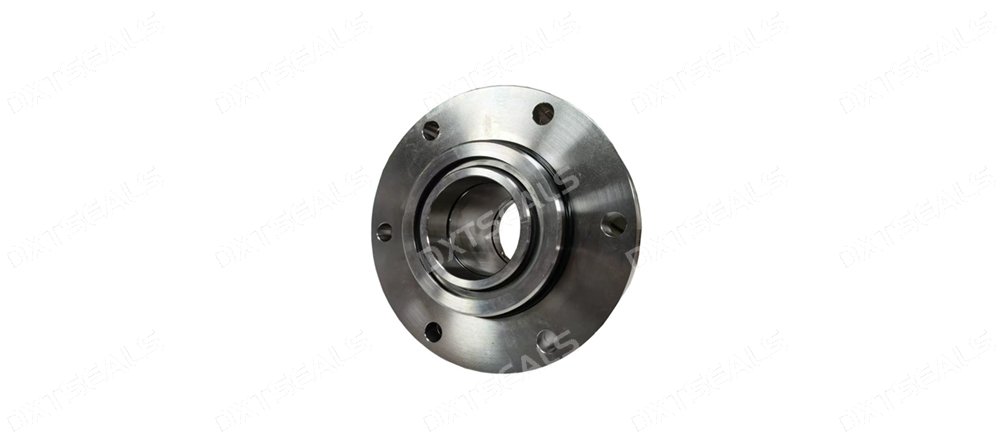
 are essential components in pumps, compressors, mixers, reactors, and various rotating equipment. Their primary function is to prevent process fluid leakage while maintaining operational efficiency and equipment reliability. In modern industrial applications, mechanical seals are often required to operate under extreme conditions involving high pressure, elevated temperatures, corrosive chemicals, and high rotational speeds.
While material selection and seal design are important, the true performance of a mechanical seal depends heavily on manufacturing precision. Even a well-designed seal can experience premature failure if critical components are not produced within strict tolerances.
This article explores why precision manufacturing is one of the most important factors influencing mechanical seal reliability and how advanced machining technologies contribute to long-term sealing performance.
Understanding the Working Principle of Mechanical Seals
Mechanical seals function by creating a sealing interface between a rotating face and a stationary face. These two highly polished surfaces remain in close contact while a microscopic lubricating film forms between them.
The success of this sealing mechanism depends on:
- Accurate face geometry
- Proper surface finish
- Stable contact pressure
- Dimensional consistency
- Dynamic balance
Any manufacturing deviation can disrupt this delicate balance and lead to leakage, excessive wear, or seal failure.
This is why precision manufacturing is not simply a production requirement—it is a performance requirement.
The Relationship Between Manufacturing Precision and Seal Reliability
Mechanical seals operate with extremely small tolerances. Even microscopic imperfections can affect sealing efficiency.
Precision manufacturing directly influences:
- Leakage control
- Friction levels
- Heat generation
- Wear resistance
- Service life
- Equipment stability
The higher the manufacturing accuracy, the more stable the seal will perform throughout its operating life.
Dimensional Accuracy Ensures Proper Seal Assembly
Every mechanical seal consists of multiple components that must work together as a complete system.
These components include:
- Rotary faces
- Stationary faces
- Springs
- Metal hardware
- Elastomer elements
If dimensions deviate from design specifications, problems may occur such as:
- Improper face loading
- Misalignment
- Uneven contact pressure
- Increased vibration
- Premature wear
Advanced CNC machining technology allows manufacturers to maintain strict dimensional tolerances and ensure consistent assembly quality.
Seal Face Flatness Directly Affects Leakage Performance
Among all manufacturing processes, seal face finishing is one of the most critical.
The sealing faces must be extremely flat to create a stable sealing interface.
Why Flatness Matters
If the sealing faces are not sufficiently flat:
- Fluid leakage may increase
- Contact pressure becomes uneven
- Wear accelerates
- Heat generation rises
Even slight deviations can significantly reduce sealing effectiveness.
Precision Lapping Technology
High-quality mechanical seals undergo precision lapping processes to achieve:
- Exceptional face flatness
- Uniform contact patterns
- Improved fluid film stability
Modern lapping techniques can produce surface flatness measured in light bands and micron-level tolerances.
This level of accuracy is essential for reliable sealing performance.
Surface Finish Controls Friction and Wear
Surface roughness plays a critical role in seal operation.
A surface that is too rough may cause:
- Excessive friction
- Accelerated wear
- Increased heat generation
A surface that is too smooth may:
- Disrupt lubrication film formation
- Reduce sealing stability
Precision grinding and polishing processes help achieve the optimal surface finish required for long-term operation.
Typical seal face roughness values are carefully controlled to balance:
- Lubrication retention
- Friction reduction
- Leakage prevention
This balance is crucial for extending seal life.
Precision Machining Improves Dynamic Balance
Many mechanical seals operate in high-speed rotating equipment.
At elevated rotational speeds, even small imbalances can create significant problems.
Consequences of Poor Balance
- Excessive vibration
- Shaft instability
- Face distortion
- Increased wear
- Reduced equipment life
Precision machining helps maintain concentricity and symmetry throughout the seal assembly.
Combined with balancing procedures, this minimizes vibration and improves operational reliability.
Material Performance Depends on Manufacturing Quality
High-performance materials such as:
- Silicon Carbide (SiC)
- Tungsten Carbide (TC)
- Carbon Graphite
- Stainless Steel Alloys
are widely used in modern mechanical seals.
However, even premium materials cannot perform effectively if machining quality is inadequate.
For example:
- Silicon carbide requires ultra-precise grinding and lapping.
- Tungsten carbide requires accurate geometry control.
- Carbon graphite requires careful finishing to avoid structural damage.
Precision manufacturing ensures that material properties are fully utilized.
Tolerance Control Prevents Premature Failure
Mechanical seals often operate under challenging conditions involving:
- High pressure
- Thermal expansion
- Shaft movement
- Process fluctuations
When components are manufactured within strict tolerances, they can better accommodate these operating conditions.
Accurate tolerance control helps prevent:
- Face distortion
- Uneven loading
- Excessive stress concentrations
- Component fatigue
As a result, seal reliability improves significantly.
Quality Inspection Supports Consistent Performance
Precision manufacturing is not limited to machining processes. Comprehensive quality inspection is equally important.
Dimensional Verification
Inspection equipment is used to verify:
- Diameter accuracy
- Concentricity
- Parallelism
- Runout
Surface Analysis
Manufacturers inspect:
- Surface roughness
- Face flatness
- Surface defects
Performance Testing
Additional tests may include:
- Pressure testing
- Leakage testing
- Rotational testing
- Thermal cycling evaluations
These quality control procedures ensure that every seal meets performance requirements before shipment.
Precision Manufacturing in Different Industries
Many industries depend on highly accurate mechanical seals.
Chemical Processing
Requires:
- Corrosion resistance
- Pressure stability
- Leak prevention
Oil and Gas
Requires:
- High-pressure capability
- Extreme durability
- Reliable long-term operation
Food and Beverage
Requires:
- Hygienic sealing
- Smooth surface finishes
- Regulatory compliance
Pharmaceutical Industry
Requires:
- Contamination control
- Precision sealing
- High cleanliness standards
Water Treatment
Requires:
- Cost-effective reliability
- Continuous operation
- Long service intervals
In each industry, manufacturing precision directly influences operational success.
The Role of Advanced CNC Technology
Modern mechanical seal manufacturing relies heavily on advanced CNC equipment.
Benefits include:
- Repeatable accuracy
- Complex geometry production
- Tight tolerance control
- Improved consistency
- Faster production cycles
Compared with conventional machining methods, CNC technology significantly improves seal quality and manufacturing efficiency.
At DXTSEALS, advanced CNC machining systems support the production of both standard and custom mechanical seals with exceptional accuracy.
Why Precision Manufacturing Reduces Total Operating Costs
While precision manufacturing may increase production complexity, it provides significant long-term cost benefits.
Advantages include:
- Reduced leakage incidents
- Lower maintenance requirements
- Extended seal service life
- Reduced equipment downtime
- Improved energy efficiency
- Lower replacement costs
For industrial operators, these benefits often outweigh the initial investment in high-quality sealing solutions.
Why DXTSEALS Focuses on Precision Manufacturing
At DXTSEALS, precision manufacturing is the foundation of product quality.
Our capabilities include:
- Advanced CNC machining
- Precision grinding technology
- High-accuracy lapping processes
- Multiple material machining expertise
- Strict dimensional inspection
- Comprehensive quality control systems
Whether producing standard replacement seals or fully customized solutions, DXTSEALS applies rigorous manufacturing standards to ensure reliable sealing performance across demanding industrial applications.
Conclusion
Mechanical seal reliability is not determined solely by design or material selection. Precision manufacturing is the critical factor that transforms engineering concepts into dependable sealing solutions.
From dimensional accuracy and seal face flatness to surface finish control and quality inspection, every stage of the manufacturing process influences seal performance and service life.
By investing in advanced machining technologies and strict quality control procedures, manufacturers can deliver mechanical seals that provide superior reliability, reduced maintenance costs, and long-term operational stability.
DXTSEALS combines precision manufacturing expertise with advanced sealing technology to provide high-performance mechanical seal solutions for industries worldwide.